
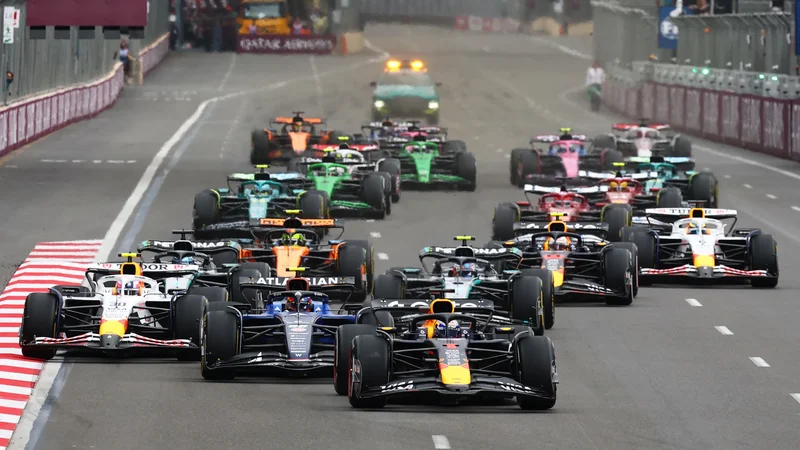
The Formula 1 paddock heads to Baku this weekend for Round 15 on the calendar, the Azerbaijan Grand Prix, and tyre suppliers Pirelli have confirmed the compounds that will be in use throughout the weekend.
For this year’s event, the three softest compounds in the range have been selected, with the C3 acting as the hard, the C4 as the medium, and the C5 serving as the soft. This marks a step down from those used in 2025, where the selection was one step softer and included the C6, though that compound was not chosen during the race.
Drivers will receive two sets of the white-marked hard tyre, three sets of the yellow-marked medium tyre, and eight sets of the red-marked soft tyre. They will also have access to the green intermediate tyre and the blue full wets should conditions require them. An extra set of softs is reserved specifically for drivers who reach Q3 in qualifying, while all competitors must use at least two different slick compounds during the race, provided the track stays dry.
Some of the city streets making up the circuit have been resurfaced, affecting sections of Turns 2, 3, and 4. According to Pirelli’s weekend preview, this new asphalt is limited to specific areas and should not directly influence tyre behaviour, which will initially face low grip levels typical of street circuits. Track evolution over the course of the weekend is expected to be significant due to the progressive build-up of rubber on the surface.
The relatively smooth and low-abrasivity asphalt should produce very low levels of wear and degradation, making a one-stop race the most likely scenario. The C5 compound could prove capable of delivering particularly long stints, similar to recent performances at Monza, a circuit that shares some characteristics with Baku. By contrast, the hard compound could be overlooked by many teams during the race entirely.
Some graining may occur during the opening sessions when grip levels remain low, but it is not expected to be a decisive factor for performance. Temperature management will be one of the most interesting aspects to watch; the very long full-throttle section linking the final corner to the first promotes tyre cooling, aided by developments in wheel rim design. This phenomenon could increase the risk of lock-ups under heavy braking, particularly on the front axle. Meanwhile, ambient temperatures could help keep tyre overheating under control, as the buildings lining the circuit create numerous shaded areas that limit any rise in track temperature.
.webp&w=800)