
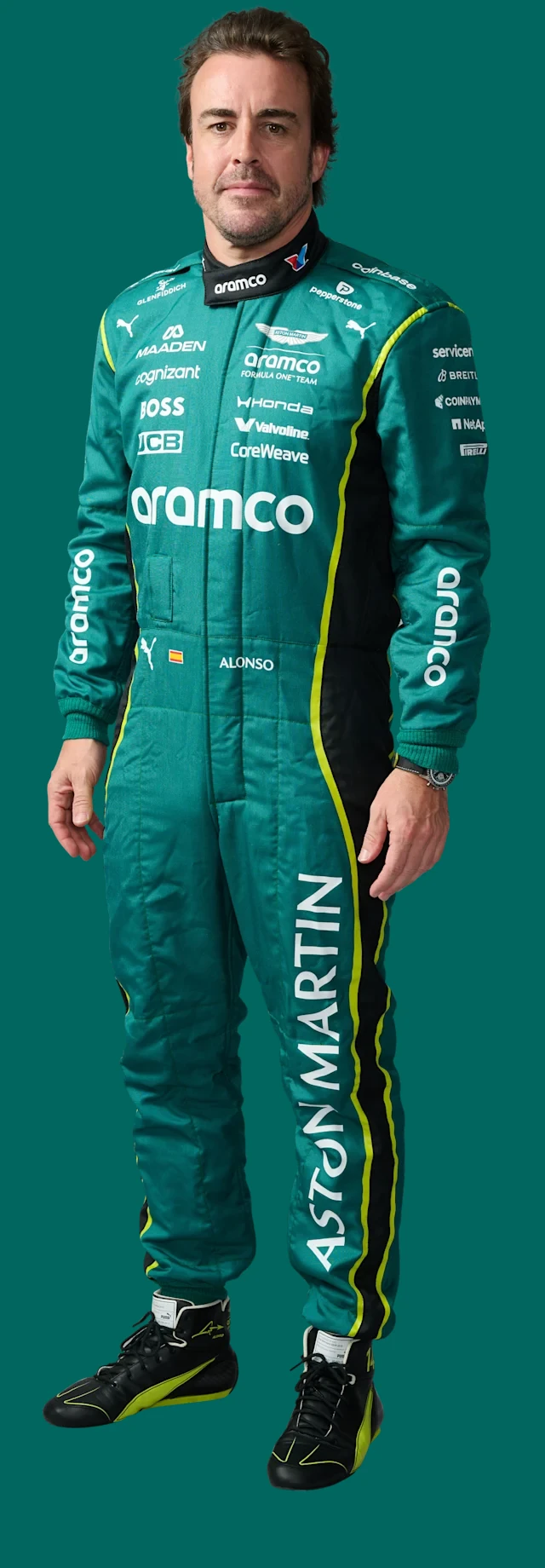
The explosion that changed Spain: reflecting on the Alonso era
It is hard to imagine now, but Formula 1 was once a quiet footnote in Spain. Before Fernando Alonso, the country’s sporting heart belonged strictly to football, tennis, and basketball. Then, the explosion happened. As Pedro de la Rosa—now a Team Ambassador for Aston Martin—aptly puts it, when Alonso started winning, the nation didn't just become interested; they became fanáticos. He was the first truly successful Spanish driver, and he brought with him the "Marea Azul," a sea of blue and yellow that turned every race into an extension of the Asturian flag.
This wasn't just about the two World Championships in 2005 and 2006. It was the spectacle of his driving, from that legendary 2012 comeback in Valencia to his audacious move on Lewis Hamilton at the 2023 Bahrain Grand Prix. The fans felt it then, and they feel it now. Whether he is sunbathing at Interlagos or sniffing flowers in the media pen, Alonso is a character who transcends the machine. For a generation of fans, watching him race became a religious ritual, a shared Sunday experience that moved from the living room to the grandstands.
Today, the devotion remains staggering. At the Circuit de Barcelona-Catalunya, the atmosphere is electric, with grandstands now featuring 'Alonso Land' to celebrate the Aston Martin driver. His legacy is etched in the careers of those who followed, from Williams’ Carlos Sainz to Formula 2 driver Mari Boya, who grew up watching those same Sunday broadcasts. As one observer put it, there isn't a single person in Spain working in the F1 paddock today who isn't there because of him. That is the true, beautiful weight of his legacy.


