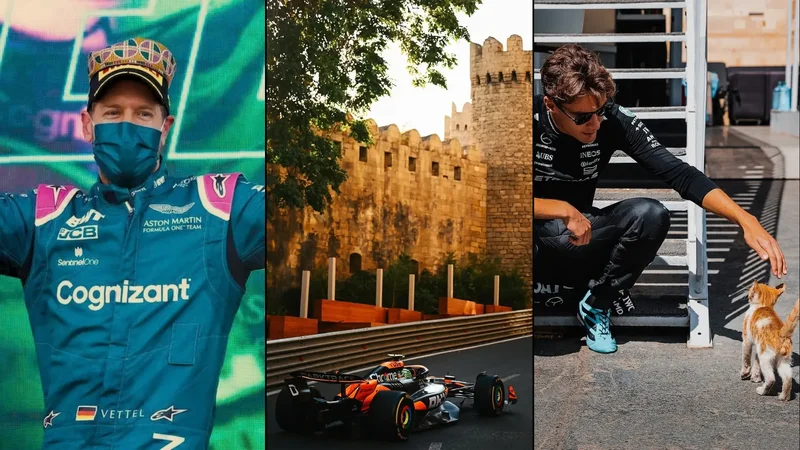
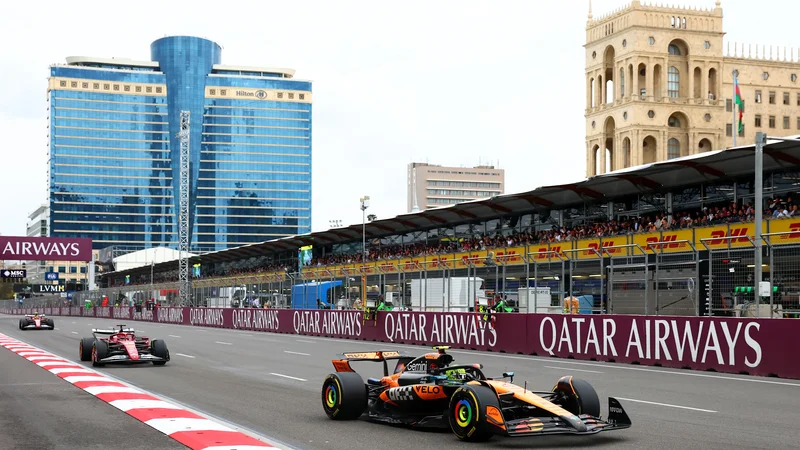
Formula 1 is back in action this weekend for the Azerbaijan Grand Prix, with plenty still to fight for. Designed by Hermann Tilke, the Baku City Circuit made its debut in 2016 when it hosted the European Grand Prix as the 23rd and last edition of a race under that title. It returned the following season as the Azerbaijan Grand Prix and quickly established itself as a venue that produced exhilarating drama, with Lewis Hamilton and Sebastian Vettel clashing behind the Safety Car before Daniel Ricciardo clinched a fifth career victory. Baku has featured every year since with the exception of 2020, joining the likes of Monaco, Singapore and Las Vegas on the list of memorable street circuits.
Baku presents a unique challenge, combining a remarkably long main straight that sees drivers go three-wide down its 2.2km stretch with tight twists around the city’s medieval walls. It can be difficult to master, especially as teams have to strike a perfect balance between downforce for the turns and low drag for the straights, and it’s a strong test of a racer’s technical ability and nerve. Former Renault F1 driver Jolyon Palmer explained: “There’s so much to put together in Baku, with lengthy straights and big braking zones in the first sector, before a winding second sector and a tough third sector.” Palmer added that braking for Turn 1 is tricky and comes quickly after the start/finish line, noting that with some slipstream, whether you luck into it or orchestrate it, you can gain a huge amount of time. He also pointed out that out-laps are important because the track surface isn't so abrasive, meaning a slow out-lap could lead to failing to warm up the tyres and locking up into Turn 1.
The notorious castle section in the middle of the track is narrow and a place where accidents can easily happen, but Palmer noted the trickiest corner is probably Turn 15, an unsighted left-hander where you are accelerating towards the end of the lap while braking slightly to the right. As Palmer put it: “It’s all about the braking and, like at any street circuit, there’s plenty of time to be gained if you can carry sufficient speed out of the apex – just don’t get greedy with the apex and clout the wall.”
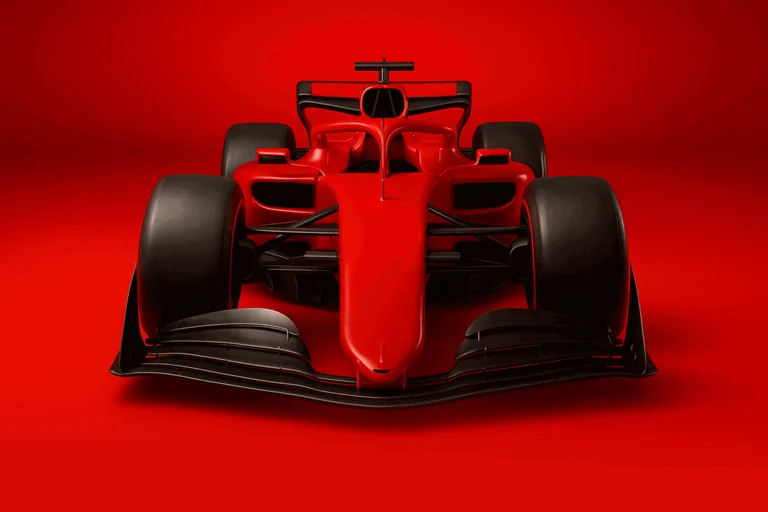
Straight Mode is a different aerodynamic configuration that allows cars to reduce their drag, making them more efficient when accelerating up towards top speed. The rear wing continues to open up a gap just like DRS in the past, but now the front wing also moves as the uppermost front wing elements drop down at the same time the rear wing’s top element does. This mode is used on every single lap in dry conditions, in every area designated for it. In Baku, there are two designated Straight Mode zones: the section between Turns 2 and 3, and a longer one along the start/finish straight beginning at the exit of Turn 19 and extending all the way down to Turn 1.
Meanwhile, Overtake Mode replaces DRS and is a new power mode allowing a driver to recharge more electrical energy and generate an additional electrical power profile to sustain a higher speed for a longer period. There is one detection point per lap for this mode, available to drivers on the following lap as long as they stay within a second of the car in front at that detection point. Around Baku, the Overtake Detection point comes shortly after the left-hander of Turn 16, while the Overtake Activation line follows at the entry of Turn 17.
Some notable fun facts highlight the extreme nature of the venue. The Baku City Circuit includes the longest straight on the F1 calendar at 2.2km. Leclerc is the only driver who has recorded more than one pole position in Baku, having qualified P1 on four occasions. Red Bull hold the record for the most wins with five, consisting of one for Ricciardo and two apiece for Max Verstappen and Sergio Perez. At its narrowest point, specifically the Turn 8/9 'Old Town' complex, the circuit is just 7.6m wide. Finally, qualifying for the 2025 Azerbaijan Grand Prix saw a record-breaking six red flags.
.webp&w=800)
%2FPiastri%2520Madrid.webp&w=800)