
Hankook is preparing a bid to become Formula 1's sole tyre supplier from 2029, with a 44-person internal taskforce already in place, according to Autosport and The Race.
The FIA is due to open a new tender process next year. Pirelli, F1's supplier since 2011, has a contract that runs to the end of 2028 after a one-year extension was taken up in June. Bridgestone, which left F1 in 2010, is also known to be preparing a pitch. Pirelli is understood to want to see the tender details before deciding whether to enter.
Hankook has completed two development tests this year using a modified F2-equivalent mule car, evaluating tyre construction and different compounds. A third test is scheduled to work on wet-weather tyres. The aim is a design with a narrower spray plume, to ease the visibility problems that currently make a red flag likely in heavy rain.
Company representatives, including Hankook Competition CEO Steven Cho, have attended several grands prix over the past two seasons. The most recent was Las Vegas, which was reportedly the second F1 race they visited this year after Madrid in September. In 2025 they also went to events in China, Japan and Singapore. The Race understands the trips were used to meet a majority of teams and discuss plans with senior executives.
Hankook is also working on the production and manufacturing planning needed to supply F1, F2 and F3 tyres, which would fall under any tender contract.
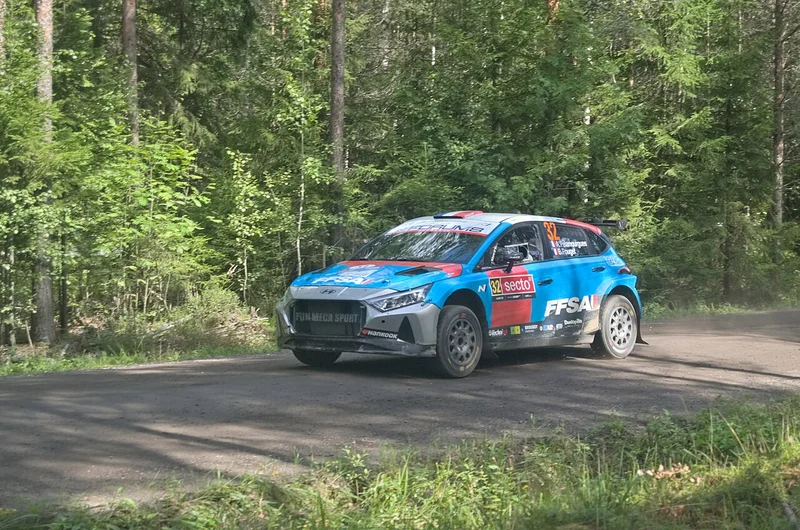
Its credentials include being sole tyre supplier to the World Rally Championship, a role it was appointed to in 2025. This year the FIA named it a member of its global partner programme. It supplied Formula E's Gen3-era cars from 2022 to 2026, with Bridgestone taking over that contract. It also supplied the W Series in 2021 and 2022, and was an unsuccessful bidder in 2018 for the contract covering 2020-23. Its manufacturing includes an R&D facility in Hanover, Germany, and a factory in Hungary undergoing a €450million expansion.
The FIA assesses bids on technical capacity, sustainability credentials and operational capacity, while F1 has a say on commercial grounds. Any new supplier would arrive in year four of the current technical regulations and would have to show it can match the existing product. The period covered is expected to include the 2030 rules change, with V8 power units and lighter, nimbler cars. Plans also include a new tyre design with a slightly smaller wheel than the current 18-inch size.
The tender process opens next year.