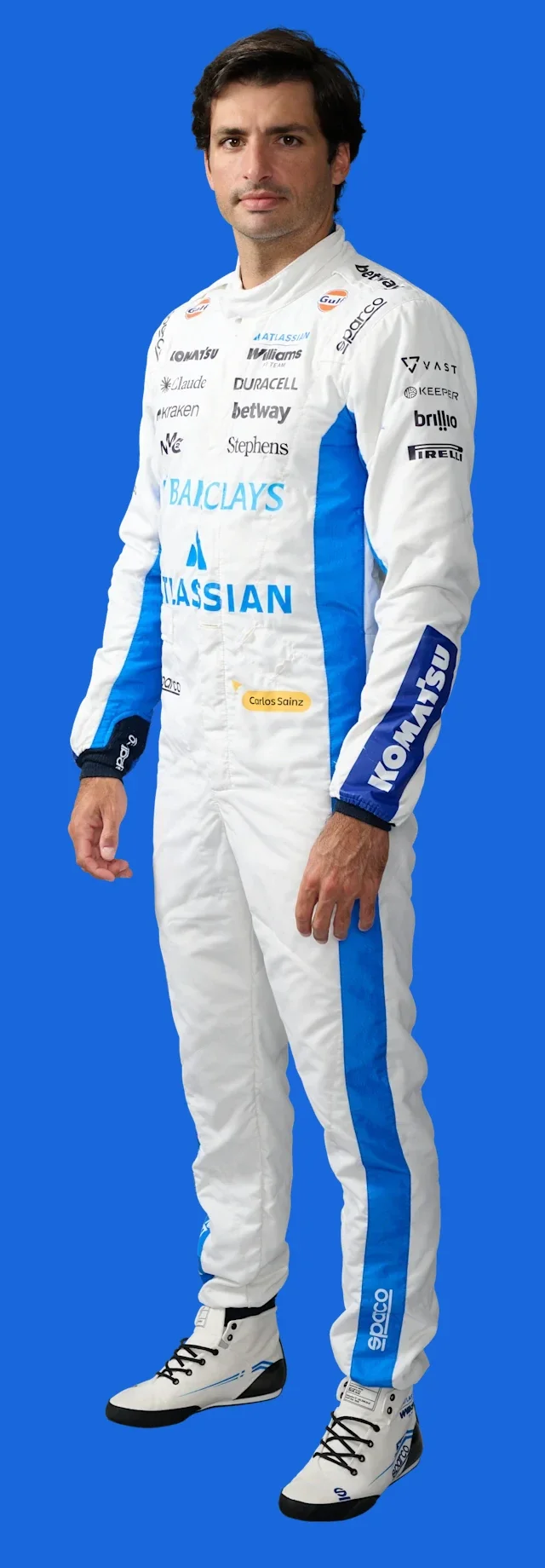


The Azerbaijan Grand Prix arrives as a massive weekend for the Williams team, finally bringing their long-awaited, major upgrade package for the FW48 to the track. Up until now, the 2026 season has proven to be a painful affair for drivers Carlos Sainz and Alex Albon, particularly given the strong promise shown last year. Delays forced the team to miss the Barcelona Shakedown, and once the car finally hit the asphalt, it turned out to be significantly overweight alongside some inherent design issues.
Early on, the team took the decision to focus heavily on a major package for the second half of the season—much like Aston Martin—though Williams did introduce some incremental bits along the way, such as a revised front wing for Silverstone alongside an ongoing weight-trimming programme. The results, however, tell a tough story. The drivers managed to log five points finishes in the early races, with a best of P8 for Albon in the high attrition Monaco Grand Prix. Since then, the team has failed to score a single point, typically finishing in the P15, P16, and P17 range.
That slump stems partly from improved reliability across the field since the opening rounds, but it also highlights how rivals have pushed forward while Williams stagnated. After a difficult race in Madrid last weekend, Albon pointed out the sheer scale of the current development race. Most midfield teams are bringing three or four massive upgrades a year. In a normal season, the Baku package would place Williams back in contention, but the rapid speed of development has left them falling back.
When this Baku package was signed off several months ago, the projected numbers looked promising. But as rival midfield cars improved, the goalposts shifted. While the FW48 will undoubtedly be faster, it is all relative, and the dramatic surge up the grid originally envisioned might not materialize. It also serves as likely the final roll of the dice for Williams in 2026, as focus shifts increasingly toward next season and the FW50.
Albon laid out the stark reality of their pace, noting they are finishing roughly 50 seconds behind the midfield in a race—losing more than a second a lap. While hopeful the upgrade will deliver a good step, he acknowledged they are too far back to sustain multiple upgrades for this year and must turn attention to next year. Sainz, who qualified second and finished third in Azerbaijan last year, is similarly keeping his expectations firmly in check. He noted that while the upgrade will help them get closer to fighting for points and boost team motivation, it remains nowhere near where the team wanted to be or what was promised, leaving their biggest hope in putting all eggs into next year's basket.
For Team Principal James Vowles, who recently convinced Albon and Sainz to commit to the future, Baku is crucial. Vowles pointed to changes in processes, methodology, and key recruits like Chief Optimisation and Planning Officer Piers Thynne as reasons for the drivers to trust the team. Explaining last winter's missteps, Vowles noted that a lack of simulation technology—which only came online in November when the car was already mostly done—forced the team to rely on educated guessing, resulting in developing at the wrong rear ride height alongside Aston Martin. If the Baku package performs as intended, it will prove that things are moving in the right direction at Grove, though Vowles refuses to guarantee perfection for the 2027 car's development, emphasizing instead that the goal is building depth in systems, tools, processes, and people to catch errors.

.webp&w=800)