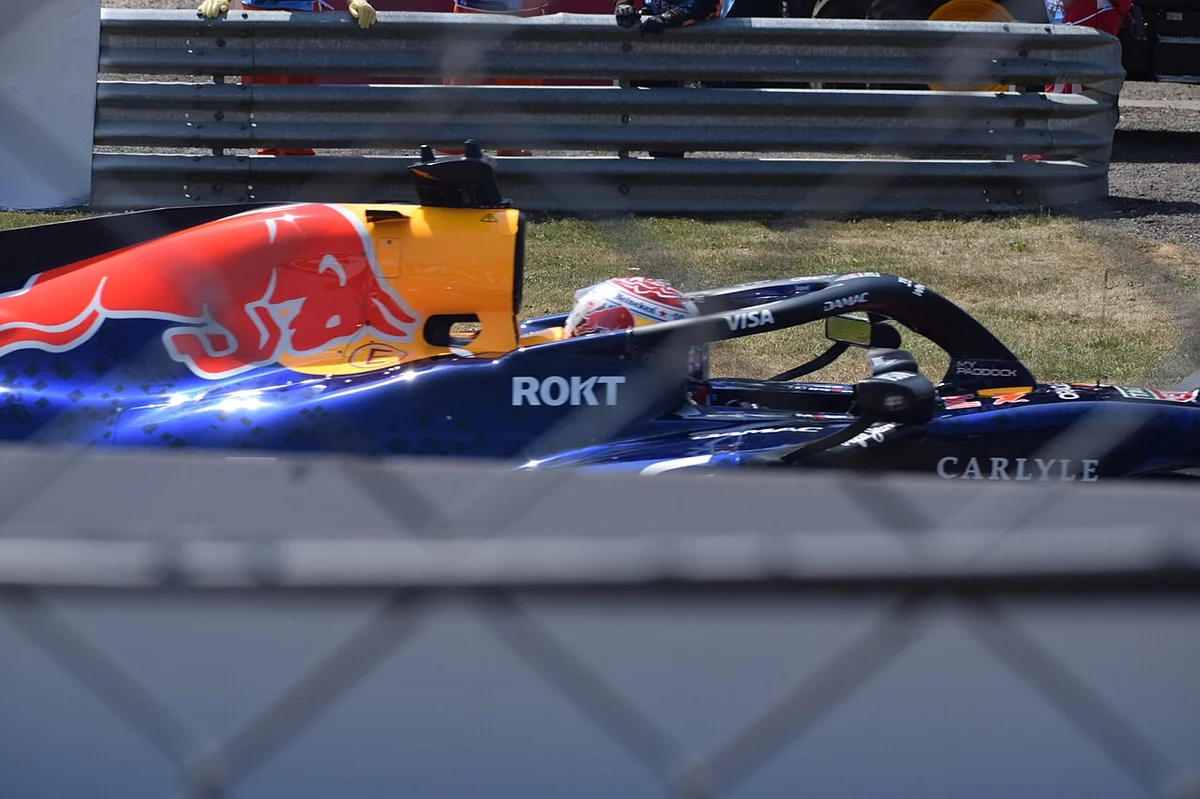


As Autosport reports, Formula 1 cars experienced significant technical issues ahead of Sunday’s Bahrain Grand Prix in Malaysia. Numerous cars came to a standstill in Sepang because they needed a software update.
The start of the Sepang race was delayed by 40 minutes due to a downpour. A chaotic formation lap then saw front-row starters Max Verstappen and Lewis Hamilton suffer from a glitch which rendered throttle input ineffective, with numerous cars coming to a standstill and the red flag being waved.
I had 50% DNFs this year, they never stopped the race for us.
The situation was branded “unacceptable” by Sergio Perez, who likened it to ‘being in a rental kart and running out of time’. Lando Norris described it as “just horrible” and evidence that “we shouldn't have any of that stuff, the electronic side”, given this was linked to Formula 1’s new machinery, which features 47% electrical power.
FIA single-seater Nikolas Tombazis has now explained that, given F1 had never had competitive running in actual wet conditions this season, it was caught out by the power unit’s reaction to cars driving extremely slowly at that time. A software update therefore had to be carried out, hence a 53-minute delay to get the race restarted.
“We didn't manage to test the software as extensively as we would have liked, because there's been very little wet running this year, and there was a bit of a combination of circumstances which caused this bug to kick in,” Tombazis said. “Basically, the formation lap, some cars went very slowly, almost came to a standstill. There was a bit of a concertina effect between cars, and some cars almost stopped completely. And that bug prevented the power to be redeployed and for the cars to start again. I think if we had had a bit more testing, we probably would have managed to catch it in time and not to have such a situation.”
Tombazis praised the FIA’s reaction when it came to fixing the issue as swiftly as possible, noting that once the problem happened, their crew realized very quickly what was occurring and worked under intense time pressure for an update to the software to be issued and installed by the teams.
“So all of that took about 20 minutes. It may have felt like five hours for spectators waiting [for] a race and for everybody else, which is understandable, and we are sorry about that. But I think it was quite a fast reaction given the problem,” he added.
Not everyone was so upset about some cars running into trouble, with eighth-placed Fernando Alonso joking at the end of an unusually good day for Aston Martin-Honda: “I had 50% DNFs this year, they never stopped the race for us.”