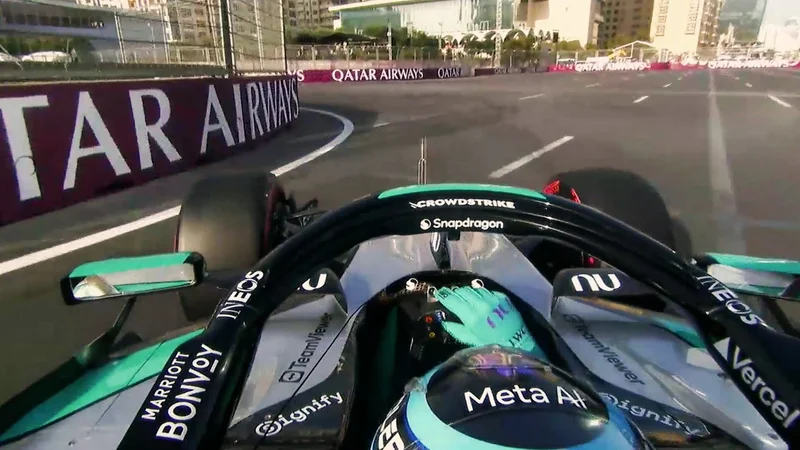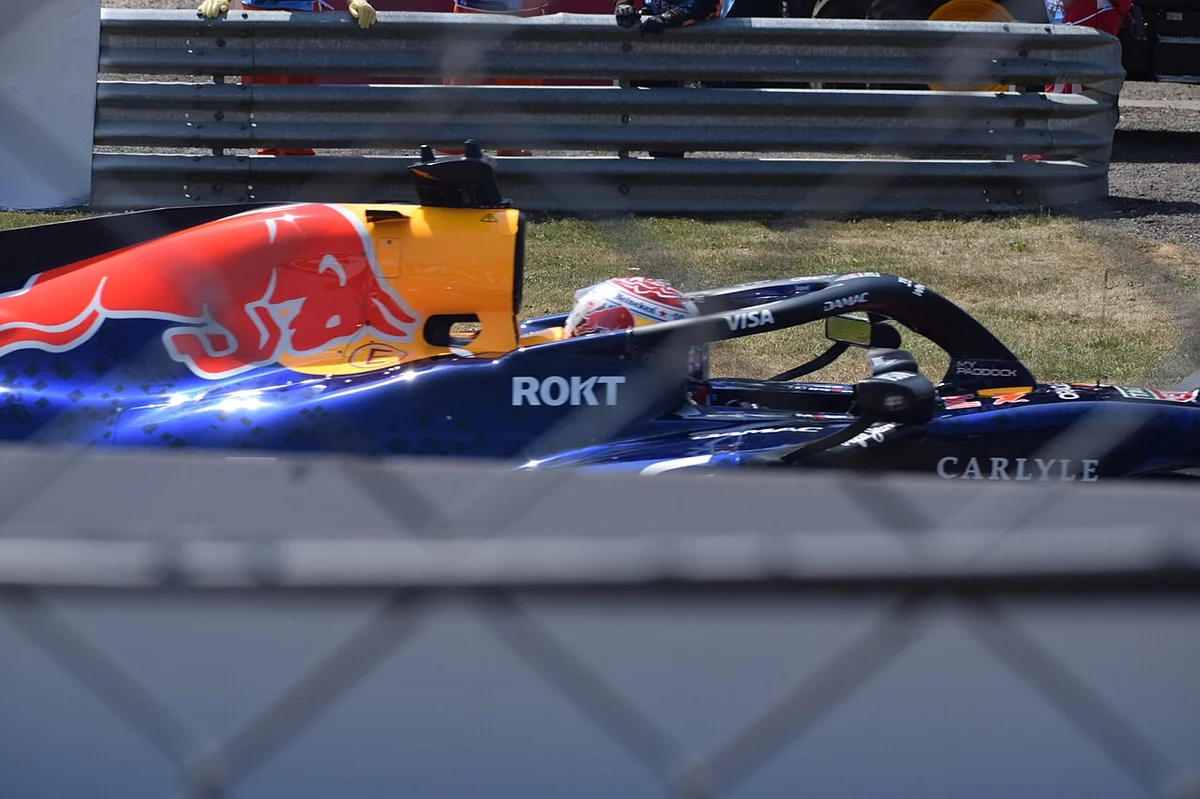


As Motorsport.com Italia reports, the opening day of practice in Baku brought genuine relief to the Red Bull garage, with their latest package delivering results likely exceeding initial expectations. On slow-speed, acceleration-heavy layouts like this, the RB22 has traditionally shown flashes of strength, but what genuinely caught Max Verstappen off guard was the absence of major balance gremlins. Naturally, there remains a specific headache to iron out overnight.
Red Bull arrived at the venue carrying a substantial batch of updates, intended to serve as the final true developmental step of the season. The squad has already pivoted its engineering focus toward the 2027 machine, constrained by budget caps following the heavy lifting required earlier in the year to tame the RB22's inherent limitations. Team Principal Laurent Mekies confirmed that a significant slice of resources has already migrated to next year's project, though that concession has not dulled their appetite for sealing that elusive maiden victory of the campaign.
While matching Mercedes looks like a mountainous task right now and a gap to the front stubbornly remains, the track data offered plenty of encouragement. Mercedes appeared entirely out of reach during the opening running, yet the RB22's performance suggests it firmly belongs in the podium mix. The upgrades are behaving precisely as predicted in areas requiring delicate aerodynamic intervention, yielding a positive feeling from the cockpit that is rarely taken for granted at Milton Keynes.
“It was actually a pretty positive day. I’m quite happy with the car. We’ll have to fine-tune a few details and try to find a bit more lap time, but overall it’s been a good start, with the upgrades behaving as we expected,” Verstappen stated.
Despite the positive signs in slow corners—where the RB22 often punches above its weight much like it did in Canada, Monaco, and Austria—a familiar chassis challenge persists around ride heights. Finding an optimal compromise remains a thorny puzzle. Verstappen previously voiced complaints in Canada about a rigid platform that skips under braking, and chasing maximum straight-line efficiency on a bumpy street circuit only magnifies the compromise. Even with partial resurfacing, the tarmac hides plenty of vertical surprises, and the rear end failed to offer convincing responses during both practice sessions.
Addressing those bumps over the night is crucial, but the underlying satisfaction stems from the nature of the complaints. The drivers are wrestling with ride heights rather than a fundamentally flawed balance plagued by excessive understeer or oversteer. In the twisty second sector, the times are genuinely encouraging, occasionally eclipsing both Ferrari and McLaren. Though the car bleeds time on the straights, tactical slipstreaming could emerge as a qualifying weapon to ambush the opposition.
That underlying poise gives the team confidence when attacking the castle section, leaving Technical Director Pierre Waché relatively relaxed about the ride-height compromise. The priority is softening the chassis over the bumps to secure stability under braking and mid-corner traction, unlocking the full aeroflot potential without knocking the car out of its working window.
“It’s quite positive both regarding the balance of the car and what the update brings. There’s a good correlation with the simulator under this aspect. We still have some issues on the ride heights of the car that we are trying to solve, but the main complaints come from there, not from the upgrade nor the balance,” Waché added.
“The main problem is that we need to make sure we make the car more stable on the bumps, especially at the rear, so that it can maximize the potential of the car and, in particular, the aerodynamic one.”
.webp&w=800)