The constructors' crown secured at Interlagos marks the end of four bruising seasons and brings Mercedes back to the pinnacle of Formula 1. As Motorsport.com Italia reports, team principal Toto Wolff has now reached his seventeenth world title across drivers' and constructors' championships, placing him alongside Ron Dennis in the sport's history books. Yet the Austrian boss remains reluctant to place himself in the same galaxy as legends like Frank Williams and Ron Dennis, viewing them as absolute benchmarks who established entirely new standards for motorsport.
Beyond the raw statistics, that triumph at Interlagos carries deep meaning for Wolff. It is not merely validation of the 2026 car, but the culmination of a grueling four-year climb after losing their long-held dominance. Wolff didn't sugarcoat how brutal those win-sparse years were. The most frustrating element was the constant loop of thinking they had fixed an issue, only to realize they hadn't truly grasped it at all. Even though the team still collected race wins and strong championship placings—meaning history won't paint them as total losers—the internal reality felt entirely different. Surviving that valley without falling apart demanded a rare kind of organizational resilience.
You can be dominant and, within a few races, discover that an update doesn't work and find yourself third,
Crucially, Wolff credits that survival to psychological safety rather than a revolving door of hires and fires. He explains that the team fosters an environment where people can grow, make mistakes, and speak their minds without fearing for their jobs. That long-term vision dictates everything at Brackley, with Wolff famously noting that for him, "soon means ten years from now." It is a culture built on raising standards daily rather than firing people at the first sign of trouble, allowing the organization to weather the storm.
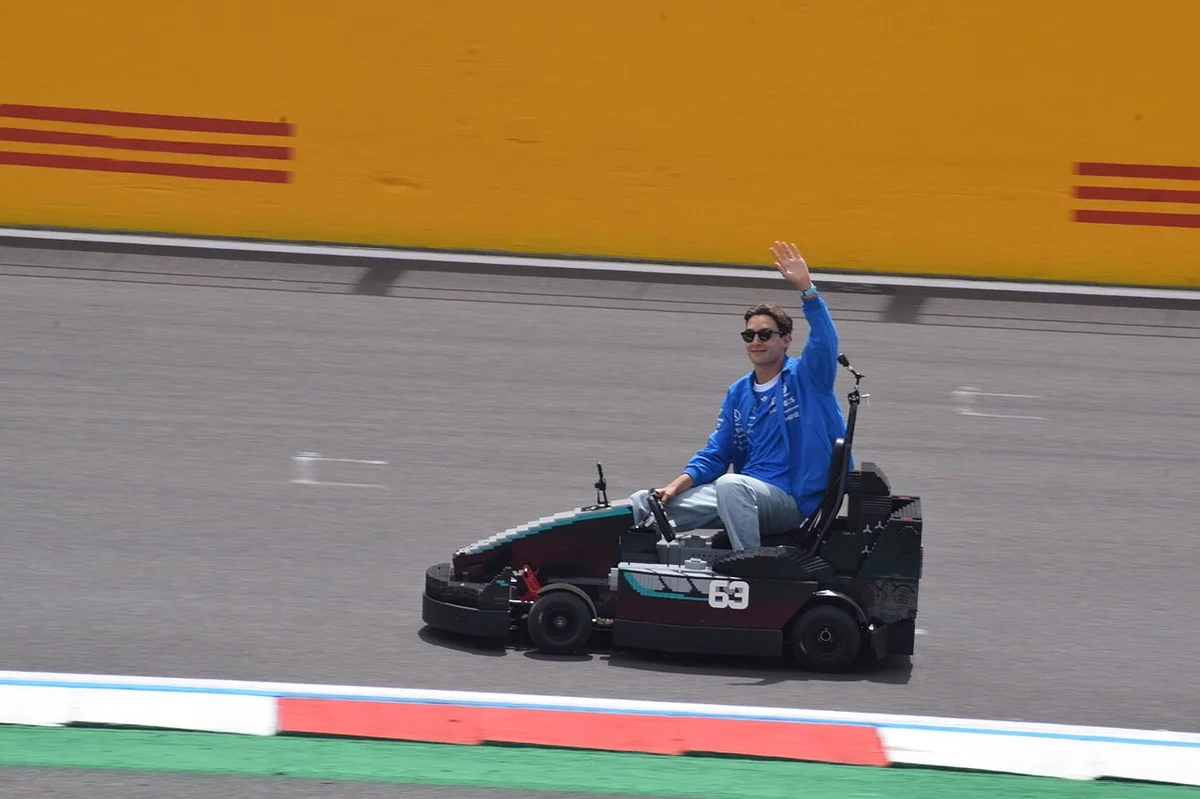
Yet celebration time is short, because the 2027 season has already begun behind closed doors. Wolff points out that Ferrari, McLaren, and Red Bull have aggressively closed the gap, creating a fiercely tight field where four teams can legitimately win races. Looking back at Interlagos, where both George Russell and Andrea Kimi Antonelli struggled with severe rear tyre wear despite blistering early pace, Wolff admits the team still needs to analyze what went wrong with their setup or tyre pressures. With the competition tighter than ever, he firmly believes we will never see prolonged cycles of team dominance in Formula 1 again.
"You can be dominant and, within a few races, discover that an update doesn't work and find yourself third," Wolff explains, calling it fantastic for the sport. While a part of him might privately crave another runaway era, he knows reality dictates otherwise. Mercedes is back on top of the world, but the boss already has his eyes locked firmly on the horizon for the battles ahead.


 F1
 F1