It is one of the wild realities of modern motorsport: winning the championship in the feeder series does not guarantee you a seat at the pinnacle. As Motorsport.com Deutschland reports, three of the past four Formula 2 champions have failed to make the jump to Formula 1, proving that raw standings are often secondary to what team bosses see behind the wheel.
Take Leonardo Fornaroli. He claimed the Formula 2 title as a rookie in 2025, yet a permanent seat in Formula 1 remained completely out of reach for 2026. Even with McLaren stepping in to sign him as a reserve driver and backing him through various test sessions, there is still no opening on the grid for him in 2027.
We all know that a lot goes on in Formula 2. Reliability problems and so on. The world isn't always particularly fair. But the goal is to find someone who knows what you're worth,
Fornaroli's roadblock is hardly an outlier anymore. Of the last four drivers to conquer the category, only Gabriel Bortoleto managed to graduate to Formula 1, securing a drive with Sauber (today Audi) for the 2025 season after winning the title in 2024. Meanwhile, Felipe Drugovich (the 2022 champion) and Theo Pourchaire (the 2023 champion) both missed out on a permanent drive entirely.
Yet drivers who never took the championship crown, such as Oliver Bearman, Isack Hadjar, and Kimi Antonelli, successfully stepped up to Formula 1 all the same. Hadjar knows this machine from the inside out, spending two years in the junior category where he finished an unremarkable 14th in his opening campaign before securing the runner-up spot behind Bortoleto in his second year. During that same 2024 season, Bearman and Antonelli finished twelfth and sixth respectively in the standings, yet both still earned their promotion to Formula 1.
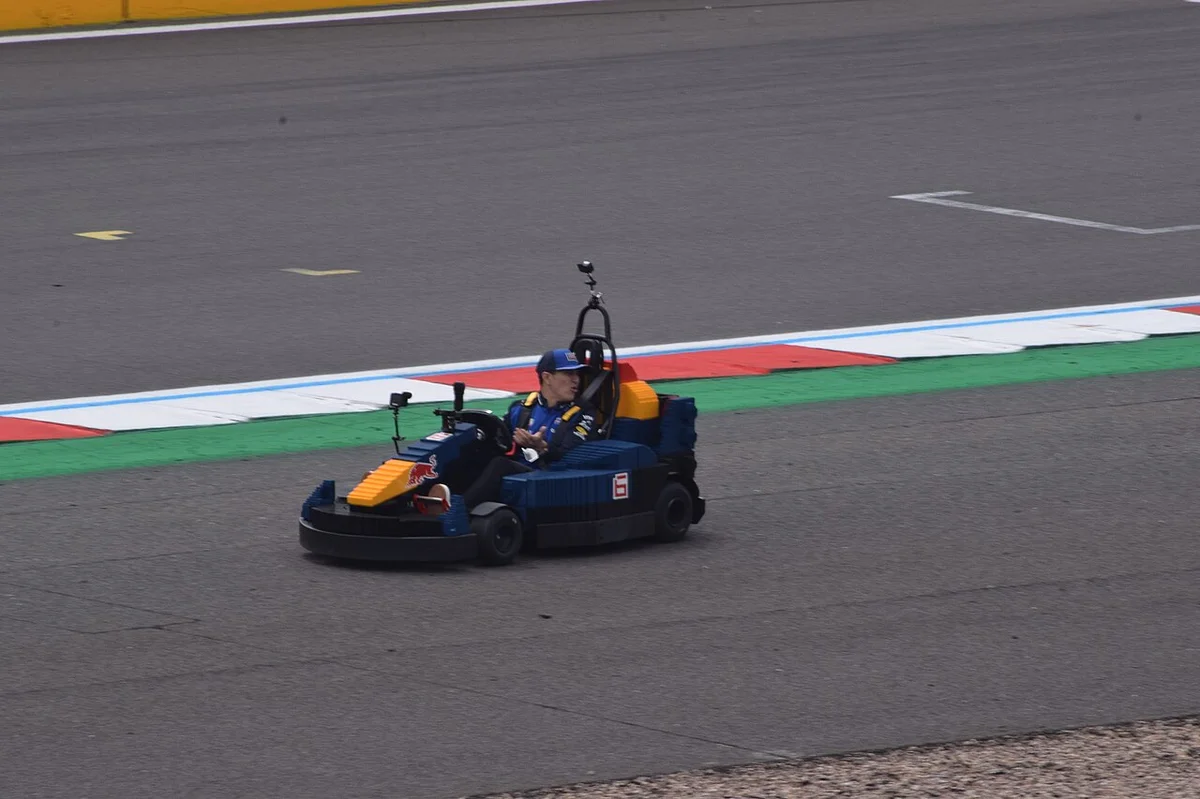
"In Formula 2, it's not about the result," Hadjar points out, explaining that final championship positions carry almost no weight with decision-makers. According to the Red Bull junior, team bosses ask a very different set of questions: what do you see in the driver, what are they doing inside their team to improve the machine, and how are they extracting the absolute maximum from the equipment provided? Those hidden metrics completely eclipse the numbers on a timesheet.
"We all know that a lot goes on in Formula 2. Reliability problems and so on. The world isn't always particularly fair. But the goal is to find someone who knows what you're worth," Hadjar says, adding that he considers himself deeply fortunate. Helmut Marko, who was responsible for the juniors at Red Bull at the time, spotted something in him despite a debut season where he failed to crack the top ten. "In my first year in Formula 2, I was in 14th place. And today I drive for Red Bull. So did it have any meaning? No."
Right now in the 2026 Formula 2 season, Rafael Camara leads the charge with 207 points, closely followed by Nikola Tsolov with 200 points and Alexander Dunne with 189 points as they scrap for the crown. Camara has already made his Formula 1 debut last weekend in Brazil, while Red Bull junior Tsolov is still fighting for an opening at the Racing Bulls. Dunne sits within the Alpine junior program, and by current accounts holds no realistic path onto the Formula 1 grid for next year—meaning even a championship victory this season likely wouldn't change his fate.


 F1
 F1