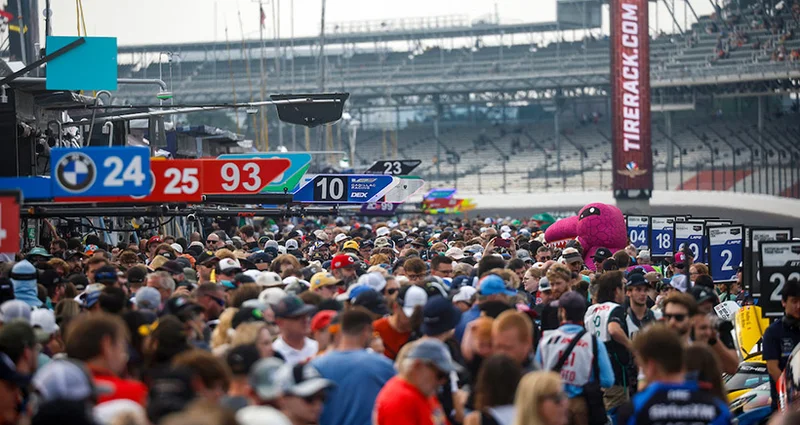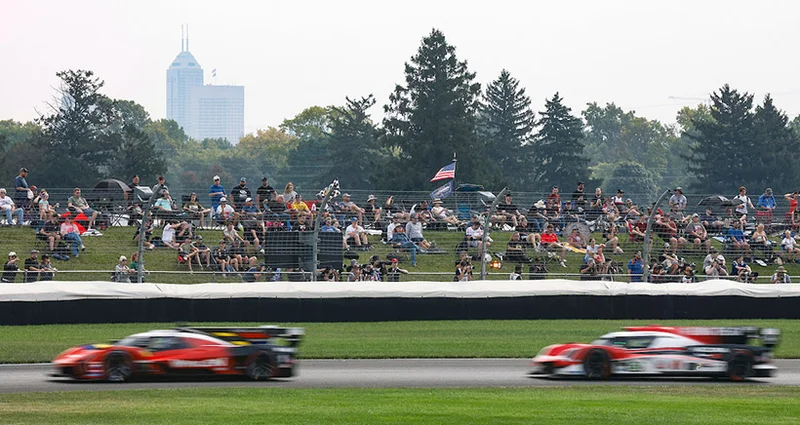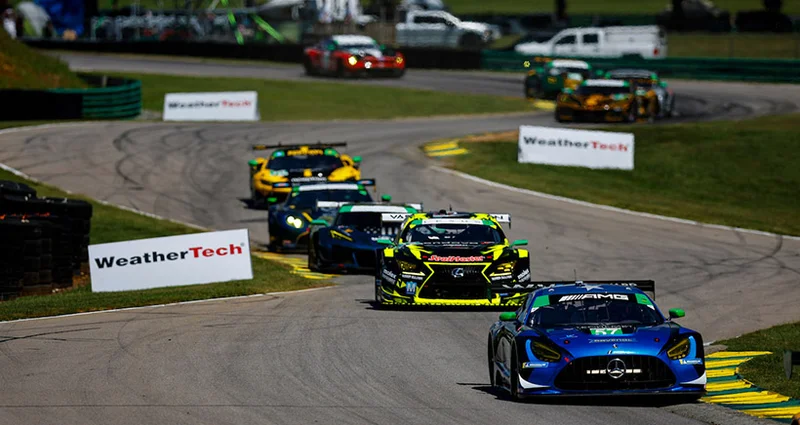
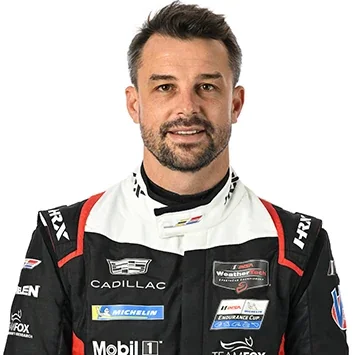



When the IMSA WeatherTech SportsCar Championship heads into its final two rounds, the biggest challenge might not be the competition itself, but simply finding room to breathe. The season ends with a pair of events featuring heavier traffic in terms of cars per mile of track than all the rest: the TireRack.com Battle on the Bricks at the Indianapolis Motor Speedway road course, and Motul Petit Le Mans at Michelin Raceway Road Atlanta.
They are nearly identical in length on paper, with Indianapolis measuring 2.439 miles and Michelin Raceway sitting at a tick longer at 2.54 miles. Yet the circuits are entirely different beasts. Michelin Raceway's 12 corners wind up and down through hilly forests, while Indy is nearly completely flat, run within a stadium, and characterized by two long straights. Despite the similar lengths, both tracks are among the shortest on the calendar and combine that with uniquely massive fields.
For my personal preference, I think (Michelin Raceway) Road Atlanta is the most difficult to manage in terms of traffic, because Indy offers two long straights,
Indianapolis delivers a 44-car entry as the only sprint race on the schedule including all four WeatherTech Championship classes: Grand Touring Prototype (GTP), Le Mans Prototype 2 (LMP2), Grand Touring Daytona Pro (GTD PRO), and Grand Touring Daytona (GTD). Meanwhile, Michelin Raceway marks the final round of the five-race IMSA Michelin Endurance Cup and may draw up to 54 cars on a circuit considerably shorter than any of the other four endurance venues, which measure from 3.4 to 4.048 miles. It works out to a busy 18 cars per mile of track at Indianapolis, and an even denser 21 cars per mile at Michelin Raceway.
Managing that congestion is vital, especially for the pilots of the faster prototypes. Earl Bamber, whose co-driving of the No. 31 Cadillac Whelen Cadillac V-Series.R has helped propel Jack Aitken to the top of the GTP points standings, revealed that creating a more predictable car in traffic was a key element in the design brief for the EVO upgrades integrated into the V-Series.R this year. "When we were doing the EVO, we were really targeting the raceability aspect and that was definitely achieved through being able to follow in traffic," Bamber said.
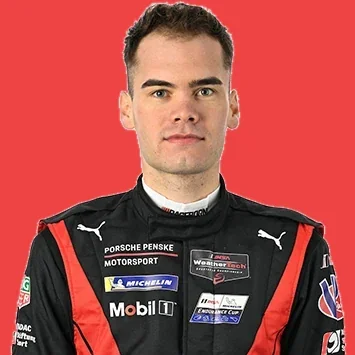
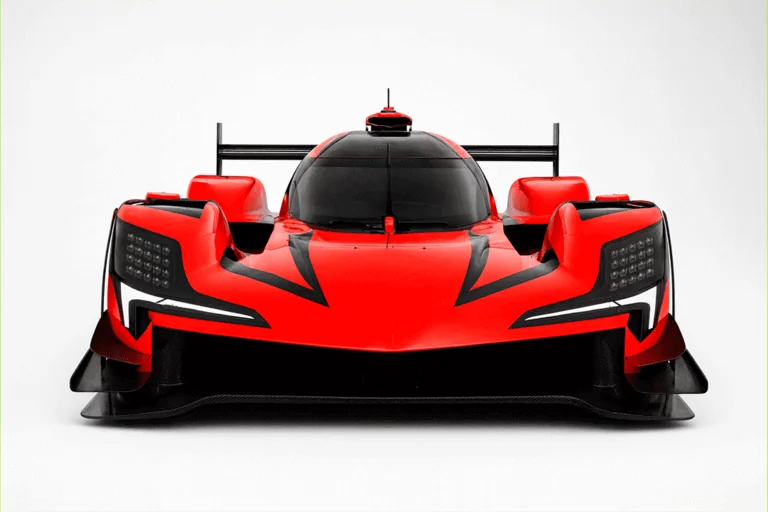
Nick Yelloly and Renger van der Zande stand third in the GTP standings in the No. 93 Acura Meyer Shank Racing w/Curb Agajanian Acura ARX-06, 185 points behind Aitken. Yelloly noted that navigating slower traffic relies on a careful mix of aerodynamic performance and mechanical grip. "You also have to really think about having good, combined traction, in my opinion, to be able to get by the slower traffic," Yelloly said.
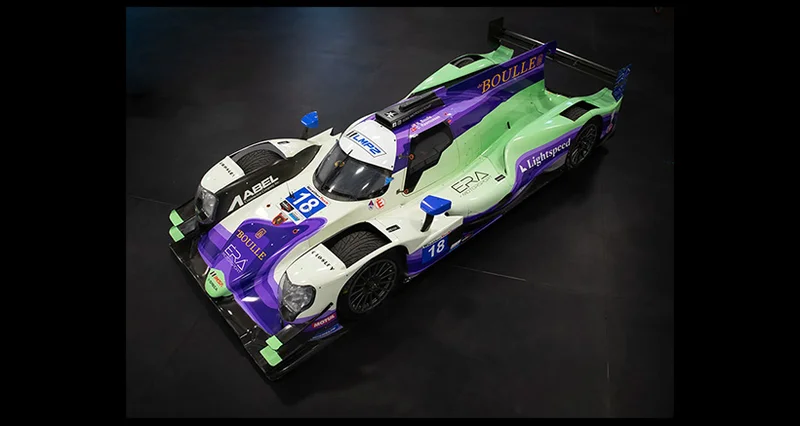
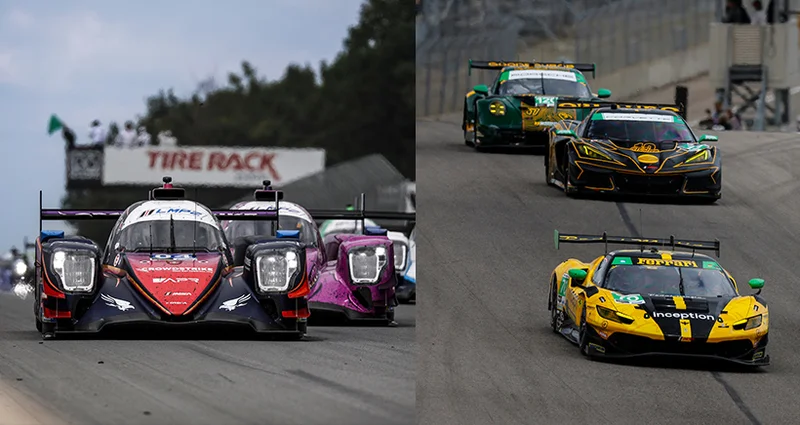
Meanwhile, LMP2 drivers face a double-sided headache of weaving through slower GT entries while keeping watch for charging GTP machines. Mikkel Jensen, who shares the No. 2 United Autosports USA ORECA LMP2 07 with Phil Fayer, finds the challenge fun. "The traffic makes it very demanding through Turns 7-8-9, which are super tight," observed Jensen. Ben Barker, who splits seat time in the GTD PRO class No. 64 Ford Racing Ford Mustang GT3 with Dennis Olsen, confirmed the close confines produce plenty of bumping and banging. "I did the race two years ago in a GTD Mustang, and I think I probably got hit about 10 times by prototypes," Barker said.
GTD PRO features the tightest title battle among the four classes, with the top five contestants clustered within 67 points. Neil Verhagen and Connor De Phillippi top the standings in the No. 1 Paul Miller Racing BMW M4 GT3 EVO. "For my personal preference, I think (Michelin Raceway) Road Atlanta is the most difficult to manage in terms of traffic, because Indy offers two long straights," Verhagen said.