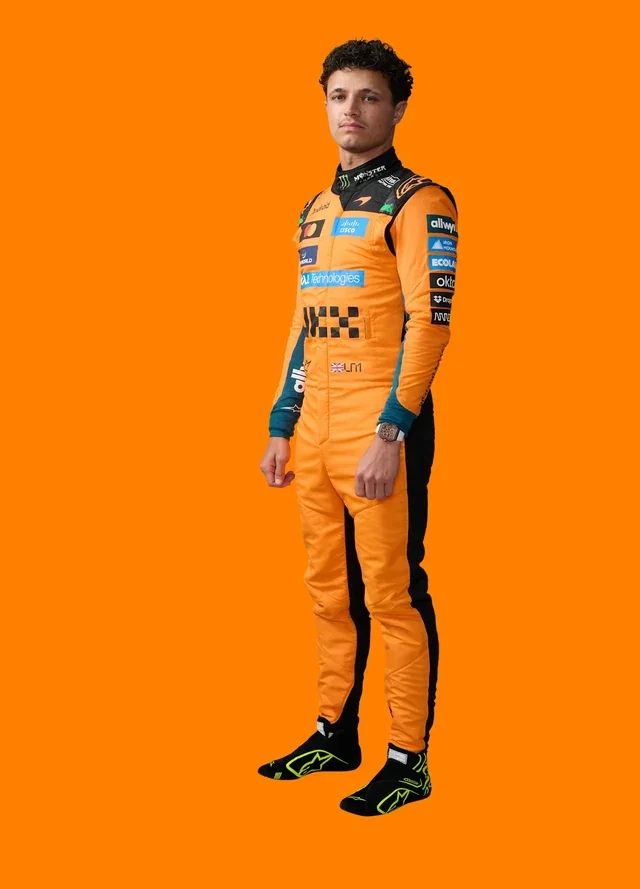


Lando Norris down in sixth and Oscar Piastri all the way back in thirteenth. That was the brutal reality check McLaren faced after qualifying at the Gran Premio di Città del Messico, and as Motorsport.com Italia reports, team principal Andrea Stella was entirely transparent about the root cause: their machine is simply too treacherous to handle when pushed right to the edge.
According to Stella, the squad must take full blame for engineering a car that punishes drivers the moment they hunt for that final fraction of performance. When Norris and Piastri extract 99% of the potential, the pace looks genuinely strong, as proved during FP3 and the early qualifying runs. But the second they chase that last 1%, the lap time evaporates instantly with no margin to recover it. The numbers back it up harshly: across Norris's last four Q3 attempts between Austin and Mexico, only a single one was brought home cleanly. Piastri suffered the exact same fate when the car's behavior flipped without warning in Q2.
This fierce snap comes down to a deliberate development gamble. Stella admitted that during the evolution of the MCL40, the outfit consciously prioritized pure downlift and aerodynamic load over drivability. Part of that was forced by circumstance, with the 2005 world championship fight and their status as a customer team leaving them roughly three months behind in technical knowledge and raw pace. Sacrificing user-friendliness for sheer aerodynamic gains felt correct at the time, delivering a massive step of over a second in lap time progress compared to the start of the season. But that evolution has now hit a wall where adding more load without fixing the handling behavior is a dead end.
Stella firmly rejected the easy excuse of pointing fingers at tire preparation, noting that while Piastri's rubber ran too hot in Q2 despite a cooling lap and a half, it does not explain the broader mechanical nervousness of the beast. Even independent feedback from Leonardo Fornaroli after checking onboard footage confirmed that the McLaren looks visibly more twitchy and demanding than its rivals. While Stella pointed out that drivers like Hamilton, Leclerc, and Verstappen are all wrestling with the brutal limits of this new generation of cars, Woking's creation sits right at the sharpest, most punishing end of that spectrum.
Looking ahead to the grand prix, the grid spots leave the team vulnerable in their tight mini-championship battle against Red Bull. Stella noted that traffic management might be manageable, but the real nightmare could be overtaking itself. Due to how electric power deployment works under the current regulations, generating enough of a speed delta to complete a pass on the straight remains a massive question mark, mirroring warnings raised by Charles Leclerc about positions locking in after the opening three corners. For now, the mission is simple: secure points, fix the balance for future projects, and find a way to let their drivers use every last drop of performance without losing the car entirely.

 F1
 F1
 F1