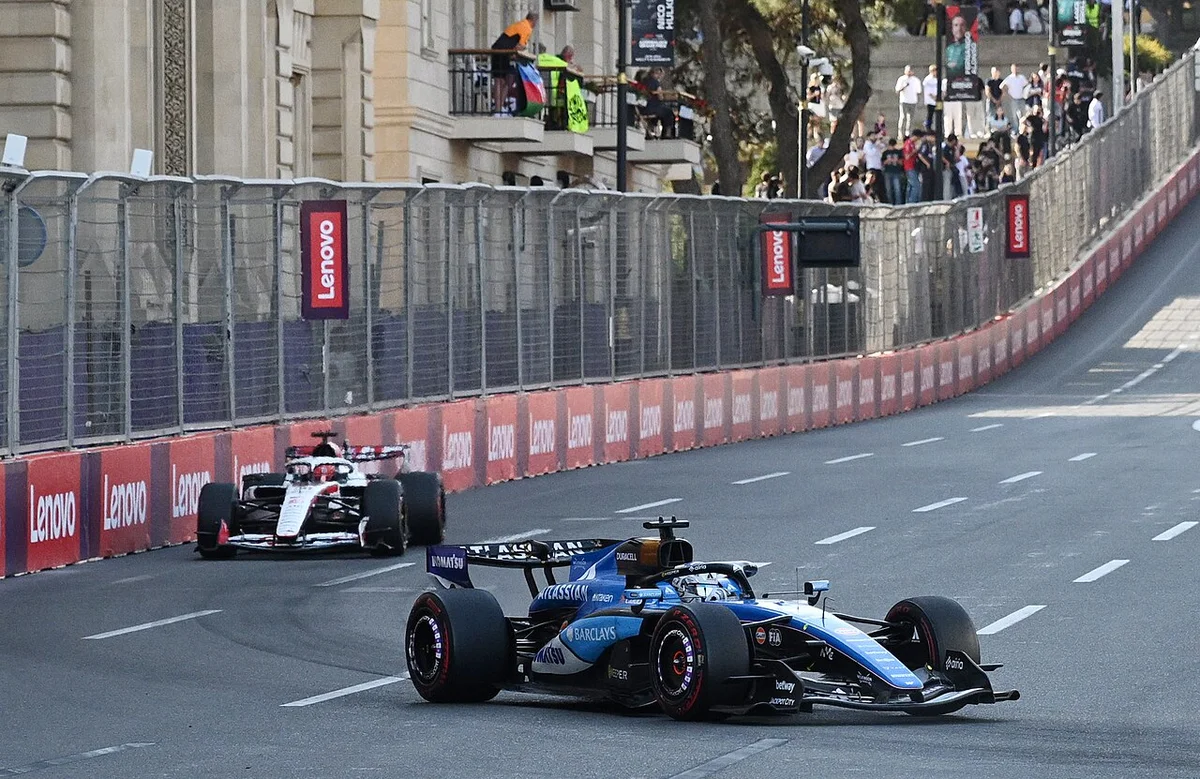


Formula 1 could see a major shift in race day tactics for 2027. As Motorsport.com Italia reports, Pirelli is preparing to dial up tire degradation slightly, moving away from the single-stop processions and long stints that have dominated large portions of recent racing.
Developing rubber without relying solely on virtual models or mule cars is a massive puzzle, especially when just five compounds must handle radically different circuits. This year alone showcased everything from high-degradation sprints to races where a single set of tires could theoretically carry a car all the way to the checkered flag. In several rounds, particularly during the latter half of the calendar, the soft compound surprisingly emerged as the premier race tire because it slipped less and outlived both the medium and hard options—a quirk also spotted previously at Barcelona and mirrored at Singapore.
Alex Albon's theory points toward high tire pressures reducing the contact patch, which ironically elevates the importance of the soft compound's extra grip. Yet, with a significant chunk of grands prix turning into straightforward one-stop affairs, Pirelli has taken note and started reshaping its roadmap. The goal isn't just forcing extra pit stops for the sake of it, but engineering a scenario where distinct strategies become viable options on race day. By making the 2027 rubber softer and tweaking the core structure, the Milanese manufacturer wants to generate more thermal degradation while keeping graining resistance intact.
Simone Berra, Pirelli's chief engineer, noted back in late September that testing with actual current-season machines instead of mule cars provided a much clearer picture. The development path deliberately bypassed chassis balance to focus squarely on pushing the structural limits of the front and rear tires. According to Berra, speaking in Mexico, the target is to bump up degradation by roughly 10% to 20% across varying circuits.
Of course, reality rarely matches raw test data once the pit lane figures out how to nurse a set of tires. Because teams will inevitably manage their pace to protect the rubber, Berra concedes that the effective increase on Sunday afternoons might shrink down to 5% or even less. Even so, the fundamental mission remains clear: open up the pit windows so that charging on an extra stop and nursing a single set can actually square off as equal choices on the stopwatch.


 F1
 F1