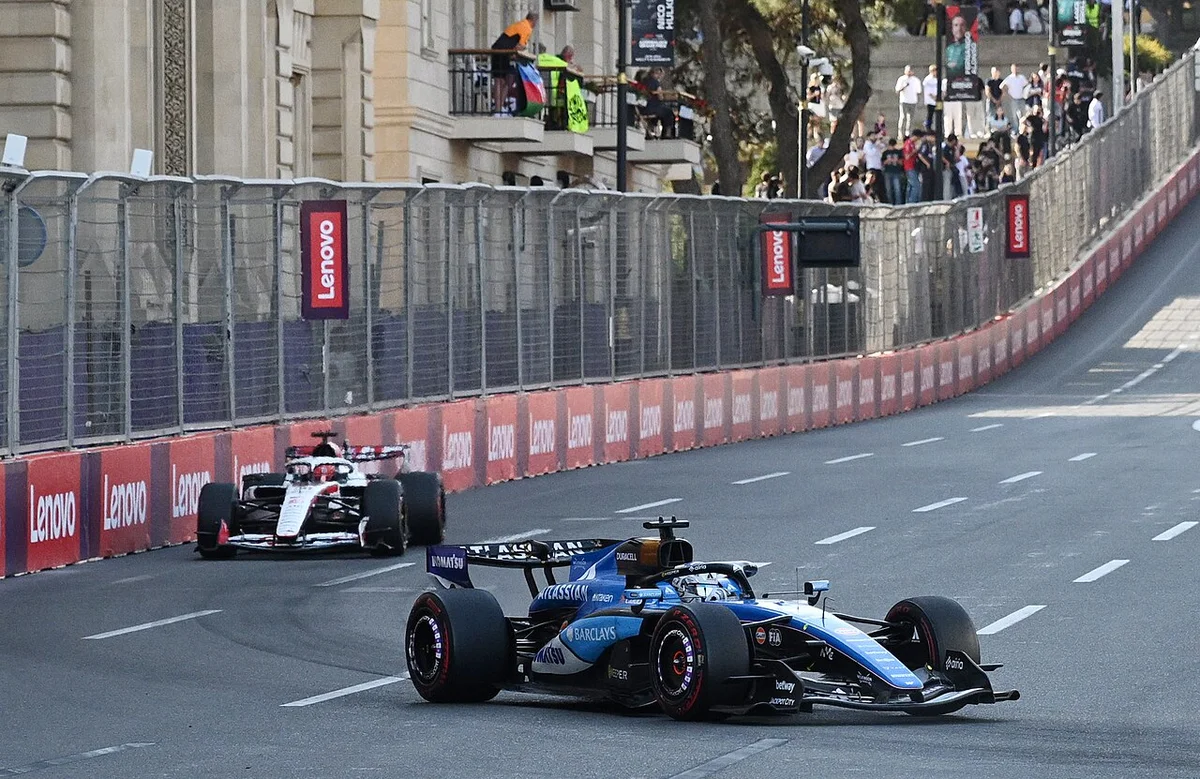


Formula 1 is a ruthless game of tenths, but as The Race reports, Williams has effectively turned its race weekends into private test sessions. With its 2026 campaign derailed by a late shakedown, an overweight car, and a flawed high-rake aerodynamic concept, the team has abandoned all hope of salvaging the current year. Instead, Carlos Sainz and Alex Albon have quietly become the most overqualified test drivers in the paddock, sacrificing Friday practice to build data for 2027.
That reality was embraced months ago. Williams sits ninth in the standings on points and single-lap pace, ahead of only Aston Martin and Cadillac. Speaking at his home race in Madrid in September, Sainz did not mince words about the machinery underneath him. "That's nowhere near where we wanted to be this year, nowhere near what we promised," he said, adding that the team's only real hope was putting all its eggs in next year's basket. When asked directly if that made him a test driver, Sainz was blunt: "I am. And I told the team that I don't care about finishing 15th or 17th. It's more how much can I learn, how much can they learn, in order to get myself and the team and the car in a better place for next year."
The conventional approach to a lost season is simply shifting wind tunnel and CFD focus to the following year. What makes Williams unconventional is how they use grand prix weekends. Alex Albon noted that simulator work at the factory spends almost no time on the current car. At the track, the team runs deliberate experiments to bridge the gap between real-world asphalt and the Grove base models. The clearest example came during practice for the United States Grand Prix at the Circuit of the Americas, where chief trackside engineer Paul Williams admitted the team balanced performance against long-term learning.
Williams ran an FP1 programme unlike anyone else on the grid. While rivals conducted normal runs, Sainz and Albon repeatedly pitted after a single out-lap and a partial push through the first two sectors on hard tyres, spending up to nine minutes in the garage between bursts. Albon did this four times and Sainz five, while the rest of the field managed six such laps combined. Neither Williams driver completed a flying lap until the medium-tyre runs nearly 48 minutes in, and neither touched the soft compound. With his only flying laps deleted for track limits, Albon finished the session 40.416 seconds off the pace, but the team walked away with a massive bank of controlled data.
Technical director Matt Harman explained that the team is intentionally pushing the operational envelope. They are experimenting with cooling systems, physical hardware, and aggressive risk-taking to test the edges of their factory models rather than staying safely in the middle. Yet, this entire strategy hinges on whether the 2027 concept actually works. Sainz pointed out that Williams failed in three key areas this year: getting the car to the track on time, making weight, and nailing the aero concept. While he trusts the first two will be solved, the aerodynamic side worries him most, noting that recent upgrades haven't matched simulator predictions quite as cleanly as they used to.
Even so, the garage has found motivation elsewhere. Pitstops have sharpened dramatically, with the team's median stop dropping from 3.28 seconds before the summer break to 2.79s since, yielding the fastest pitstop of the race in Mexico. And when rare opportunities arise, the team switches back to fighting trim—like maximizing wet conditions at Interlagos to get Albon into the top 10 in qualifying, or preparing a normal programme for Las Vegas. But for the most part, the rest of the year is just an extended test session.

 F1
 F1