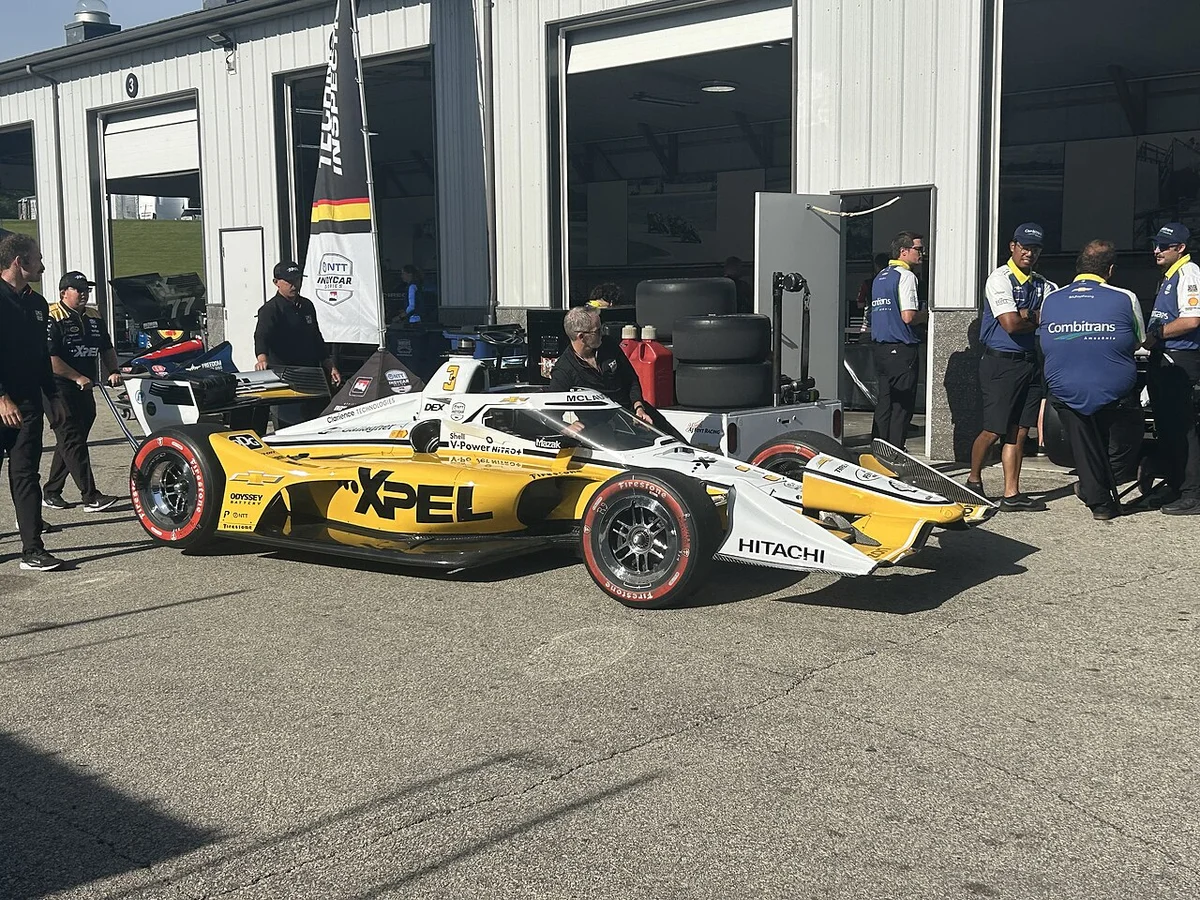


Scott McLaughlin never actually doubted he would get back to victory lane. The real question was simply how long the climb would take.
That climb finally reached its peak earlier this month at WeatherTech Raceway Laguna Seca, where McLaughlin won the NTT IndyCar SERIES season finale. The victory brought an end to a brutal 36-race drought—the longest winless streak of his professional racing career—capping off a turbulent year of rebuilding for both the New Zealander and Team Penske.
Before everything went sideways, McLaughlin looked like a proper championship threat. He kicked off the 2025 Indianapolis 500 presented by Gainbridge sitting fifth in the standings, just 14 points behind Kyle Kirkwood for second, on the back of four top-six finishes in the opening five races. Then series officials discovered illegal attenuators on the cars of teammates Will Power and Josef Newgarden ahead of Indy 500 qualifying, triggering an earthquake inside the team that cost them team president Tim Cindric, managing director Ron Ruzewski, and general manager Kyle Moyer.
The fallout hit all three entries hard. Moyer had been calling strategy for McLaughlin, while Cindric and Ruzewski handled Newgarden and Power. Team Penske eventually righted the ship enough to win two of the final three races of the 2025 season—one each for Power and Newgarden—but the organizational upheaval bled straight into the offseason. Jonathan Diuguid stepped up as permanent team president and took over strategy for Newgarden with Luke Mason as engineer, while Ben Bretzman moved from engineering McLaughlin to an oversight role across all three cars.
That left McLaughlin breaking in an entirely new race engineer in Raul Prados—his first new engineer since joining the series full-time in 2021—alongside a new spotter in David Hunt, though Cindric did return on race weekends to serve as McLaughlin's strategist. Prados brought plenty of sports car pedigree from the IMSA WeatherTech SportsCar Championship, where he competed from 2017 onward in a championship-winning program, but the IndyCar paddock is a different beast entirely. As McLaughlin put it, "This is the most competitive category I've ever been in in my life as well. Even more so than any of the years of Supercars and stuff. I think this category is super tough right now, super tight and you need everything to go right."
The turning point arrived with a full day of testing at Mid-Ohio Sports Car Course in late June, which finally bridged a communication gap between driver and engineer. Through the first 10 races, McLaughlin had stacked up six top-10 finishes and an average finish of 9.3. Over the final eight rounds, that average ticked up to eighth, despite a painful 22nd-place crash while fighting Kirkwood for the win with fewer than 20 laps to go in Washington. Strip away that single incident, and his average finish over the last eight races climbs to a stellar 5.5.
The turnaround showed up everywhere. McLaughlin grabbed fourth at Portland International Raceway and followed it up with second and fourth-place finishes in the Milwaukee Mile doubleheader before converting speed into a win at Laguna Seca, closing out his campaign with three consecutive top-four results.
The secret ingredient was fixing how he and Prados talked to each other. McLaughlin is fiercely expressive on the radio, and Prados initially struggled to translate that heat into the right chassis changes, occasionally making massive adjustments when the machine only needed a tiny tweak.
Their fix was delightfully old-school: they went back to printed track maps. McLaughlin started marking exact problem areas on a scale up to 10 so the team had clear visual data in the truck instead of relying purely on frantic radio chatter under race pressure. That simple shared language turned a struggling pairing into a front-running force, proving that Team Penske's massive restructuring is finally bearing fruit. "I think we're getting our way back to where we want to be," McLaughlin said.