Here's the thing about modern motorsport: the biggest leaps often happen behind closed doors, long before the green flag drops. ECR is making a massive play for the future by bringing cutting-edge Driver-in-the-Loop simulation tools directly into their team operation. Starting next season, the garage is getting a serious upgrade.
Specifically, the team is bringing in the race-proven DMG-1 Driver-in-the-Loop simulator from Dynisma Ltd., a leading UK-based driving simulator technology company. That makes them the very first NTT IndyCar SERIES team to use this particular hardware. Scheduled for delivery in Indianapolis in the first quarter of 2027, the DMG-1 is going to provide dedicated high-fidelity simulation capability for car development, race preparation, and driver training across the wide mix of circuit types that define IndyCar competition.
At this level of racing, the smallest details make a difference, and the closer you can get the simulator to replicating what you actually experience in the car, the more valuable that tool becomes,
Now, the timing here is everything. This significant investment lands right ahead of a major new chapter for the NTT IndyCar SERIES, with the all-new Dallara IR-28 making its competitive debut at the start of the 2028 season. That machine introduces a lighter chassis, a revised aerodynamic concept, and a next-generation powertrain package designed to improve performance, drivability, and wheel-to-wheel racing.
“We began exploring bringing a DiL in-house for over a year now,” said Ed Carpenter, ECR co-owner and CEO. “Simulation is something that we have committed to over the course of our team’s existence. After our visits with Dynisma, they became the obvious choice to move forward and bring this online prior to the introduction of the IR-28. Dynisma has a proven track record, and we are excited to be their first partner in the NTT IndyCar SERIES. Our drivers were very impressed with the capabilities of this product and look forward to having expanded access to the tool. ECR is on an upward trajectory toward achieving its championship aspirations, and this is just one step in that process.”
The new hardware will give engineers and drivers a dedicated environment for repeatable development and preparation away from the circuit. Applications will cover vehicle setup and dynamics development, driver familiarization, tire and balance optimization, race scenario rehearsal, engineering correlation, and the development of future vehicle models. IndyCar’s brutal mix of high-speed ovals, short ovals, temporary street circuits, and permanent road courses places uniquely varied demands on both car and driver, making pre-event preparation essential when physical testing opportunities are limited.
Under the hood, so to speak, Dynisma’s DMG-1 combines ultra-low motion latency of less than 5 milliseconds with primary motion bandwidth exceeding 50 Hz. That gives the setup the responsiveness and motion fidelity required for detailed vehicle development and driver preparation.
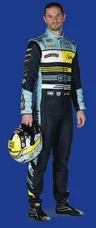
ECR driver Alexander Rossi has been the Chevrolet representative behind the wheel for all tests of the IR-28 so far, and he sees the immediate value of the DMG-1 simulator in developing both the existing and new car. “At this level of racing, the smallest details make a difference, and the closer you can get the simulator to replicating what you actually experience in the car, the more valuable that tool becomes,” Rossi said. “What makes the Dynisma system particularly exciting is the level of responsiveness and feedback it can provide, which is critical when you're trying to understand the balance of the car and how it reacts to different changes. With the IR-28 coming in 2028, that becomes even more important. Having been involved in the development process, I know how significant the differences will be, and having a tool like this in-house will give us an opportunity to better understand the new car and accelerate that learning process before we ever get to the racetrack.”