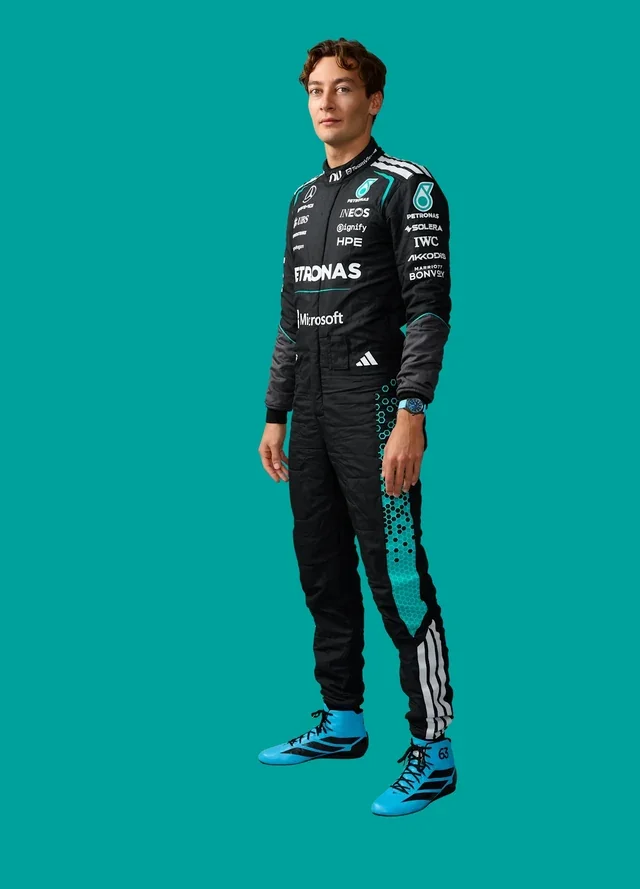


As Autosport reports, Mercedes Formula 1 driver George Russell has sparked a debate by suggesting the governing body should make cooling vests mandatory to protect teams against themselves. Driver comfort in extreme climates has been a pressing topic ever since the 2023 Qatar Grand Prix in Doha, where multiple drivers suffered heat exhaustion symptoms before the event was moved from October to December. In the aftermath, the FIA and all F1 teams joined forces to research and develop a water-circulating cooling vest connected through a tube system for severe conditions.
The rules state the FIA declares a "heat hazard" whenever ambient temperatures for an on-track session are predicted to exceed 31C. This weekend's Bahrain Grand Prix, exceptionally held in Malaysia, marks the third heat hazard of the 2026 season, with a fourth expected next weekend in Singapore. That severe climate prompted Russell to reveal he would love to use a bespoke cooling solution, but his Mercedes squad ultimately decided against building one.
“We won’t be running the cooling vest because we haven’t put the resource into making it robust enough,” Russell told The Times in Kuala Lumpur. “When it works, it works great. So, I would like to wear it this week, and I would like to wear it next week. But the team asked me…'look, we can develop it, and we can put the money towards it [but at the cost of performance]'.”
That trade-off is precisely why Russell wants the FIA to intervene and shield teams from their own resource calculations. He suggested the governing body could provide extra funds in the cost cap or hire an external company to build a universal solution for everyone, ensuring a level playing field where all drivers can wear it.
While some interpretations painted this as a dramatic rift between driver and engineers, the reality is far more pragmatic. Initially, the FIA planned to make these vests mandatory during heat hazards, but drivers disliked the standard design because its benefits faded after a handful of laps, turning it into a hindrance. Consequently, the vest remains optional, requiring any driver who skips it to add a corresponding 0.5kg of ballast to their car instead.
Teams are permitted to design their own improvements within strict frameworks, yet most choose not to bother. Because heat hazards only happen a handful of times per year and rarely reach the extreme levels seen in Qatar 2023, squads deem the engineering resources unjustified. With the drivers having largely dismissed a mandatory rollout anyway, the FIA has left the rule optional with no appetite to reopen the debate.
For Mercedes, every ounce of engineering power and financial resource must go toward extracting raw performance from the W17 machine. As the team fights to defend its position against relentless pressure from McLaren, Red Bull and Ferrari—and with the issue currently framed around comfort rather than immediate safety—the priorities in the garage are crystal clear.