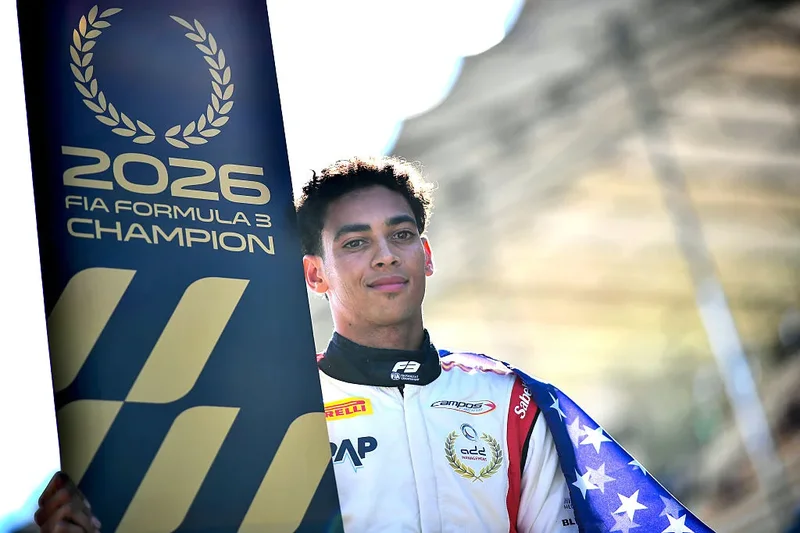

It was, to borrow Kyle Larson's own words, a little anticlimactic. Most dominant results usually are. Even with Christopher Bell and Denny Hamlin arriving at Homestead-Miami Speedway with mathematical hopes, a seven-point haul for Larson in the opening stage—paired with eight points for Bell and five for Hamlin—sealed the deal. Just like that, the Bill France Cup was his for the 2026 NASCAR Cup Series season.
That makes Larson just one of 11 drivers in Cup Series history to hoist the trophy three times. More than that, he is the first to achieve back-to-back titles since Jimmie Johnson completed his streak of five straight in 2009-2010. Placed alongside Johnson, Joey Logano, and Tony Stewart, Larson stands proudly as part of an exclusive group of triple-title winners this century. But the truly fascinating detail about this machine of a driver is that none of his three championship runs looked remotely the same.
Think back to 2021, when he had the absolute best team and simply steamrolled the competition. He secured five regular-season victories—highlighted by three on the bounce midseason, or four if you count the All-Star Race—and stormed into the playoffs as the top seed before adding another five wins across the final 10 races. Given his second chance at top-tier racing by Hendrick Motorsports, he kept his eyes dead ahead and didn't miss a beat.
Last year was a totally different beast. Larson started strong with three wins in the first 12 races, but his regular-season form dipped afterward as he averaged a finish of 17.4 with an 80.2 Driver Rating from mid-May onward. He survived the playoffs almost entirely on grit rather than outright dominance, eventually outdueling Denny Hamlin for a third-place finish at Phoenix to join Tony Stewart (2005) as the only champions to go winless throughout the postseason.
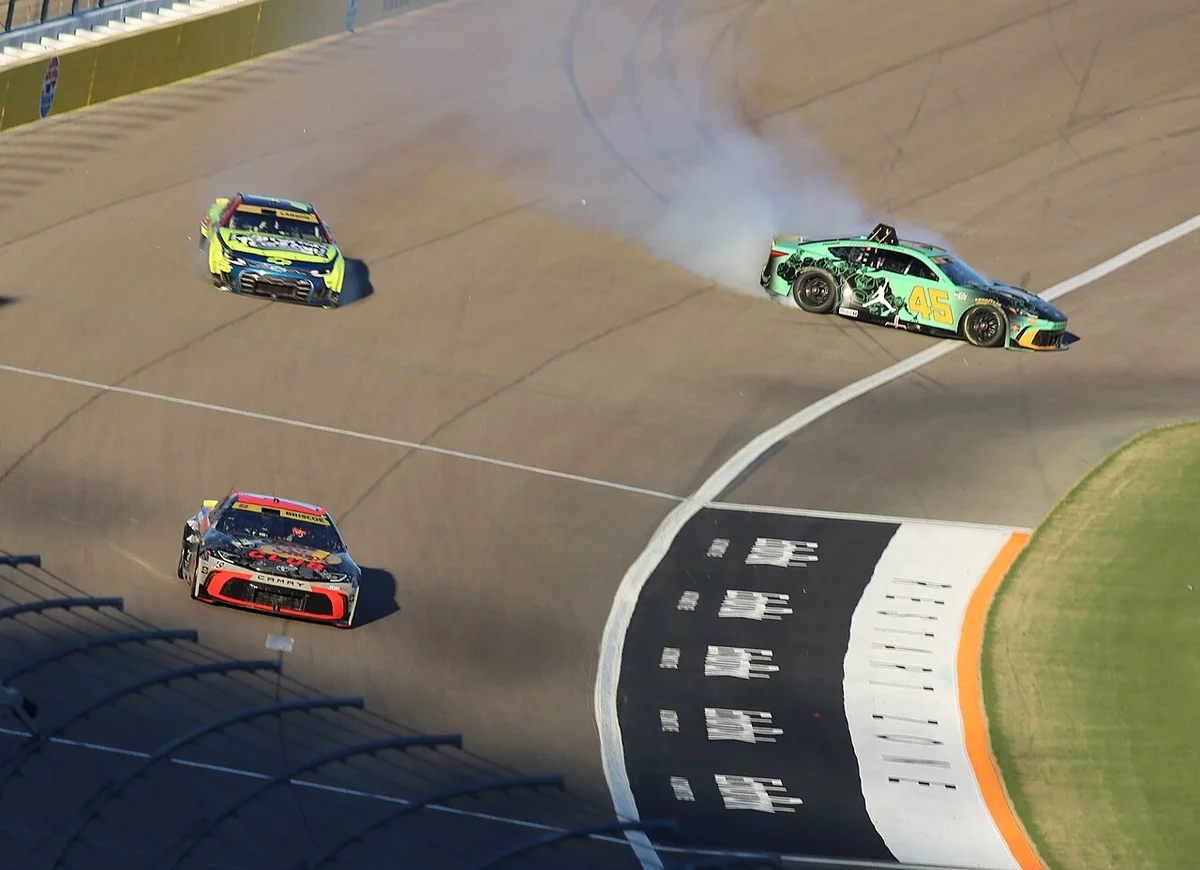
And then came this season, a bizarre inversion of everything that came before. Larson was both winless and surprisingly quiet through the regular season, sliding into the reborn Chase as the No. 7 seed. But that all changed the moment the Chase began. After posting a pedestrian 17.2 average finish and a 93.0 Driver Rating in the regular season, he found an extra 11.3 points in his rating and gained 9.9 positions on his average finish across the final 10 races.
Remarkably, his final numbers wound up looking like carbon copies of the previous year despite the entirely different journey. Last season he put up 3 wins, 15 top fives, 21 top 10s, a 13.2 average finish, and a 94.3 Driver Rating. This time around, he matched it with 3 wins, 15 top fives, 21 top 10s, a 14.5 average finish, and a 96.1 Driver Rating. His postseason average finish actually ranked ninth out of 23 champions since 2004, beating out both of his prior title runs.
Now, the conversation naturally shifts to what comes next. Evaluated at his season age of 33—he turned 34 later in the summer—his three titles place him alongside Jeff Gordon (who reached the milestone by age 26), Jimmie Johnson (age 32), and Richard Petty (age 33). Every single one of those legends went on to capture even more hardware. Given that modern-era drivers typically score more than half their career victories from their age-34 seasons onward, Larson's 35 lifetime wins might not even be halfway to his eventual career total. He has already won by dominating from the front, by barely surviving, and by flipping a switch when the pressure peaked. Whatever path he takes next, the sport is on notice.