
As Motorsport.com Italia reports, the governing body is looking to restrict the flap-closing time for movable wings down to 300 ms for next year, tightening up from the current allowance of 400 ms. This adjustment brings some serious questions about whether teams can keep their current design paths, especially regarding Ferrari and their unique approach.
Looking back at the technical landscape, the FTM system will be banned under the 2027 technical regulations, meaning the blown exhaust engineered by Ferrari will vanish from the grid. But that is not all, as the Macarena rear wing could also face adjustments. The International Federation wants to prevent designers from pushing engineering into exaggerated sophistications, citing track facility safety and cost increases as the main reasons.
This reversible wing concept first broke cover when Scuderia rolled it out during the opening practice session at the GP of China in Shanghai. Since then, it has been developed using different concepts by Red Bull, McLaren, and Racing Bulls, meaning four out of the eleven teams on the grid run it. Safety concerns flared up during the summer following two track excursions by Max Verstappen in the Red Bull RB22, where the Dutchman crashed on the final lap of qualifying at the Austrian GP and during the race at the British GP due to a mechanical issue that was later sorted for Hungary.
Following these incidents, the FIA rightly requested a supplementary investigation from the teams utilizing the Macarena wing. They wanted to check both the four-decisecond closing time and how the cars behaved when the flaps returned to the loaded position, since the airflow does not restore itself instantly once the wing shuts.
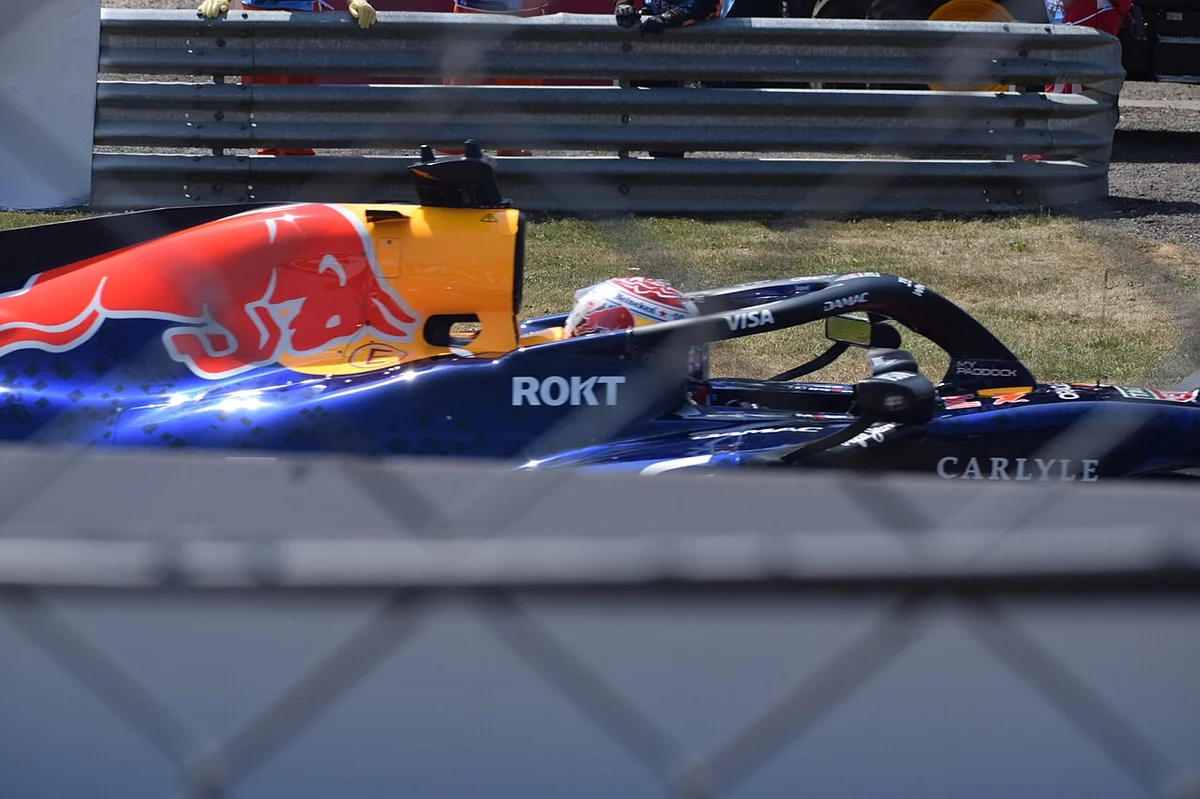
While the solution dodged a total ban for 2027, the governing body still wants to tweak these rotating wings by shaving the maximum transition time from 400 to 300 ms. This regulatory squeeze hits different designs in wildly different ways. The Macarena wings used by Red Bull, McLaren, and Racing Bulls execute a rotation of 150-160 degrees, whereas the Ferrari version makes a massive 270-degree rotation. Meeting that tighter target with a much wider movement will be a genuine headache.
To add to the mechanical intrigue, the central hydraulic actuator has vanished on the SF-26, with the command relocated into the side bulkhead. Aerodynamicists now face a fascinating challenge to see how they adapt. Will Scuderia stick to their guns with the extended rotation, or will the need for a faster transition force them to copy the concepts of their rivals? According to Motorsport.com Italia, folks back in Maranello are not exactly panicking over the rule tweak, suggesting they already have a fix lined up for the red machine.