

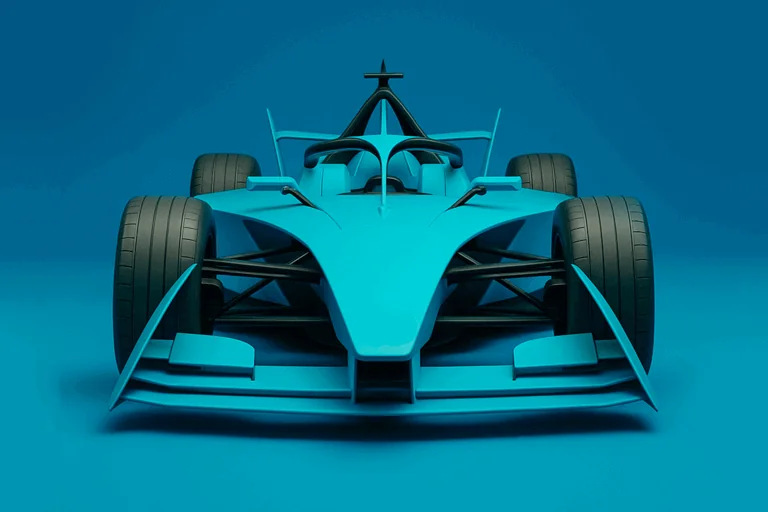
Hold onto your hats, because Formula E is about to change completely. As Motorsport.com reports ahead of the Jarama test, the championship's upcoming Gen4 machine has been developed with a singular obsession: raw, uncompromised performance.
Let us look at the numbers, because they are staggering. In qualifying mode, power is jumping to 600kW—that is roughly 815bhp—while aerodynamic downforce will more than double. Pair that immense output with permanent four-wheel drive courtesy of new tyre supplier Bridgestone, and you have a beast that demands serious respect. FIA Technical Manager Vincent Gaillardot explained that pushing aerodynamic development further was the main focus, backed by intensive tyre work to handle the sheer force.
To manage all that energy and grip, the championship is introducing two distinct aerodynamic packages. The high-downforce setup features a lower front wing with clever airflow channels and a raised, double-flapped rear wing. That configuration is locked in for shorter 30-minute sprint races dubbed E-PrixUnleashed, where drivers can push flat-out. Meanwhile, the low-downforce setup stays for full-distance races where energy management rules the day.
Perhaps even wilder than the aero is what is happening underneath the bodywork. Teams are getting total freedom over their electronic systems. Traction control, active front and rear differentials, brake-by-wire on both axles, and torque distribution will all be completely unrestricted. Drivers will even be able to make real-time adjustments directly from the steering wheel.
Gaillardot put it bluntly: road-going electric cars feature these systems, so manufacturers needed them here. It is a deliberate shift away from banning aids just to manufacture a show, leaning instead into pure technology. An active front differential will tweak balance on corner entry, while permanent four-wheel drive lets teams shunt power between axles to cure understeer or settle a nervous rear end.
James Rossiter, the driver who handled Gen4 track development, notes that teams can use software to compensate if a car is not quite mechanically perfect. It will reward the sharpest, most analytical drivers on the grid. Formula E's new era officially kicked off with the start of the Jarama pre-season test, and the engineering chess match has only just begun.
 Formula E
 Formula E
 Formula E
 Formula E
 Formula E
 Formula E