



The Las Vegas Grand Prix paddock opened its doors to a flurry of major revelations, starting with a 2027 driver announcement and some remarkably blunt long-term future plans. According to The Race, veteran world champions and contenders alike are already drawing hard lines about how much longer they intend to stay in Formula 1.
Fernando Alonso, 45, made it abundantly clear that he will "not be around for the new V8, 100%", using the moment to take another swipe at the current engine regulations. He described the entire V6 hybrid turbo era from 2014 until the return of V8s in either 2030 or 2031 as “16 or 17 years lost of pure racing”. Sergio Perez, nearly a decade younger than Alonso, is equally certain he will hang up his helmet before the V8s make their comeback. Perez explained that his previous stint at Red Bull from 2021-24 was "very intense" and that 2026 has been unremittingly busy, leaving him certain that after his current contract with Cadillac he will not have much energy left.
Perez wasn't finished delivering home truths in Las Vegas, quickly pivoting from team-mate Valtteri Bottas being retained for 2027 to demand sharper operational standards from Cadillac. Pointing to weak pit stops and recent operational lapses, Perez warned that there is "no room for anyone in this team that is just happy to be here" and insisted that personnel need to step up or move out as the squad pushes for progress.
Elsewhere in the driver market, Ollie Bearman is expressing public frustration over his delayed 2027 deal. After establishing himself as Haas’s lead driver over his first two years, the 20-year-old admitted he is "quite disappointed" and that there is "no excuse" not to have his future sorted. The hold-up stems from lengthy, unsuccessful negotiations between Bearman’s management and Ferrari regarding his long-term path, given that Lewis Hamilton and Charles Leclerc are already under contract. While a third year at Haas looks likely, Bearman acknowledged that his ultimate dream of racing with Ferrari presents clear challenges ahead.
F1's plans to introduce biometric tracking and show driver data on TV broadcasts from 2027 through a partnership with Whoop met a divided garage. Four-time world champion Max Verstappen firmly rejected the idea, calling it a privacy issue and stating he simply will not use the device. George Russell questioned the practical value of comparing heart rates across vastly different age groups and physical profiles, pointing out that a 45-year-old Alonso or a 72-year-old fan would naturally sit at different baselines than an 18-year-old. Leclerc, already a Whoop ambassador wearing the hardware while driving his Ferrari, welcomed the FIA-certified version.
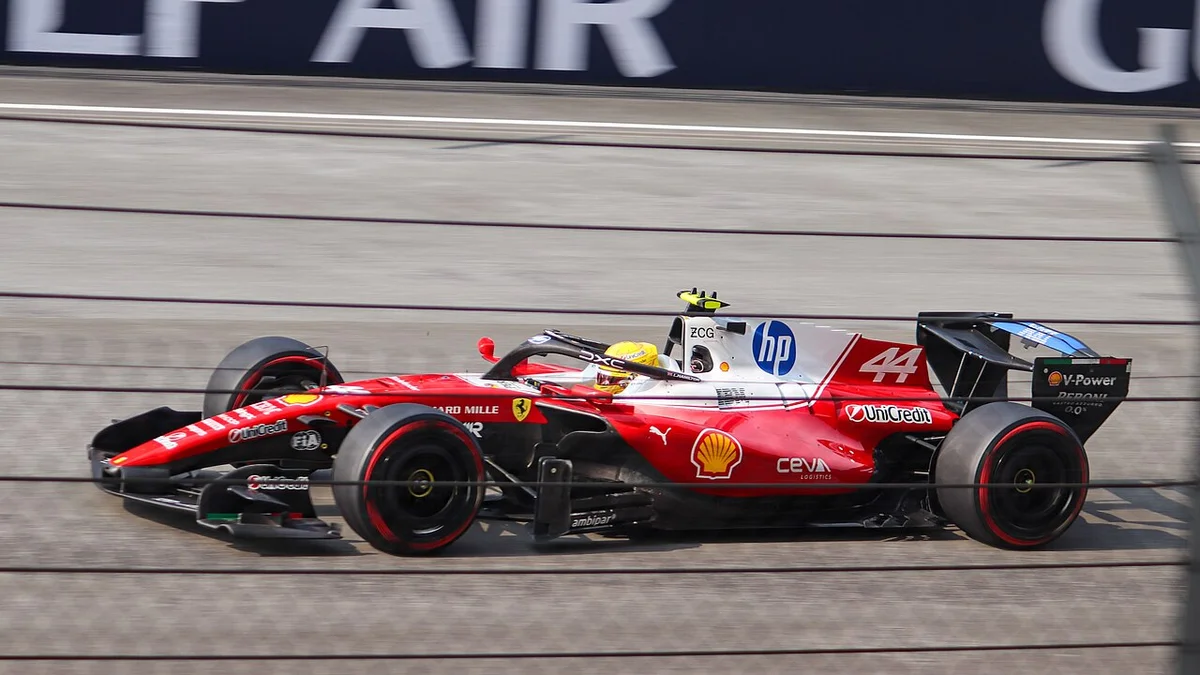
Leclerc also addressed an unscheduled off-track headline after a Daily Mail journalist had their media accreditation revoked by the FIA for the season following an article that referred to the Ferrari driver as a “sneaky little b****d”. Leclerc admitted he was quite surprised by the choice of words, though he conceded that navigating harsh criticism simply comes with the territory in Formula 1.
On the technical side, Mercedes driver Russell heads into the final triple-header of the season feeling chipper about his upgrade package and his 11-9 qualifying record against team-mate Kimi Antonelli. However, Russell noted that cold venues like Las Vegas or the night races in Qatar and Abu Dhabi fail to test his main limitation: race pace and tyre overheating at hot, abrasive circuits. Meanwhile, Antonelli’s stunning title-winning form has been unlocked by aggressive use of brake migration and differential settings, which Mercedes technical director James Allison described as "quite extreme" to generate rotation and corner-entry speed.
Finally, Honda arrived in Las Vegas with an unproven countermeasure for a persistent battery reliability issue linked to structural design within the main enclosure rather than internal cell faults. Trackside general manager Shintaro Orihara admitted the Las Vegas fix is not expected to completely solve the problem, but it should help validate assumptions ahead of a completely redesigned battery for 2027.


 F1

