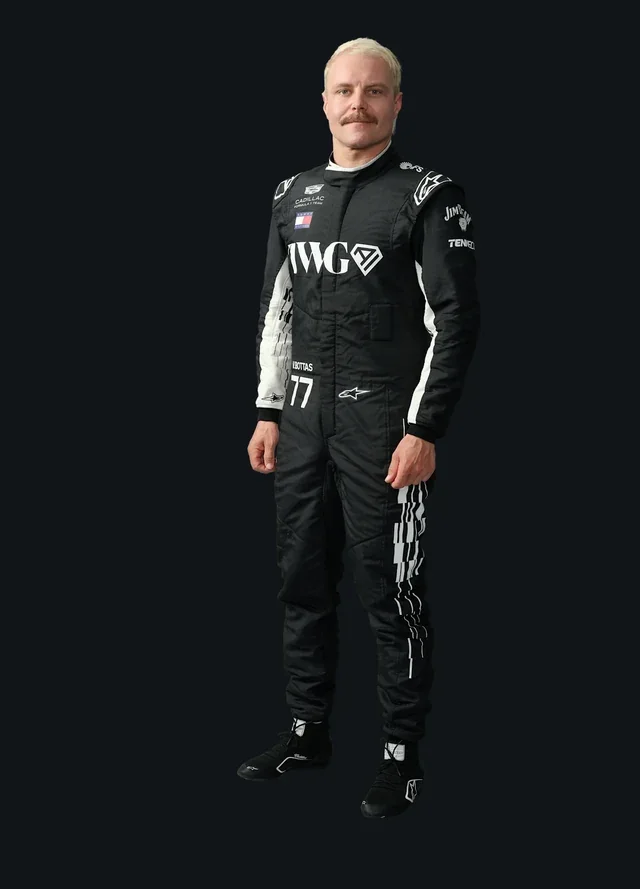


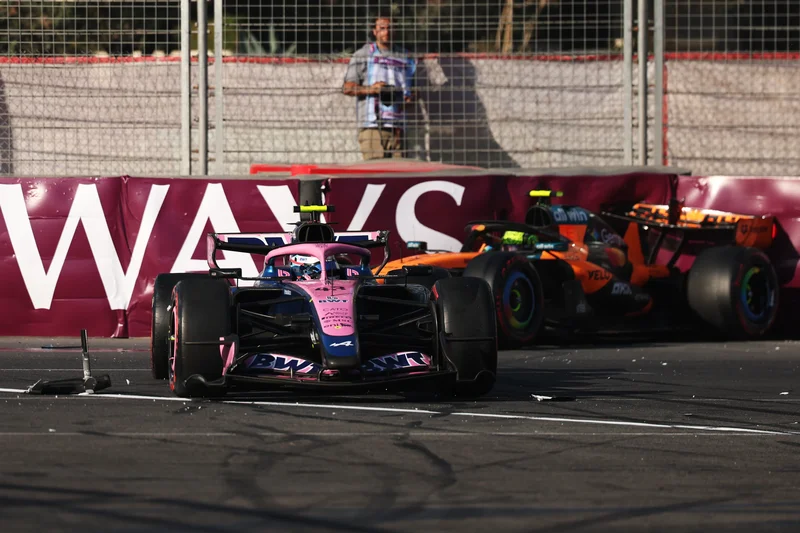
As Crash.net reports, Formula 1's governing body the FIA opted against deploying a safety car or virtual safety car after Valtteri Bottas crashed out late in the Azerbaijan Grand Prix. Bottas was running in last place when he hit the barrier at Turn 15, leaving his wrecked Cadillac stuck on the track.
Rather than neutralizing the race, officials decided to cover the incident using double waved yellow flags. This choice allowed the field, including race leaders George Russell and Max Verstappen, to pass the scene on their way to the chequered flag and engage in a late fight for victory that ended in a drag-race over the line. Russell fended off Verstappen to claim the win by just 0.196 seconds, with green flags after passing the stricken Bottas allowing the pair to contest the closest finish to an F1 race since the 2002 Austrian Grand Prix. The lack of safety car or VSC intervention surprised many fans and raised questions about safety.
The Driver acknowledged that he could have left the area more quickly and confirmed that, in similar circumstances in the future, he would endeavour to do so,
An FIA spokesperson explained that the F1 race director was happy to let the field race to the finish line because drivers were able to cut the apex at Turn 15 and the fact it is a slow corner meant the isolated incident could be successfully managed by double yellows.
As for the crash itself, Bottas said a technical problem on his Cadillac that confused the systems on his car ultimately caused his last-lap accident. “It was quite strange. I went off in turn one on that same lap, so I think the system’s got a bit confused,” the Finn explained. “I’d had a big super-clip, like 100 metres, and then only the front brakes would probably work. So it’s almost like I wasn’t harvesting anymore with the rears.”
Bottas also escaped punishment for remaining in the vicinity of his car after the incident, which prompted a stewards’ investigation. The stewards noted that the driver remained near the car for a relatively extended period rather than moving promptly to a place of safety, as he sought to ascertain whether a technical issue contributed to the incident and believed he had a rear brakes failure.
“The Driver acknowledged that he could have left the area more quickly and confirmed that, in similar circumstances in the future, he would endeavour to do so,” the stewards’ verdict read. Having considered the location of the car and prevailing track conditions, the stewards determined the situation did not present a significant level of danger, ruling that no further action was required.
.webp&w=800)


.webp&w=800)