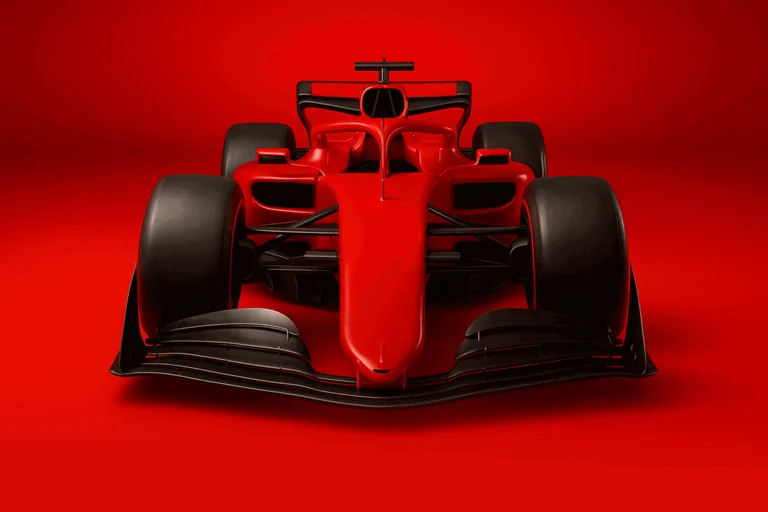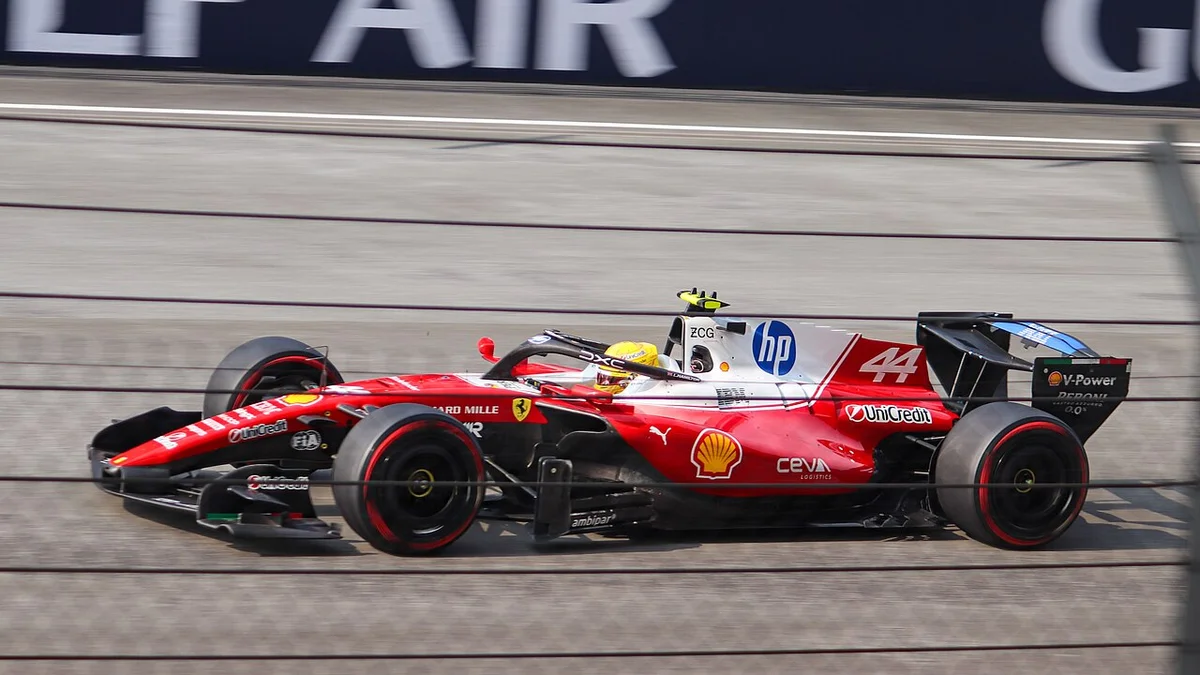


Here is the wild reality of the thing: the pole position was right there, sitting on the table, yet third place still felt like a relief. As Motorsport.com Italia reports, Lewis Hamilton walked away from qualifying with the distinct sense that a masterclass had slipped through his fingers just when the lights got sharpest in Q3. The stopwatch, as always, gave the final verdict to Max Verstappen, who pulled out the decisive lap when it truly mattered. But the Ferrari garage is left chewing on a very real, very heavy slice of regret.
It is not just about a missed pole, but rather the razor-thin margin of error defining this machine. Charles Leclerc had already noted that extracting anything more from the SF-26 is becoming an exercise in pure survival. Earlier in the weekend, the gap to Red Bull lived largely on the straights, where sheer power and aero efficiency did the damage. Today, those straight-line differences shrank, yet the top spot still eluded the red cars.
Over the last three or four races, Leclerc explains, the SF-26 has leaked ground to the competition, forcing the drivers to hunt for the limit in Q3 and roll the dice on risk. The problem? Pushing harder shrinks an already unforgiving operating window into a microscopic sliver. Mercedes has hit the exact same wall with their W17 updates, trading adaptability for raw precision. Add the concrete canyon walls of Singapore into the mix, and the penalty for stepping an inch over that line becomes instantaneous.
While Leclerc wrestled with braking confidence—fighting a stubborn lack of feel that hurt him heavily into turn 13 and turn 16—Hamilton's heartbreak was all about balance. After looking untouchable through Q1 and Q2, the final shootout broke him. “I think it was just a balance thing. The car felt great. I think my team, the engineers, as well as the mechanics between sessions did a fantastic job. The car was exceptional in Q1 and Q2. When I finished those laps, I thought it still had something left to give,” Lewis said.
Desperate to unearth that final tenth, the team dialled in more front wing to chase a sharper front end. It proved to be one step too far. “The only way to try and extract something more was to add load, increasing the front wing angle. I think, however, in doing so, we went over the limit. After that modification it became nervous and unpredictable, and none of the laps in Q3 were really good. So, honestly, I'm grateful to be third anyway, considering those laps weren't well executed at all,” Hamilton added.
Track evolution on a street circuit—especially one washed by rain that stripped away the rubber—made hitting that moving target a nightmare. On his first Q3 run, Hamilton bled nearly two tenths between turn 1 and turn 3 on oversteer, only to scream through the middle sector with a record split that put him over two tenths clear of Verstappen. But the final gamble on wing angle turned the beast nervous, and when he tried to push again, the oversteer came back to collect the debt.
Looking at the raw sector times stitched together, the pole was genuinely within reach for the Ferrari driver. When the performance gap to rivals closes this tightly, every single micro-mistake is magnified, and chasing that missing tenth requires walking a tightrope without a net. Starting from the second and third rows gives them plenty of strategic ammunition for tomorrow, and if the launch off the line goes to plan, the race might just open right up.