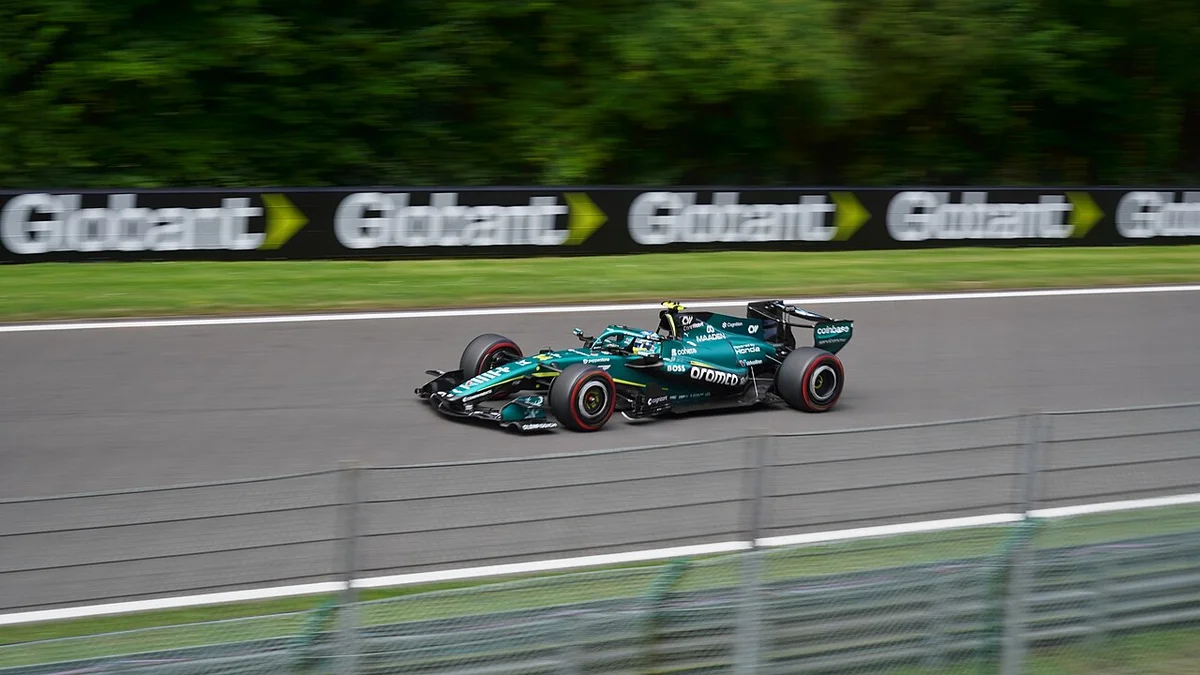


Fernando Alonso has once again delivered unfiltered opinions, taking aim at race control decisions and the sheer technological complexity of modern Formula 1, as Motorsport.com Italia reports. Despite clawing his way to an eighth-place finish at the Grand Premio del Bahrain in Malesia, the Aston Martin driver made it clear he was far from impressed with how the weekend unfolded.
The main flashpoint for Alonso's frustration came before the race even truly got underway. Race control threw a red flag and halted the starting procedure after three cars stalled on the grid—namely the Ferrari of Lewis Hamilton, the Haas of Bearman, and a Cadillac. That stoppage bewildered the veteran Spaniard, who pointed out the double standard when mechanical failures strike smaller teams.
I need to watch the race again, but I think when you get involved in duels, like Lando did with Nico, you consume the battery and then spend two laps recharging it,
"They'll have to explain it to us because, honestly, this year I've retired in half the races and they never stopped the race because we retired," Fernando said. He noted with a hint of irony that panic ensued simply because Hamilton was stranded at the side of the track, requiring a stoppage to let him get going again. "It was a bit strange," he added, noting they would likely seek answers at Singapore.
The chaos on the formation lap was ultimately triggered by exceptionally low speeds causing a standard software glitch that prevented power from being properly redeployed. Yet Alonso's grievance focused squarely on the sporting regulations and race direction rather than the software failure itself.

Beyond the start, the asturiano took direct aim at the sport's heavy reliance on technology, arguing that spectators fail to truly appreciate it. To illustrate his point, he broke down how he managed to fend off Lando Norris during the closing laps of the race.
"I need to watch the race again, but I think when you get involved in duels, like Lando did with Nico, you consume the battery and then spend two laps recharging it," Alonso explained. By managing to have his battery completely full during those two laps and deploying it on the straights, he survived the onslaught, proving that mastering the complex energy systems can either penalize or reward a driver depending on how well they read the race.