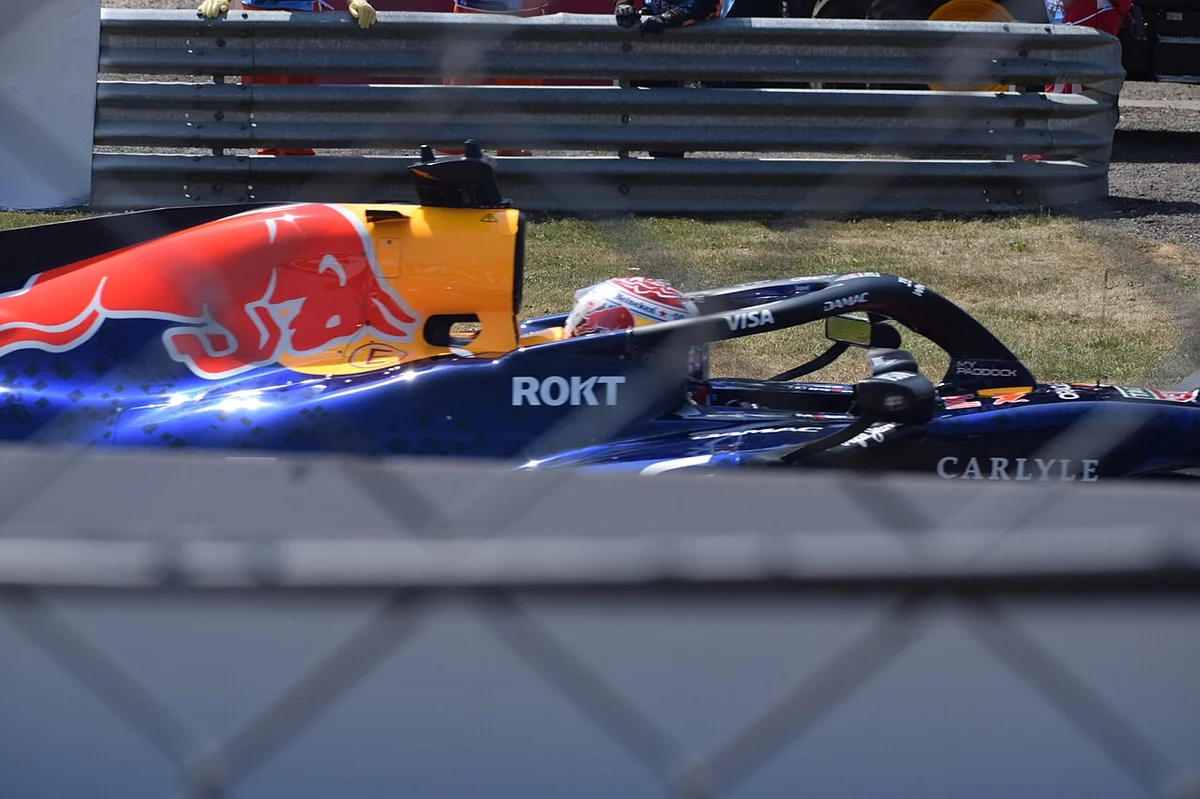


Formula 1 returned to Sepang and promptly scrambled the usual order, with Red Bull and Max Verstappen leaving the usual benchmarks behind as The Race reports. Up until Bahrain in Malaysia, Mercedes and McLaren had locked down 14 of 15 pole positions and taken 13 of 15 wins in 2026. But at this grand prix, Red Bull mastered the unique challenge while Ferrari also outqualified the erstwhile frontrunners, leaving Red Bull team principal Laurent Mekies to admit the turnaround was a genuine surprise.
The shockwaves hit hardest at Mercedes, where a major upgrade package backfired dramatically. Team principal Toto Wolff noted the new parts sent them half a second backwards rather than delivering the expected three-tenth gain, while McLaren also found themselves far less competitive than anticipated. Mekies pointed out that extreme heat, track layout, and an unusually rough surface left most of the field stranded outside their ideal operating windows.
That abrasive surface, matched only by Sakhir in Bahrain, immediately exposed weaknesses. Mercedes suffered most in the slower corners where the asphalt was broken up the worst. Meanwhile, McLaren team principal Andrea Stella was left puzzled as to why their usual high-speed corner prowess from recent rounds in Madrid and Zandvoort simply vanished in Malaysia.
Providing an intriguing technical hint, Stella suggested that certain tarmac conditions force cars to behave in a weird way beyond just tyre management. When asked directly about potential aerodynamic effects, he agreed with the premise. The underlying issue is understood to stem from loose stones in severely rough surfaces generating disturbed airflow, preventing air from flowing smoothly across the car's aerodynamic surfaces.
This phenomenon bears a strong resemblance to the previous ground-effect era from 2022 to 2025, when machines producing massive underfloor downforce proved fiercely sensitive to any disruption in their airflow. Stella insisted that McLaren's data shows the car operated right where it should have to extract mechanical grip and downforce, even if the on-track competitiveness painted a different picture. The team now plans to observe the car, their upgrades, and their relative competitiveness in Singapore before drawing final conclusions.
For Mercedes, deputy team principal Bradley Lord described the situation as a complex three-dimensional puzzle. Championship leader Kimi Antonelli ultimately finished second behind Verstappen, unable to sustain a challenge for the win despite leaping into the lead at the start. Lord explained that the combination of updates, high track temperatures, and the abrasive surface created a set of interactions that dragged the car out of its happy state, forcing drivers to turn the car on the throttle in slow corners and worsening their tyre temperature woes.