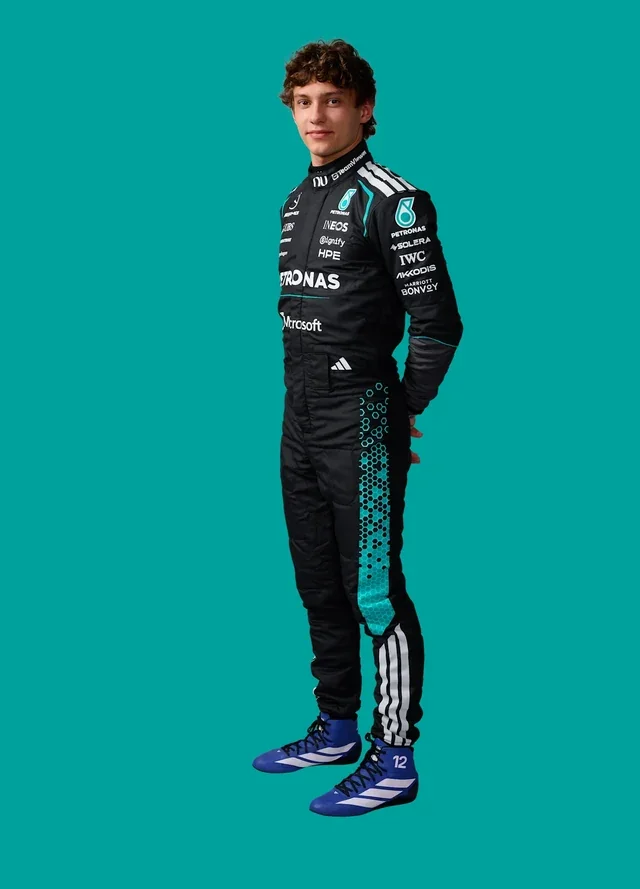


Here is the thing about raw talent: it usually finds a way to embarrass the engineering department. According to Motorsport.com Italia, the latest upgrade package introduced by Mercedes at Sepang is finally starting to deliver the download where it is needed most, but it still hides a few dark corners that require sorting out. Enter Andrea Kimi Antonelli, driving for Mercedes, who managed to drag the machine past its own engineering limitations during a masterclass out in Texas.
The victory secured last weekend at the Circuit of the Americas has practically put one hand on the championship trophy for the young Italian, with the title now within touching distance and ready to be snatched in Mexico City. But make no mistake, that Sunday afternoon in Austin might just be remembered as the true cornerstone of his entire campaign. Toto Wolff was completely estatic after watching the unexpected pole position pulled off by the Bologna native on Saturday, and even more relieved by the subsequent win on Sunday, hailing the performance as the finest drive of the youngster's career so far.
I think that, at the moment, we are following the same approach also with the update,
"For what concerns Kimi, obviously, the main point is that, in my opinion, he drove his best race so far," Wolff stated. "He managed to start on a less performing tyre and then manage the situation at every moment of the race."
What pushed the Austrian boss to heap such high praise on the driver is the current, imperfect nature of the W17. That fresh batch of updates brought to Sepang gave the team plenty of headaches initially, forcing a mountain of analysis behind the scenes. Mercedes appears to have finally stumbled onto the right path, yet there are still raw details to polish. In Wolff's eyes, it took pure driver magic to make up for the car's current boundaries.
"For the rest, the champion — who is not yet a champion, but who has shown exceptional qualities — did something extraordinary," Wolff added. "I believe therefore that he performed above the potential of the car. Maybe it's a bit excessive to say it, but I think his driving style blends perfectly with the car. We also saw it in qualifying, when, on his final lap, he could have gained another one or two and a half tenths."
Down in the Brackley team headquarters, the squad seems to have unlocked the key to extracting pace from the new parts. The aerodynamic load the engineers desperately chased is finally there, shining brightly through the fast corners. Yet, the slower sections remain a puzzle, and the operational window required to exploit the W17's traits continues to be stubbornly narrow.
"I think that the update we introduced on the car is difficult to exploit," Wolff explained. "When we have analyzed everything, we will try to retrace every decision we made and correlate it with the lack of performance on Friday and the relatively better performance on Saturday and Sunday. The positive news, at least, is that the car works. Now it's a matter of widening the operating window."
Comparing this upgrade to past successes, Wolff noted that a truly seamless introduction happened back at Montreal, where you bolt the part on, the driver confirms it instantly, and the expected gains arrive right where development aimed them. By contrast, the current package refused to cooperate at the start. These setup struggles generated major headaches for both drivers and the crew, but identifying the correct trajectory offers massive hope for the future. In fact, the current foundation of the W17 is expected to shape the W18 for next season.
"I think that, at the moment, we are following the same approach also with the update," Wolff concluded. "Our data tells us that the car has the necessary downforce and also indicates where the weak points are. This, after all, has been the direction we followed in development over the last three and a half months. We will therefore continue on this path, trying to correct the elements that do not work as they should."