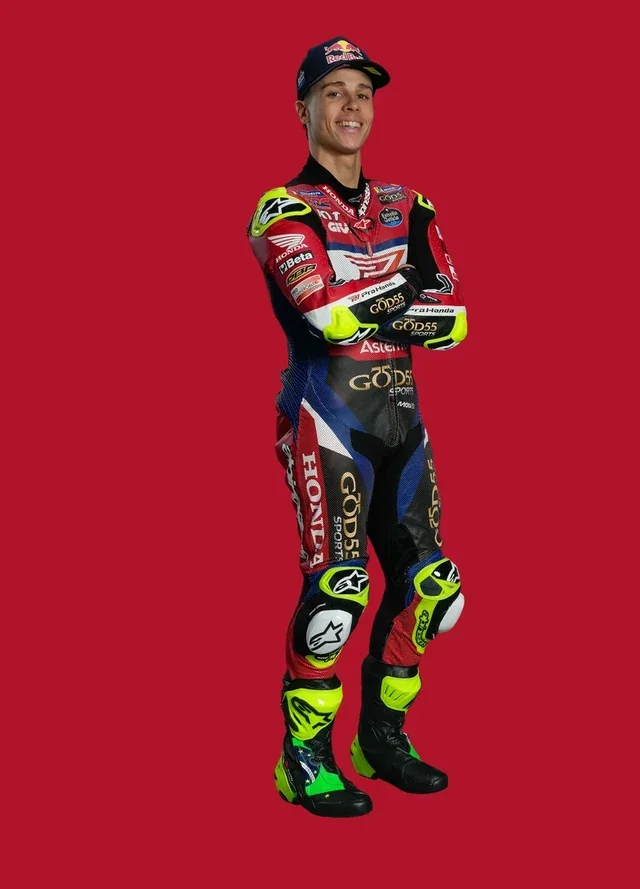
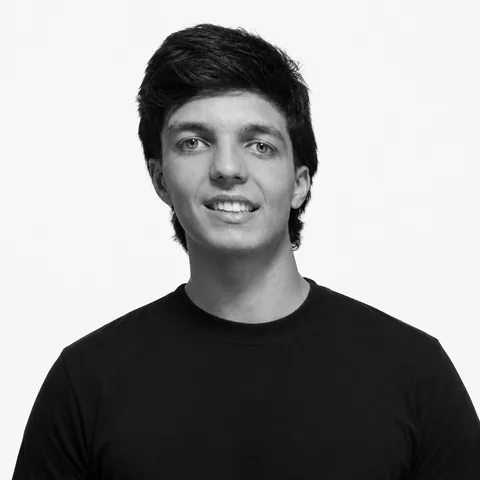
It is the ultimate accolade for being the very best in the world. At the final round of this year’s Moto2 World Championship in Valencia, Brazilian Diogo Moreira joined that very select club after a marathon season for him and his team.
Twenty-two Grands Prix spread over 257 days visiting five separate continents tested everyone involved. The 21-year-old certainly earned his crown as the very first Brazilian Grand Prix World Champion in every single way, before stepping up to MotoGP next season.
History shows that reaching the top has rarely been straightforward. When the legendary John Surtees won the 1959 500cc World Championship, it took him just 41 days and four Grands Prix in a seven-round championship without even having to leave Europe. By contrast, while this year’s 22-Grand Prix season is the largest number of races in one season in the 77-year history of MotoGP, it does not hold the record for the longest duration in time. Back in 1964, the season started at the Daytona International Speedway in America on February 2nd and finished on November 1st at Suzuka in Japan across 12 Grands Prix.
Past decades were often defined by intense confusion and fierce rivalries. In 1967, Mike Hailwood and Phil Read arrived at the final round of the 250cc Championship at the Fisco circuit at Fuji in Japan on equal points. Neither finished the race, which was won by Ralph Bryans. The resulting chaos even confused two of the biggest European motorcycle publications: Motor Cycle News celebrated Hailwood, while Motor Cycling praised Read. Untranslated rules from the original French eventually confirmed that Hailwood was the official 250cc World Champion because the Honda rider had won five Grands Prix compared to Read’s four.
Controversy struck again in 1968 after Honda pulled out and Yamaha dominated the smaller classes. Read and 125cc World Champion Bill Ivy initially agreed that Read should take the 125cc title and Ivy the 250cc crown, a plan demonstrated when Ivy pulled over on the last lap of the Isle of Man TT to let Read win. But Read soon formed his own agenda. After claiming the 125cc title at Brno, he won in Finland before Ivy fought back at the Ulster. The stage was set for a winner-take-all Monza finale where Read beat Ivy to grab his third 250cc World title on equal points, decided by combined race times.
A devastated Ivy walked away from motorcycle racing, later returning on a 350cc Jawa to fund a switch to four wheels before tragically losing his life in a practice crash at the Sachsenring ahead of the 1969 East German Grand Prix. Phil Read was in the thick of the action again in 1971, when five riders—Read, Rod Gould, Jarno Saarinen, John Dodds, and Dieter Braun—started the 35-lap race at Jarama with a chance at the 250cc title. Read took second behind Saarinen to claim his fourth crown.
The closest-ever World Championship showdown also unfolded in the 250cc class at Phillip Island in 2000, won by just 0.014 seconds. Tech3 Yamaha team-mates Shinya Nakano and Olivier Jacque fought a straight winner-take-all duel, where Frenchman Jacque displayed immense patience before slipstreaming past Nakano right as the chequered flag came out.
This season has now crowned three very worthy World Champions under vastly different circumstances. MotoGP World Champion Marc Marquez delivered the greatest comeback in the sport's history, Jose Antonio Rueda dominated the Moto3 season by demolishing the opposition, and Diogo Moreira broke records to claim the Moto2 crown for Brazil.