

As FormulaUno.it reports, the FIA has officially wrapped up its investigation into the software problem that triggered a sudden loss of power across multiple cars during the formation laps of the Bahrain Grand Prix—disputed in Malaysia—forcing a suspension of the start procedure. That wild incident unfolded in weird conditions never encountered before this season, with a wet track and cars running on intermediate tires. Naturally, the Federation did not view the tricky weather as an excuse, digging in to pinpoint exactly why the software managing the new power units behaved so anomalously.
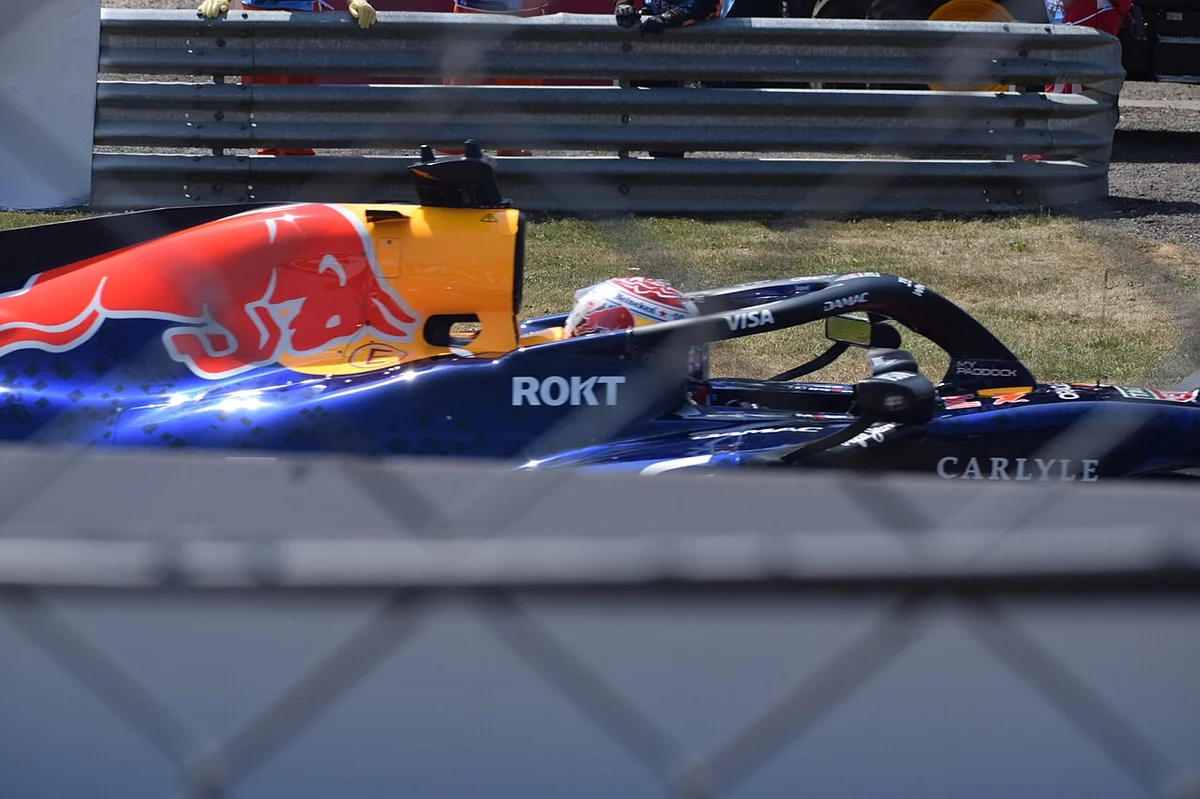
Here is what actually happened on track: according to the FIA, certain machines crawling at low engine revolutions through specific sectors ran into an unforeseen scenario regarding power delivery. A 250 kW reduction had been programmed for those zones to limit the energy unleashed by the power unit in the wet, but on some cars, the drop ended up biting harder than intended. The real trap was that ultra-low engine regime. Once the limiter kicked in, the resulting power deficit ballooned beyond what the software originally planned, and there was simply no way to claw it back within those sectors. That exact mechanism explains the chaos seen during the first formation lap: Max Verstappen's Red Bull slowed dramatically at the head of the pack, while Lewis Hamilton completely lost his throttle. Similar nightmares were suffered by Ocon with the Haas and Bottas with the Cadillac, with both teams running Ferrari engines.
Faced with this data, the FIA has decided to roll back to the Sepang configuration for Singapore, just in case similar weather conditions strike again. A proper software update dedicated to managing wet-weather power units will instead land for the United States Grand Prix on October 25.
The Federation also rolled out fresh measures to tighten up software verification processes, openly admitting that opportunities to run full-scale tests across a Formula 1 season are scarce. Teams, power unit manufacturers, and the FIA will now join forces to beef up simulations, testing, and validation procedures, pulling in the standardized electronic control unit supplier as well.
At the same time, the FIA pushed back against claims that the software was rushed out without proper checks. Before deployment, simulations were reportedly run alongside teams and engine builders, and the package even saw real-world testing during FP1 at the Belgian and Dutch grands prix. When the chaos struck in Malaysia, the response was blisteringly fast: at 15:45 the start procedure was suspended after two formation laps, by 15:50 the FIA had already traced the root cause and shipped out an updated configuration, and by 16:20 every single team had installed and integrated it. At 16:22 the ten-minute warning lights flashed, and by 16:33 the cars rolled back out for a fresh start. The Sepang scare ultimately served as a brutal stress-test, forcing a rapid system fix ahead of future wet races with that new patch locked in for Austin.