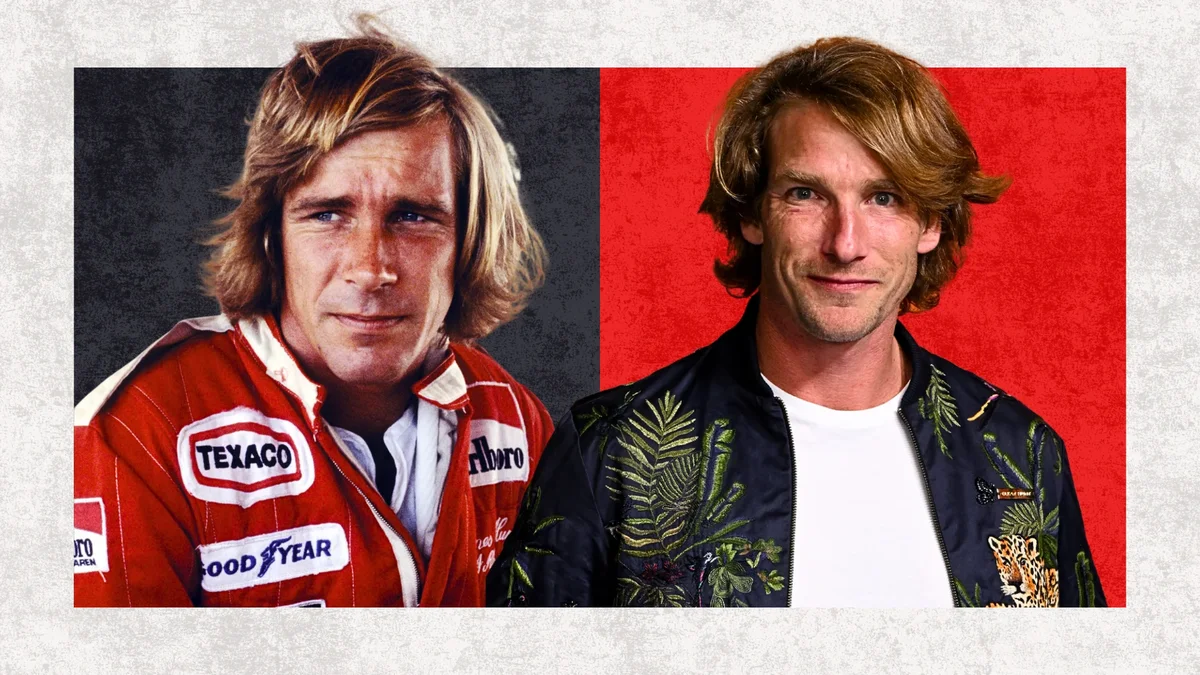

That wild 1976 Formula 1 season remains the stuff of motorsport legend, and nobody feels that weight quite like Freddie Hunt. Looking back for F1 Icons, the son of the 1976 World Champion James Hunt breaks down a campaign that was simply dripping with drama. It is a staggering thought that modern television cameras weren't capturing every inch of it the way they do today, leaving fans to piece together the sheer scale of the spectacle through archives and reading.
James rolled into the season as a complete unknown quantity. Stepping straight into the McLaren and instantly bagging pole position at the first race in Brazil meant nobody knew just how fast the man actually was—least of all teammate Jochen Mass, who naturally figured he ought to be the lead driver. With Niki Lauda qualifying right alongside him from the very start, the tone for a brutal, unforgettable year was set. Back then, drivers had to survive alongside each other with mutual respect on the track, knowing that a single mistake could easily prove fatal.
The championship battle itself featured one of the most stunning points comebacks the sport has ever witnessed. Being 17 points behind Niki with just three races left on the board made the climax intensely dramatic. Yet it was the final showdown at Fuji that sticks out in Freddie's mind for entirely chaotic reasons. Having to change tyres when others did not, and missing the crucial trick of driving through puddles to cool them down, meant James arguably messed that race up. Freddie reckons it was simply a case of overwhelming adrenaline and focus, though the exact cause remains anyone's guess.
Before that messy finale, the Canadian and United States Grands Prix saw a different kind of driving entirely. With the pressure entirely off and the points from the British Grand Prix stripped away, James simply threw caution to the wind. He enjoyed the machines, won both races back-to-back, and dragged himself right back into championship contention. His rhythm, confidence, and consistency all clicked into a higher gear when the stakes were at their absolute highest.
What truly elevated the era was the genuine bond between the main protagonists. Freddie notes that his father and Niki were very good friends, sharing a rivalry that was genuinely exciting rather than toxic. Long before they reached the pinnacle of F1 during their F3 days in Germany or Austria, Niki even rushed to bail James out of a jail cell, telling the police that the detained Englishman simply had to be released so he could race against him the following morning.
Beyond the racing exploits, the man behind the helmet was defined by a rare decency. Freddie describes a figure who treated everyone with absolute equality, equally comfortable chatting with the Queen or a local binman without changing his demeanor by an inch. He could be volatile and explosive after climbing out of a cockpit, or wildly mischievous in social settings—like the time he turned a miserable, wet wait at a bus stop into an actual fun experience with no alcohol in sight. It all adds up to a legacy built on pure pride, deep respect, and the memory of a fiercely dangerous era.