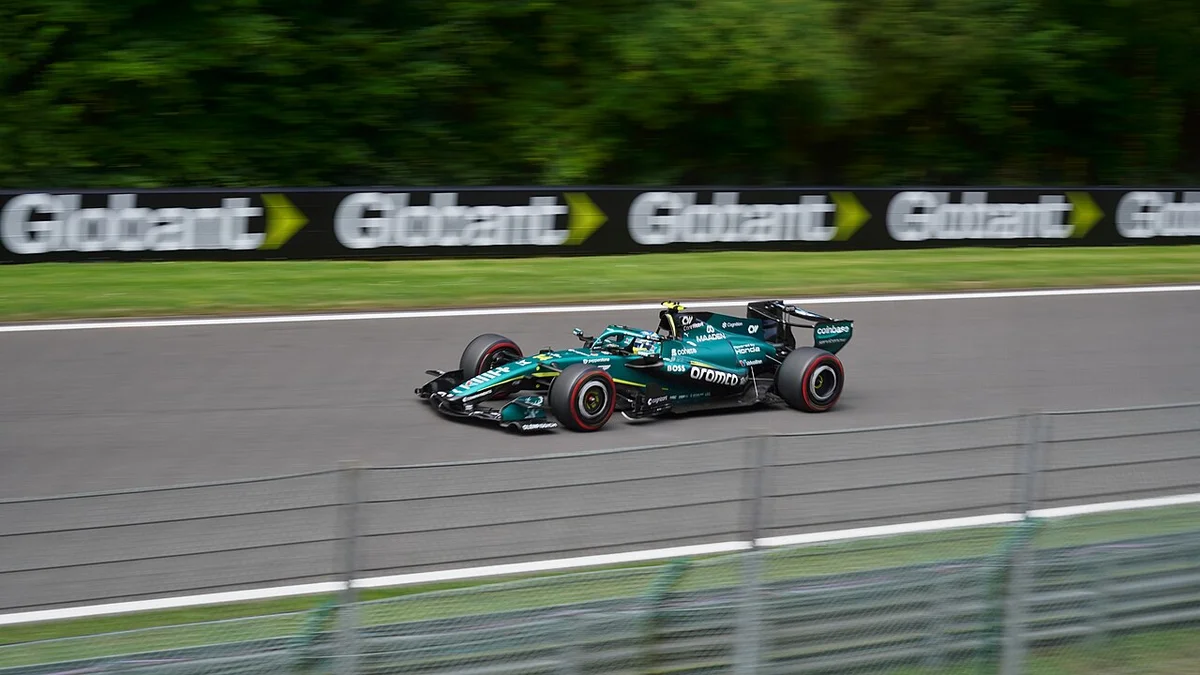


That is not what you want to hear if you are building an F1 machine. As Autosport reports, even after deploying its second ADUO upgrade in Madrid, Honda is still wrestling with stubborn turbo lag that has left driveability on energy-rich circuits well below expectations. Following a surprisingly strong weekend in Malaysia, hopes were high for Aston Martin at the Marina Bay Street Circuit, a venue that should have suited the AMR26 on paper. Instead, the weekend brought a disappointing reality check, with Fernando Alonso pointing the finger directly at the Honda power unit's driveability after the race.
When Honda packed everything up and shipped the units back to Sakura for a proper look, the hardware checks came back completely clean. No broken parts, no smoking gun. The culprit was purely turbo lag—that frustrating delay between standing on the accelerator and actually feeling the turbo bite. It is an issue that first reared its head with the new power unit specification introduced at Zandvoort, prompting Honda to spend its second ADUO token of the year in Madrid on a brand new turbocharger meant to wipe the problem out entirely.
Yet, as Honda's chief trackside engineer Shintaro Orihara admitted, the beast came back to bite them unexpectedly under the lights in Singapore. The unique track layout combined with an energy-rich environment created unstable acceleration for the driver. Orihara explained that while deploying the MGU-K can normally help mask turbo lag by keeping the engine running at a high operation point during off-throttle sections, circuits packed with energy recovery challenges make it nearly impossible to harvest enough power to keep the system happy. When that harvesting falls short, the engine operation mode simply cannot control the lag.
The fact that Sakura's hardware benches found zero faults makes the situation tricky, as it means the exact same gremlin could pop up the moment Aston Martin rolls into another energy-rich track. Thankfully, the fix won't require a hardware redesign. Instead, Honda is focusing on countermeasures through software and settings to better match driver demands. Orihara confirmed they have learned crucial lessons from the weekend and are actively preparing those software fixes, though they still need to verify how the power unit responds to them.
On the team side, the mental shock of the weekend was just as hard to swallow as the mechanical one. Aston Martin chief trackside officer Mike Krack admitted that the unexpected success in Malaysia completely distorted their expectations heading into Singapore, pushing their hopes beyond realistic levels and making the eventual slump feel all the more painful. Krack pointed out that simulators simply cannot paint a complete enough picture to predict how lag and MGU-K drops will ultimately wreck driveability on a real circuit.
Ultimately, the team is taking away a very clear psychological lesson alongside the engineering data. Krack emphasized the need to properly regroup, dissect where they lost out, and manage expectations far better in the future by keeping a closer eye on potential risks. Whether those software countermeasures can tame the turbo in time for Austin remains to be seen, but Honda and Aston Martin are certainly doing the hard homework right now.