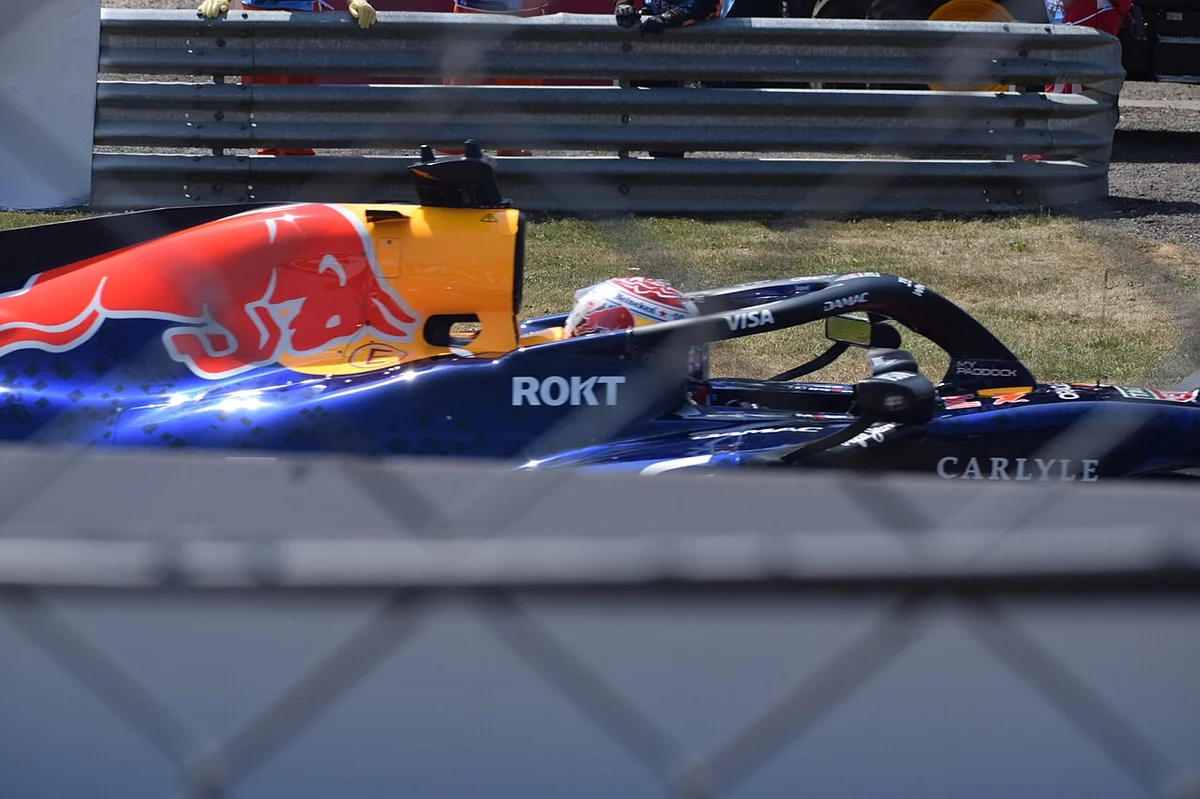


Here is the thing about Friday practice: sometimes the stopwatch tells a very clear story, even if the gaps remain tight. As Motorsport.com reports, Max Verstappen emerged as the fastest driver in the long runs during the second free practice session for the Formula 1 Bahrain Grand Prix in Malaysia, setting the pace on medium tyres. Once stint lengths and tyre compounds were accounted for, the Red Bull driver came out ahead of the competition.
Behind him, George Russell finished +0.19s behind in the Mercedes, while Ferrari driver Charles Leclerc followed in third with a +0.32s deficit. Red Bull showed formidable pace over both single laps and long-run distances, pointing to a slight advantage for the recent Malaysian Grand Prix winner, though the leading margins remain too slender to call a definitive pecking order just yet.
Evaluating Mercedes and their new components proved complicated. The team arrived with an extensive update package, but after two sessions, assessing the revised car's true potential is premature. Compared to the previous weekend in Azerbaijan, Mercedes appeared to lose some speed, though the abrasive asphalt and numerous high- and medium-speed corners of the Malaysian circuit have historically posed a tough challenge for the team.
Meanwhile, the situation at McLaren looked quite different. Lando Norris took fourth in the long-run analysis with a deficit of 0.43 seconds per lap behind Verstappen, while Oscar Piastri placed sixth at 0.78 seconds back, positioning McLaren as the fourth force behind Red Bull, Mercedes, and Ferrari. Curiously, McLaren lost significant time in the second sector during single-lap running—an unexpected drop given the medium- and high-speed corners should suit their car, leaving questions as to whether a low-downforce set-up choice was to blame.
Further down the order, a fierce midfield battle is brewing. Pierre Gasly led this group for Alpine with a deficit of 1.28 seconds per lap, closely followed by Liam Lawson at +1.63s and Nico Hülkenberg at +1.75s. Audi looked far more competitive here than in Baku, benefiting from a shift toward cornering performance and tyre management, while Aston Martin also showed improvement at +1.97s. Conversely, Haas at +2.04s, Williams at +2.58s, and Cadillac at +2.92s faced severe struggles against the high tyre degradation and medium-speed corners.
With rain forecast, teams rushed their long runs early, though the precipitation ultimately stayed away. Both the C4 soft and C3 medium tyres showed average degradation of around three-tenths of a second per lap, a heavy toll driven by the abrasive track surface and sustained lateral loads. With no team running the hard C2 compound during the session to save fresh sets for Sunday, high wear rates suggest a two-stop race strategy is firmly on the cards.