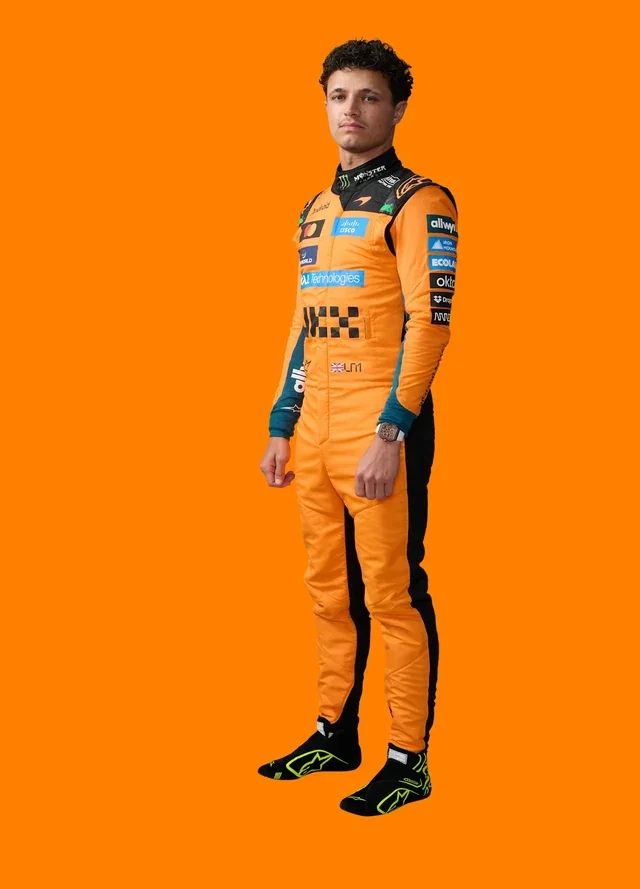


To get a lap out of the MCL40, a driver has to extract absolute perfection, and as Lando Norris admitted after practice for the Formula 1 United States Grand Prix in Austin, you just cannot be perfect. As Motorsport.com reports, those two mid-season wins for Norris now look more like a brief purple patch than a true competitive resurgence for McLaren following a difficult start to the 2026 campaign. Slow-corner performance and straightline speed have remained major hurdles, compounded by a nervous demeanour that leaves the machine on a knife edge through every single corner.
Developing the car has meant balancing raw theoretical performance with making the machine benign enough for the drivers to actually tap into that potential. Norris explained that the machine demands so much concentration and ability behind the wheel that it becomes mentally draining just trying to string laps together in qualifying. That razor-thin operating window explains why pulling off pole positions earlier in the year felt so rewarding, but also why maintaining that level of consistency has proved nearly impossible.
The underlying issues go far beyond aerodynamics alone. While Norris prefers a shallower approach to the apex and heavily overlaps his braking and throttle, modern F1 design trends favour a high degree of anti-squat and anti-dive geometry. That setup locks down the aerodynamic platform but suffocates the transmission of vital feel from the tyres, leaving Norris unable to fully trust either end of the car. It is precisely why the team has led with a revised front-end geometry and reprofiled diffuser furniture for this latest Austin outing, with subsequent phases scheduled to arrive in Brazil and Las Vegas.
Those incoming components were signed off between the Dutch GP in late August and the Italian GP in early September, with all of McLaren's design resources already fully dedicated to the 2027 car. Team insiders note that a new aerodynamic direction was identified back during the April interregnum caused by the cancellation of the Bahrain and Saudi Arabian grands prix. Although introducing a new concept mid-season often leads outsiders to prematurely write off an upgrade package if it fails to deliver an instant lap time explosion, the engineering reality is simply about establishing a brand new baseline.
McLaren first rolled out elements of this new philosophy at the Azerbaijan GP with a radical sidepod profile and heavily revised floor and rear suspension geometries, though team principal Andrea Stella was careful to manage expectations regarding immediate lap time gains. Circumstances in Baku further masked the potential of the new setup, as a fuel injection problem stymied Norris while Oscar Piastri fought to keep the Red Bulls of Max Verstappen and Isack Hadjar at bay before slipping out of the points. Stella emphasized that the Baku step was purely foundational for the parts arriving now in Austin and the upcoming rounds, with the ultimate goal of returning the team to regular podium contention and fighting for victories once the full package is bolted on.
Fixing instability while adding performance is a headache hitting other squads too, with Mercedes even running two different car specs in Singapore before committing to their latest version in Austin. As Norris pointed out, bolt-on parts do not automatically translate to straightforward lap time gains. Until the team can tame the nervous nature of the MCL40, extracting its performance will remain a brutal, exhausting task.