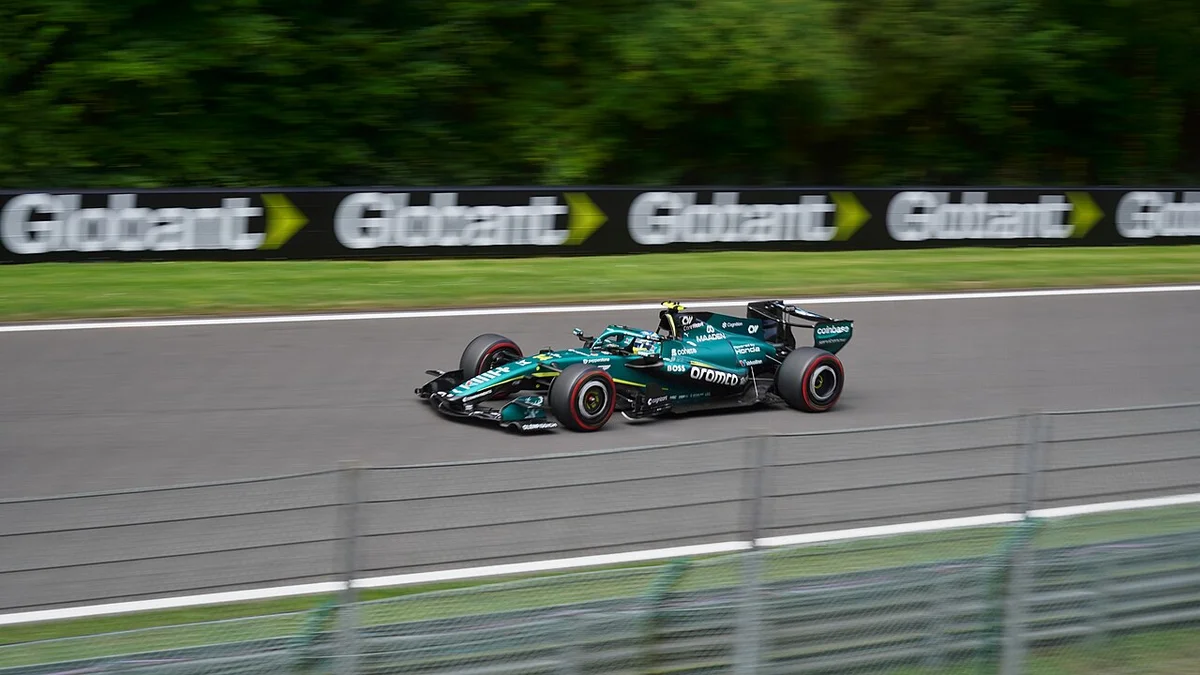


That aggressive high-rake gamble on the Aston Martin AMR26 simply did not pay off. As Motorsport.com Italia reports, the team's legendary designer Adrian Newey has openly admitted that the bold aerodynamic choice proved to be a dead end, forcing the Silverstone squad into a tactical retreat with the revised AMR26B specification.
Time was the ultimate enemy during the birth of this machine. Development work on the AMR26 was severely choked by delays, not hitting its stride until April when the new wind tunnel finally passed its calibration hurdles. That four-month slip in the schedule left the engineering group scrambling, forcing them into aggressive directions to claw back time before major component deadlines rolled around.
Speaking in Austin, Adrian Newey laid out the tight timeline clearly. “When I arrived it was the beginning of marzo and, up to that point, very little aerodynamic research work had been done,” he said, noting the compressed windows for bodywork and wing design that followed. Armed with the belief that the regulations might favor a high-rake philosophy—an approach he famously championed during his Red Bull days—the gamble was taken. But it quickly became apparent that while the concept had distinct strengths, its weaknesses ultimately forced a retreat to a more balanced, intermediate compromise.
Rigid modern regulations make managing the turbulent wake of rear tires vastly more difficult than it used to be. When paired with the relentless headache of ground clearance and circuit bumps—especially punishing in Austin—extreme rake angles quickly lose their charm. The upgraded AMR26B version brought a decisive step forward, showing genuinely encouraging chassis traits in high-load sections like Malaysia, even if the power unit and drivability limitations from Honda remain a persistent hurdle.
The broader puzzle of floor heights and aerodynamic platforms continues to confound engineers across the pitlane. Andrea Stella previously explained that finding the optimal operating window is far from straightforward, relying heavily on complex relationships between fixed components like rear-wheel winglets and a moving floor. With smaller floor surfaces and tighter restrictions on external wake management this season, chasing extreme ride heights simply yields diminishing returns.
With development on this year's charger wrapped up early, Aston Martin's gaze is already firmly fixed on 2027. The hope in the garage is that a winter step from Honda combined with a refined chassis concept will finally unlock the potential that this initial high-rake gamble failed to deliver.