

Welcome to Mexico City, where the air is thin, the turbochargers scream for mercy, and the technical headaches are entirely unique. As The Race reports from the paddock on day one of the Mexican Grand Prix, Formula 1's hybrid V6 engines are facing an unprecedented test this weekend. For the first time in the modern era, these power units are running without the MGU-H. Shintaro Orihara, Honda’s trackside engineering chief, points out that hitting sufficient boost pressure is "quite challenging" now that the complicated and expensive component has been ditched. Last year, the MGU-H provided vital support even at idle; now, turbo lag becomes the dominant headache for every manufacturer on the grid. Audi driver Gabriel Bortoleto admits it is not going to be easy, noting that the slow, first-gear final sector requires getting back on the power instantly just to keep the revs alive in a machine whose bigger turbo will already struggle at high RPM.
It gets worse when you look at the battery. Without an MGU-H to keep the turbo spinning off-throttle, teams are forced to run the engine harder than necessary in slow corners, using the remaining MGU-K motor as an engine brake to store power. But Mexico's layout offers precious little breathing room. With three long straights demanding almost all the electric deployment, the battery drains instantly, fills right back up through the subsequent braking zones, and hits capacity by the slowest corners. With nowhere left to put the extra energy, the engine has to ease off, dragging the turbo down with it and leaving a massive power gap on corner exit. It is an absolute tightrope walk between straightline speed and slow-corner drivability.
Aerodynamically, the circuit has transformed into a total outlier under the 2026 rules. Oscar Piastri explains that while this track previously offered Monza-style levels of downforce, teams no longer drop downforce for Monza in the same way, leaving Mexico standing completely alone. Max Verstappen notes that the 2026 cars already carry far less grip, and with teams now running essentially just one wing, there is a severe lack of downforce. Lewis Hamilton estimates a 25 or 30 percent drop compared to the last time F1 raced here, though he hopes his Ferrari can switch the tires on, pointing out that his team's smaller turbo should cope better with the high-RPM demands.
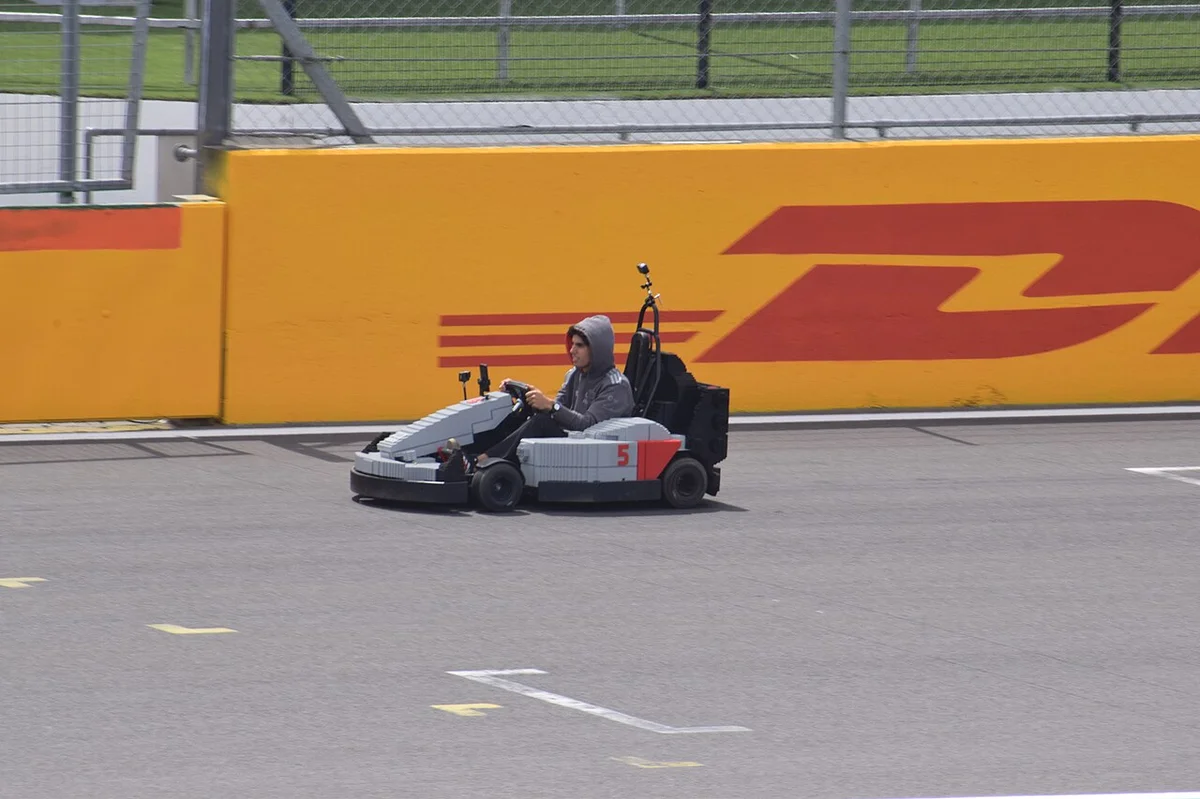
Away from the engineering nightmares, Sergio Perez managed to thrill fifty thousand fans on the streets of Mexico City ahead of the weekend. Lacking a previous-generation F1 car because of Cadillac's newcomer status—and barred by rules from using current machinery—Cadillac made the pragmatic choice to borrow a modified Formula 2 car from Apple that was previously used as an F1 machine in Brad Pitt's upcoming movie. Perez called it really enjoyable, praising its cooling system which allowed him to pull endless donuts for an ecstatic home crowd while bracing for what he expects to be a painful weekend on track.
Red Bull's drivers are still licking their wounds from a messy weekend in Austin. Max Verstappen and Isack Hadjar finished third and sixth respectively after a comical fumbling of starts, pitstops, radio communication, and strategy. Both drivers agree that strategy is the major short-term fix needed, with Verstappen noting all the little car and engine issues that cost them time. Hadjar admitted his post-race comments lacked filter, rowing back slightly on his blunt criticisms while still maintaining that Red Bull got it wrong on strategy by failing to put both cars on the faster one-stop race.
Meanwhile, Fernando Alonso stood firmly by his complaints regarding the aggressive driving standards at the back of the grid during lap one in Austin, questioning the necessity of all the flying front wings. His rivals were quick to push back. Alex Albon admitted it is not nice to hear such criticism while defending the strong standard of drivers at the back, a sentiment echoed by teammate Carlos Sainz—who blamed dirty air and the concertina effect for the chaos—and Pierre Gasly, who believes driving standards have actually improved over the years.
In factory news, Audi secured a massive long-term reinforcement by hiring Thomas Fuhr, the former managing director of Mercedes' F1 engine programme who laid the foundations for their 20th-century hybrid dominance, as CEO of the Neuburg engine project. While it comes too late to save Audi's compromised first year on track, Bortoleto welcomed the addition of an incredible CV to support Mattia Binotto and the team's ongoing vision. Finally, Esteban Ocon opened up about his ongoing misery at Haas, explaining that despite having the best starts and first laps on the grid—a strength he heavily engineers through custom steering wheel maps and pre-planned passing zones—the car lacks the pace and tire management to hold position to the checkered flag.