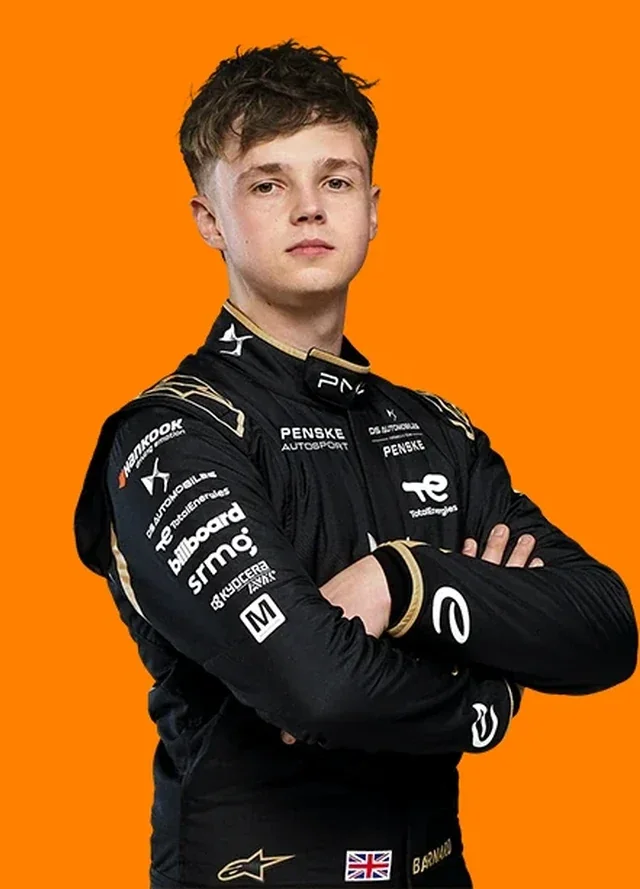
As Motorsport.com Italia reports, the lone pre-season collective test for Formula E's Gen4 era at Jarama ended in dramatic fashion with a late-session fire on the Fusion driven by Taylor Barnard. Thankfully, the driver emerged without physical consequences, and both the FIA and Formula E have launched an investigation into the cause. Car fires in this championship are exceptionally rare, with incidents across twelve years counted on one hand due to strict safety protocols. Paradoxically, the blaze arrived at the tail end of a largely smooth three-day test that ran smoothly aside from a minor paddock layout quirk involving high-voltage elements on Monday.
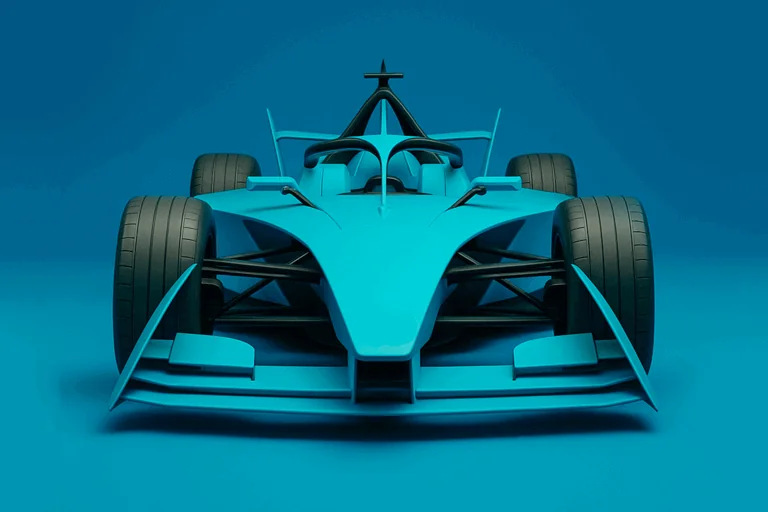
Before the flames cut the running short, Pablo Martino, Head of Championship of Formula E for the FIA, offered an upbeat assessment, emphasizing how much both the governing body and teams learned outside the simulator. That learning curve is steep because the Gen4 is a beast unlike anything else on four wheels. Thanks to an active front differential—something entirely unique in global motorsport—combined with permanent all-wheel drive, a traction control system, and torque distribution, teams have staggering setup flexibility that arguably eclipses Formula 1.
Drivers with deep multi-discipline backgrounds wasted no time handing the machine immense praise. Antonio Felix da Costa, driving for Jaguar, didn't hold back: "According to me, it's the most advanced car I've driven. You can do a lot in every corner, even during the same lap, you can change from corner to corner, and even during a run you can modify the differential for every corner. It's a very technical car." Mitch Evans, representing the Opel GSE Formula E Team, drew comparisons to legendary prototype machinery: "I drove the one that was more or less closest to it, similar but with some differences: the Porsche LMP1. When I tried it, I was really impressed. A long time ago now, but this Gen4 is a huge challenge for us drivers and for the engineers, trying even just to understand what we want to achieve. So yes, it is [the most advanced]."
On the competitive front, Porsche and Stellantis squads appear to hold the early cards. Porsche picked up right where its Gen3 campaign left off, showing stellar reliability and performance—barring the yet-unexplained issue on Barnard's customer machine. Opel (along with Citroen) also looked robust, with Evans expressing quiet optimism over the baseline pace. Meanwhile, the raw performance target of the Gen4 is staggering: to tame 600 kW in qualifying mode, aerodynamic downforce is more than double that of the Gen3 car. That load forced teams to run exceptionally low at Jarama, showering the track in beautiful sparks as the floor scraped the asphalt in high-speed sweeps.
Crucially, this extra downforce does not turn the car into a machine locked entirely to rails. When pushed to the limit in fast sections and heavy braking zones, the car still moves around, keeping the driver firmly at the center of the spectacle. There were major fears that this heavy aero footprint would create punishing dirty air and ruin wheel-to-wheel battles. However, data gathered from full-distance low-downforce simulations on Wednesday and sprint runs on Friday point to a very different reality.
Pablo Martino explained that the low-downforce configuration is barely impacted by dirty air, aligning neatly with prior CFD and wind tunnel predictions from the FIA. Even better, the energy penalty of following closely is minimal, which should theoretically prevent the tactical games of drivers refusing to lead early grands prix to save energy. With the Gen4's larger physical footprint, losing position will hurt more than before, but the racing tools appear ready. Now, we wait for the lights to go out.
 Formula E
 Formula E
 Formula E
 Formula E
 Formula E
 Formula E