
Here's the thing about the 2026 FIA World Endurance Championship: round seven is taking competitors straight to Spain for the inaugural 6 Hours of Barcelona presented by Visit Qatar, running from 16 to 18 October and replacing the originally-scheduled Qatar 1812km. And tyre-supplier Michelin is anticipating what it calls the hardest race of the year.
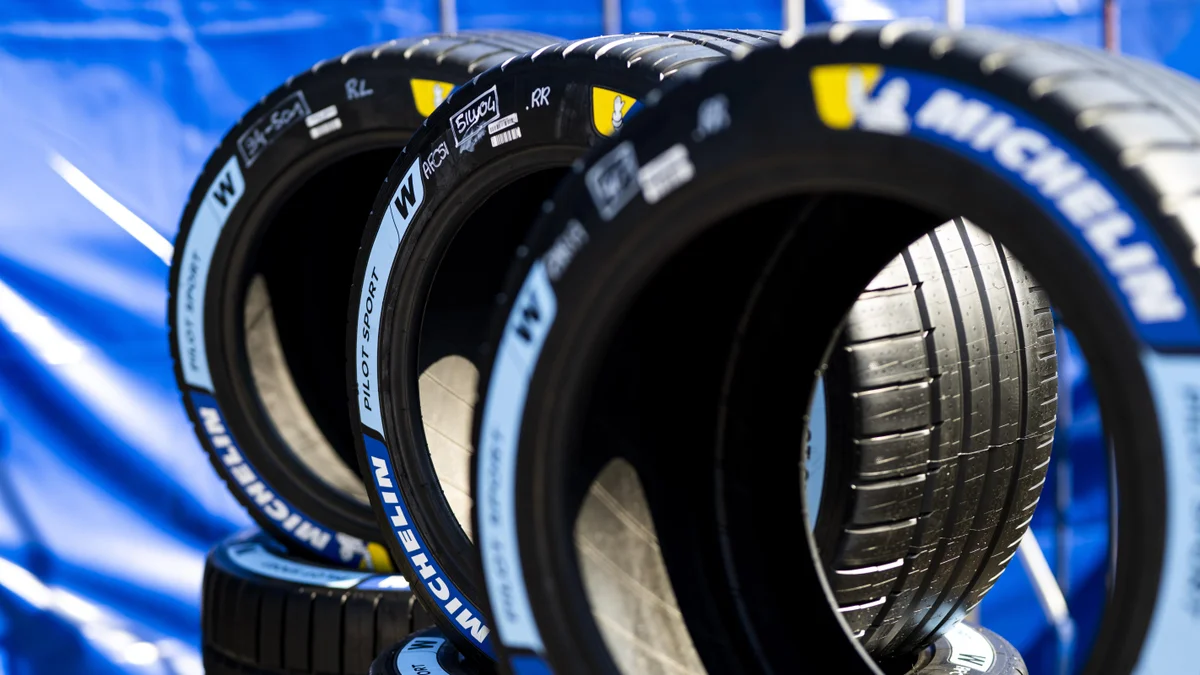
This visit to the Circuit de Barcelona-Catalunya will see the French manufacturer introduce the newest addition to its current Pilot Sport Endurance line-up. It is a wet-weather tyre comprising 57 per cent renewable or recycled raw materials, easily spotted thanks to its blue sidewall marking. It will complement the brand's latest-generation Pilot Sport Endurance slick—available in soft and medium-compound options this weekend—which itself is composed of 50 per cent sustainable materials.
"Our Hypercar partners will be able to fit this new tyre if it rains," notes Pierre Alves, manager of Michelin's endurance racing programmes. "In addition to delivering superior grip and performance in wet weather, it is also more resistant to the phenomenon known as blistering in drying conditions. It was signed off in 2025 after a private test we organised at Le Castellet in France, to which all of our Hypercar partners were invited."
The Circuit de Barcelona-Catalunya is a 4.657km, 14-turn clockwise track and the 16th different venue to host an FIA WEC round. "It's a circuit we know," continues Alves. "That said, our last visit at this level dates back to 2019, when FIA WEC organised its pre-season Prologue test here. Ten years before that, we won the 10,00km of Barcelona—a round of the 2009 Le Mans Series—with Aston Martin. The LMP1 prototypes of the day were very different to today's Hypercars, though. Our engineers have therefore made extensive use of simulation technology to prepare for the coming weekend, while some of our partner teams tested in Barcelona over the summer."
There is no hiding from the physics of this track. Tyres need to be capable of withstanding very high lateral loads, which exceed 2g for almost a third of the lap. From that point-of-view, it is the hardest race of the year for Michelin. The biggest demands are made of the left-hand-side tyres, so expect strategies where teams double-stint the rights and single-stint the lefts. It is also the track that makes the biggest energy demands. Average lap speeds are comparable with São Paulo and Bahrain, which is to say average for the championship. Also of note are the hard-braking zones into Turns One, Five and Ten.
The year's penultimate clash is scheduled to start at 12:00 CEST on Sunday, 18 October. As things stand, Toyota tops the Manufacturers' standings—23 points ahead of BMW—following its tenth home soil victory at Fuji last time out. The crew of the Japanese marque's #7 prototype has the edge in the Drivers' title-fight, ten points clear of their team-mates in the #8 car.