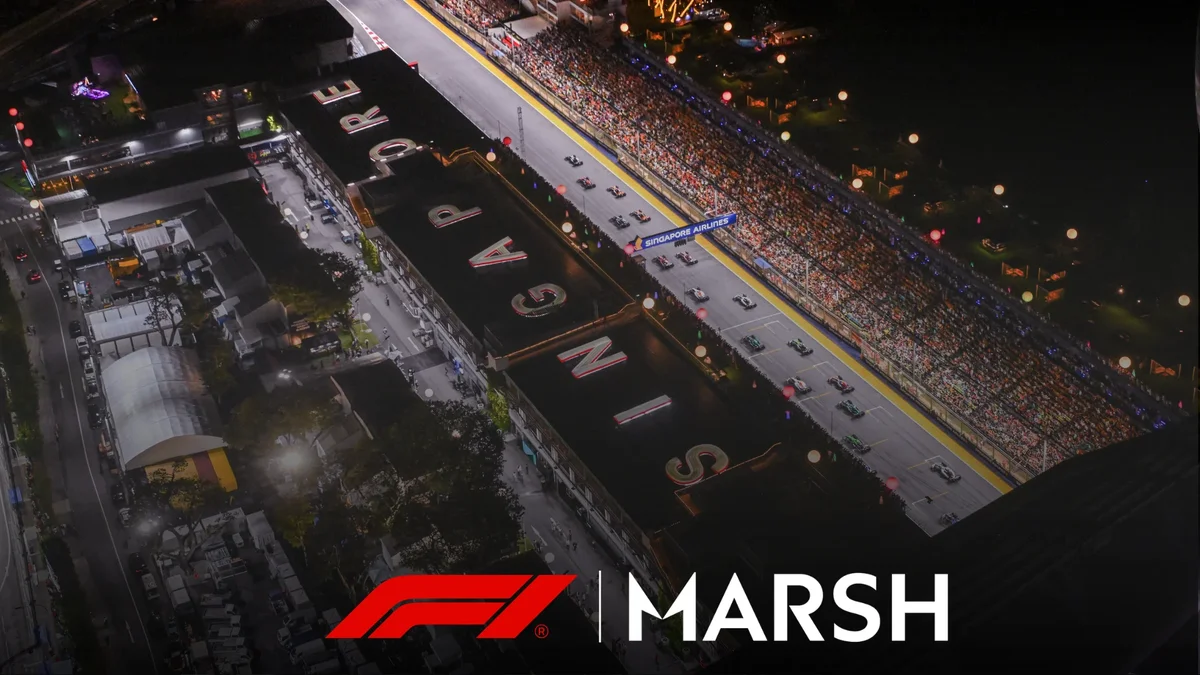


When F1 teams first arrived in Singapore in 2008 for the championship's inaugural night race, skepticism hung heavy in the air. That doubt vanished the moment they clapped eyes on a venue lit up like the mothership from Steven Spielberg’s Close Encounters. It looked bewilderingly magnificent and full of promise. Over the next two decades, Singapore has delivered every single time. The cars look fabulous under lights, the atmosphere cranks up a notch or two when night falls on the Lion City, and teams are prepared to risk plenty in an effort to win here.
Now, how will the teams, drivers, and strategists approach the weekend? The engineering challenge starts with energy management, though Alpine Racing Director Dave Greenwood notes it is a little less sensitive here than at other rounds. "Everywhere we go this year, the first topic is always energy management – but Singapore is a little less sensitive to that; it’s a less important factor in the weekend as a whole," Greenwood explains. The track demands maximum downforce, an abundance of extra winglets, and a massive amount of mechanical grip. But with just a single practice session due to the Sprint format, teams have to put a lot more trust in pre-event work and simulator discoveries.
Then there is the layout itself. The map of Marina Bay is dominated by 90-degree corners where city streets intersect. Valtteri Bottas points out that the current generation of cars feels nice on street tracks. "With the cars this year, I do think it will create more overtaking opportunities, it will be more dynamic with the battery," Bottas says. "If one car runs out [of energy] early, and another has a full pack, that’s going to make a big difference on the straights."
We only need to look back to 2023 for a masterclass in Marina Bay drama, when Red Bull Racing's dominant machine faltered. Max Verstappen qualified 11th and Sergio Pérez 13th, opening the door for Carlos Sainz to take victory from pole position for Ferrari. A late Virtual Safety Car triggered by a gearbox problem for Esteban Ocon sparked a frantic finish. Mercedes pitted George Russell and Lewis Hamilton for fresh medium tyres, setting up a thrilling chase. Russell closed in on Lando Norris, who was cleverly kept within DRS range by Sainz to fend off the Silver Arrow. Sainz won, with Norris second just 0.812s behind, and Hamilton third a mere 0.457s further back, while a fully committed Russell clipped a barrier and crashed into the wall within sight of the chequered flag.
Strategy can make or break a weekend here, as Oscar Piastri proved in 2024 when he climbed from fifth on the grid to finish P3 behind race winner Norris. By going long on the first stint, Piastri built a massive tyre delta over the Mercedes cars ahead of him, cleanly passing Hamilton on Lap 40 and Russell on Lap 45. Textbook stuff.
Yet the Sprint format completely shifts the risk profile. Williams driver Alex Albon highlights how recent events shape their approach. "We learned a lot in Madrid and Baku," says Albon. "Combine those two circuits and you get something like Singapore. You learn a little bit of where you want the ride to be on the front and the rear; where you want to be on roll stiffness, where you want to be conceptually with the tools that you run on the track."
Looking ahead to future regulations, everything suggests Singapore will continue to produce races where track position is vital and a one-stop strategy reigns supreme. Overtaking remains difficult, but as Marina Bay has proven time and time again, it is entirely possible for the brave.