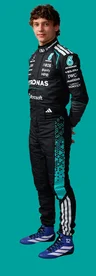
The Sao Paulo Grand Prix brought massive celebrations for Mercedes as the German manufacturer clinched the 2026 Constructors' Championship. Needing just a handful more points than Ferrari in Brazil, the Silver Arrows locked down the crown and vaulted into joint third place on the all-time constructors' winners list.
Looking back across the history of the sport, a total of 15 teams have claimed the Constructors' Championship since its introduction in 1958. Among them, six squads managed the feat just once. Vanwall took the very first title in 1958 with Stirling Moss and Tony Brooks. BRM grabbed the 1962 crown with Graham Hill. Matra supplied Ken Tyrrell's cars for Jackie Stewart's 1969 success, while Tyrrell won under his own banner in 1971 alongside Francois Cevert. Benetton dominated in 1995 with Michael Schumacher and Johnny Herbert, and Ross Brawn took over Honda's entry to form Brawn GP, guiding Jenson Button and Rubens Barrichello to glory in 2009 before the team morphed into Mercedes.
Three teams earned exactly two titles apiece, all in back-to-back fashion. Cooper took the honors in 1959 and 1960 with Jack Brabham, Stirling Moss, and Bruce McLaren, while Brabham later won titles in 1966 and 1967 with Denny Hulme. Renault ended a long wait by taking consecutive crowns in 2005 and 2006 with Fernando Alonso leading the Enstone-based squad. Further up the order, Red Bull collected six titles under Christian Horner and Adrian Newey. After early wins with Sebastian Vettel and Mark Webber, they rattled off four straight double titles through 2013, totaling 41 wins in that stretch. New power unit rules stalled them until Max Verstappen launched a four-title run, backed by Sergio Perez to secure team crowns in 2022 and 2023.
Lotus claimed seven titles under Colin Chapman during the 1960s and 1970s. Jim Clark took titles in 1963 and 1965, Graham Hill won in 1968, Jochen Rindt secured a posthumous 1970 crown alongside F1 rookie Emerson Fittipaldi, and Fittipaldi paired with Ronnie Peterson for more success in 1972 and 1973. Mario Andretti sealed the final Lotus title in 1978 with the ground-effect Lotus 79. Williams sits alongside Mercedes on nine titles, their golden eras built on Frank Williams, Patrick Head, and engines from Honda and Renault, carrying drivers like Alan Jones, Nelson Piquet, Nigel Mansell, Alain Prost, Damon Hill, and Jacques Villeneuve to glory.
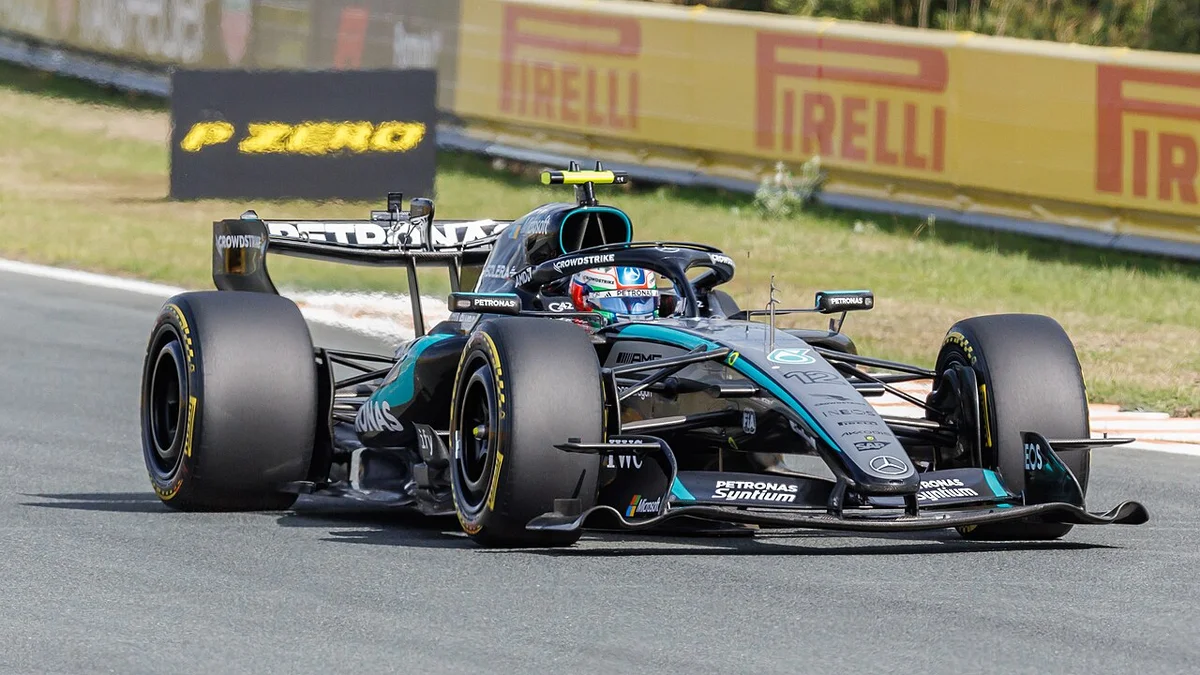
Mercedes itself boasts a rich history, starting with Juan Manuel Fangio and Stirling Moss winning for the Silver Arrows in 1955 before a five-decade hiatus. Returning by taking over Brawn for 2010, the team waited for 2014 power unit changes before rattling off eight consecutive teams' titles between 2014 and 2021 through the battles of Lewis Hamilton, Nico Rosberg, and Valtteri Bottas. After Verstappen and Red Bull seized control, another ruleset change ahead of 2026 brought Mercedes back to the summit. Kimi Antonelli made history by becoming the youngest World Champion in F1 history at the Mexico City Grand Prix, paving the way for Mercedes to lock down the constructors' crown a week later in Sao Paulo.
Ahead of them, McLaren holds 10 titles, starting in 1974 with Emerson Fittipaldi and continuing through the legendary pairings of Niki Lauda and Alain Prost, and later Ayrton Senna and Gerhard Berger. Mika Hakkinen returned them to the top in 1998 with Mercedes power, while Lando Norris and Oscar Piastri brought McLaren back to constructors' success recently, culminating in Norris winning the drivers' title in 2025. At the very top sits Ferrari with 16 titles. Having competed since the championship's birth in 1950, the Scuderia collected titles through Phil Hill, John Surtees, Niki Lauda, Jody Scheckter, and Michael Schumacher's legendary five-consecutive-title streak, right through to Kimi Raikkonen and Felipe Massa's efforts.


 F1
 F1