
Mercedes has secured the Constructors' championship, and Ferrari has walked away from Brazil with a thoroughly colorless race. As FormulaUno.it reports, that missed one-two finish in Mexico stings all the more after a Sunday completely devoid of highlights. A week prior, the chance to win was genuinely there, but at Interlagos, that opportunity simply never materialized. Fresh power units were installed, but they proved entirely insufficient to fix a deficit spanning raw power, aerodynamic efficiency, and tire performance.
The afternoon did offer a brief spark when Lewis Hamilton (yes, that seven-time world champ) launched off the line. He carved out space and picked up positions, immediately giving his race a much brighter outlook. Unfortunately, that early momentum burned out fast. Later on, both Hamilton and Leclerc found themselves running in close company, though they handled it with mutual respect this time around—leaving each other plenty of room rather than compounding an already tricky situation.
Here is the brutal engineering reality of the beast: with the Macarena rear wing closed, the Ferrari was bleeding roughly seven tenths of a lap on the straights alone. At its absolute worst, it coughed up another 7 tenths through the corners. These are two distinct faces of the exact same flaw. On one side you have limits in power and aerodynamic drag; on the other, an absolute inability to switch the tires on through slow-speed turns.
The SF-26 chassis shouldn't look terrible in the wet, but when bolted into maximum downforce configuration, the machine simply carries slightly more drag than the competition while packing less power to punch through it. In a wet race scenario with active aerodynamics locked out, that vital chance to shed straight-line resistance vanishes entirely. Swapping out the engine was never going to wipe away a structural limit like that.
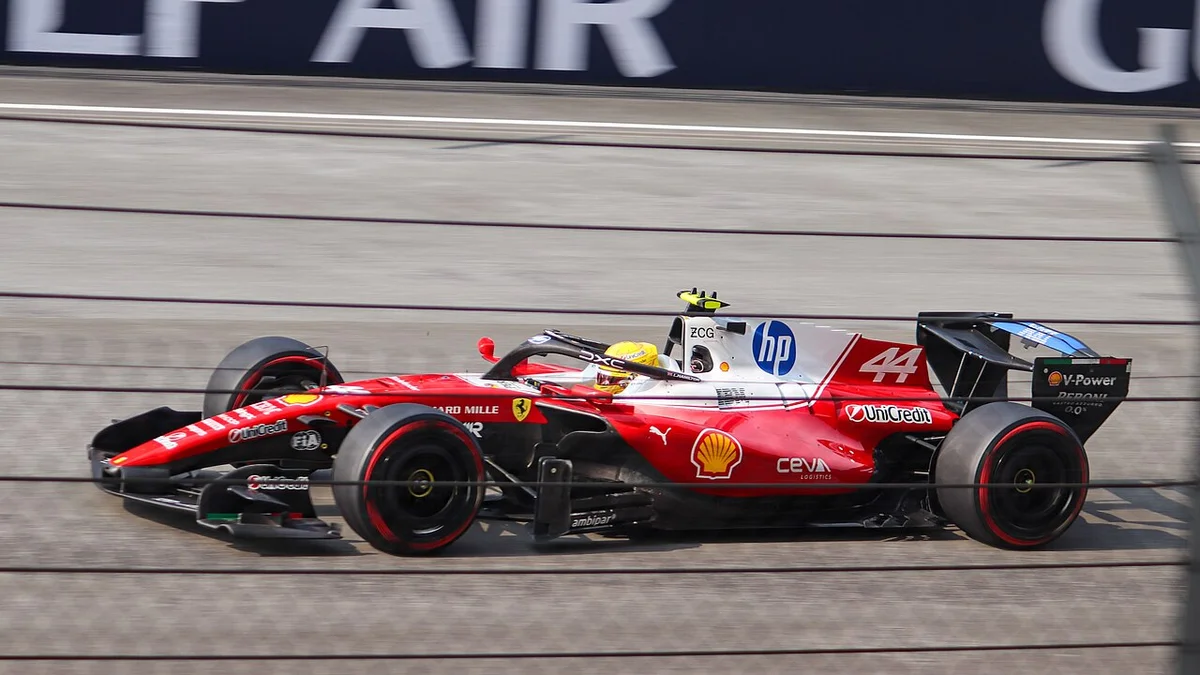
Things looked even bleaker when the scarlet cars started leaking time in the twisty sections where they were supposed to claw back ground. By lap 15, Verstappen had already dropped about twenty seconds on both machines, and this happened despite Hamilton and Leclerc running totally opposing tire strategies. The gap was far too vast to blame on individual driving management. While tire pressures brought up memories of Canada 2024, pointing the finger solely at the trackside engineers misses the mark. Ferrari was running right at the minimum permitted prescriptions, just like everyone else. Instead, attention needs to shift toward the design of the wheel corners, which can violently swing performance in specific conditions.
Interlagos laid bare a fundamental concept limitation that tightens the operating window and makes finding an effective setup fix terribly difficult. A grid penalty certainly did nothing to help their weekend preparation either. While that softens the blame slightly, it leaves open the urgent question of why Ferrari suffered so desperately. On the tactical side, strategic maneuvering offered almost zero room to alter the outcome. Given that kind of performance deficit, shuffling the pit stop sequence wouldn't have saved the race.
A strange moment also popped up when Hamilton ignored a team call to pit. Whether Lewis doubted the pit wall's judgment or simply wanted to stay out and expose a few more of the car's handling flaws remains an open question, and Vasseur's post-race interpretation felt rather generous compared to the reality on track. Aside from a handful of fleeting moments, neither driver was able to extract any real joy from the package. Mercedes is celebrating a title, but Ferrari has to confront a mountain of troubles that stretches far beyond a single messy weekend.


 F1
 F1