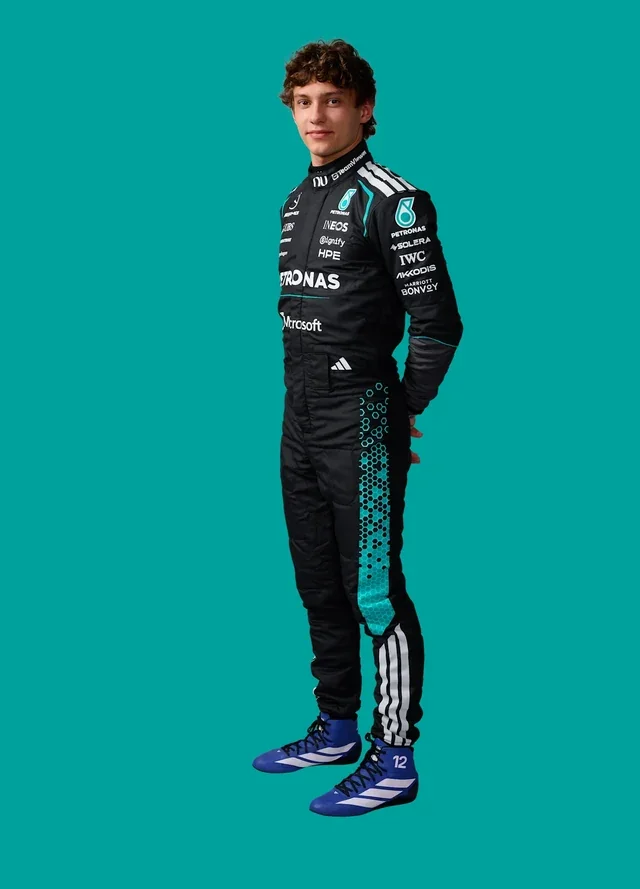


Mercedes and Andrea Kimi Antonelli are going through the usual motions of pretending the championship fight is alive until it is mathematically settled. As RaceFans reports, for Antonelli to secure the crown this weekend, the team’s other driver simply needs to finish no higher than ninth—a scenario Mercedes is hardly banking on. Even so, it is difficult to imagine the factory does not already have boxes of commemorative T-shirts tucked away for F1’s youngest world champion.
Barring an impossible collapse over the remaining rounds, the conclusion to this year's championship carries a heavy sense of anti-climax. Any realistic threat from Antonelli's rivals vanished long ago, and the title will be wrapped up well before the final race. Last year delivered a rare treat when three drivers fought for the crown at the final round, but this season's contest feels hollow regardless of how many contenders it might have featured.
The culprit lies squarely in the technical regulations. The hideously overcomplicated, energy-starved 2026 power units mask the talent of the world’s best drivers so thoroughly that their incredible abilities are nearly impossible to appreciate. The faster and more demanding the circuit, the more glaringly inadequate these machines become.
F1 and the FIA have scrambled to sell the show, but they know they have made a disastrous mis-step. The desperation is evident in how quickly officials rushed through fixes and prepared to abandon the formula after a mere four seasons—just one-third of its predecessor's lifespan. While F1 CEO Stefano Domenicali insists fans simply fail to understand the current generation of cars, the stark reality is laid bare by the drivers themselves.
Ferrari driver Charles Leclerc laid out the absurdity earlier this year, explaining how a brilliant drive through turn one at Spa—gaining a tenth-and-a-half—resulted in losing two-and-a-half tenths down the straight, leaving him a tenth slower overall despite nailing the corner. A world championship loses its meaning in a category that actively punishes a driver for out-performing the machinery.
Following grand prix racing has always demanded filtering out variables like chassis performance or reliability, but the 2026 season has pushed that challenge into total impenetrability. On-track battles are further distorted by invisible features like Overtake Mode, stripping away the authenticity of any pass. With only modest tweaks planned for the 2027 engine regulations, there is little hope of a genuine cure, leaving some to ponder whether drivers would rather jump ship to test single-seaters that do not artificially slow down before high-speed corners.
Antonelli's speed is undeniable, and he may well be one of the sport's greatest talents. But when the racing itself is fundamentally broken, it becomes nearly impossible to care who hoists the trophy at the end of the year.