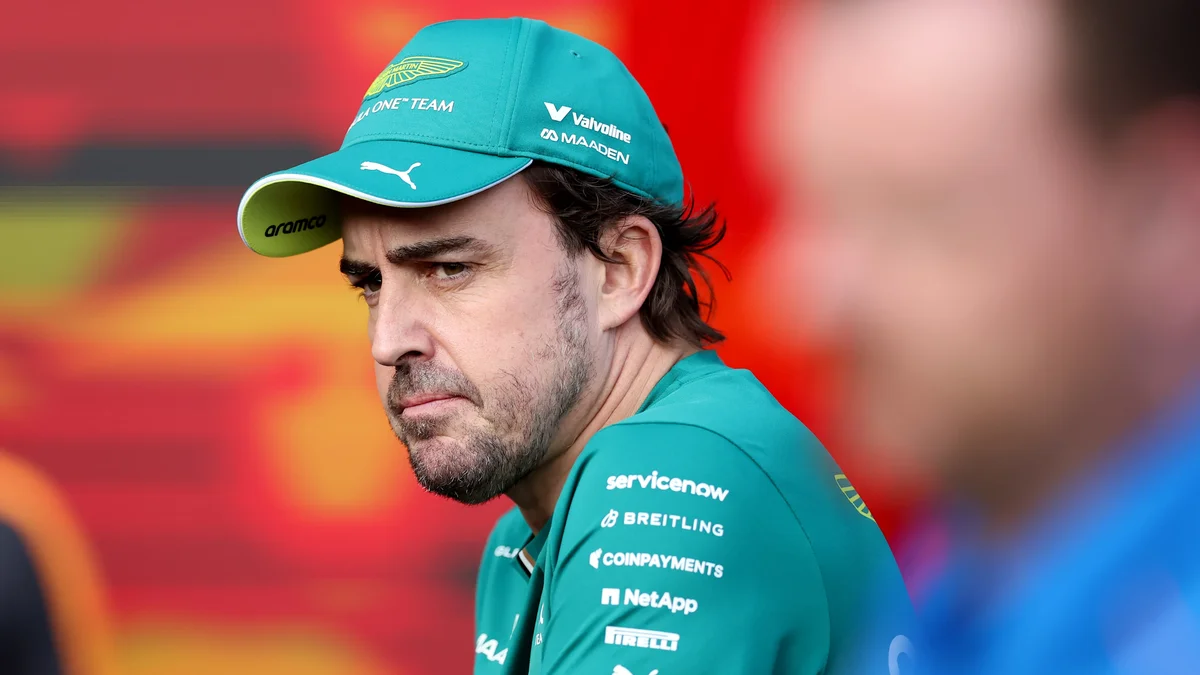


It was a disaster that materialized in barely five laps. Aston Martin suffered a brutal double retirement at the Mexico City Grand Prix, with both Fernando Alonso and Lance Stroll credited with just five laps after overheating issues ended their race before it could properly begin. For a Silverstone-based team and power unit partner Honda enduring a painful 2026 season, this was a new low—especially after points were ultimately on offer for drivers starting down the grid, and after a weekend where the package had initially shown genuine promise.
Fernando Alonso had looked respectably quick through practice, amassing some 84 laps across the three sessions and showing strong pace particularly in Free Practice 2 (FP2). But things unraveled in Qualifying when he was told to stop after just a single run in Q1 due to an MGU-K cooling issue. Sunday brought an even harsher reality. Despite changes to Alonso's MGU-K and multiple elements on Lance Stroll's car, both drivers suffered poor getaways—Alonso explicitly citing a lack of power off the line—and were almost immediately ordered to lift off early to address cooling issues.
It certainly was encouraging, but it was also concerning from the simple point that cooling was a challenge from the beginning, and that’s something that carried also over the whole weekend.
The team dragged them both into the pits at the end of Lap 3, desperately trying to drop them out of the train and bring temperatures down. It failed completely. Alonso was quickly called back in to retire his machine, while Stroll was told to pull over and park shortly after.
“Mexico always provides a very big challenge for the power units and things like that,” Alonso said. “So yeah, even with that, seems that it was not enough, so we had to retire the car. We need to understand.” He added: “Quali and the race was very frustrating, because free practice was fine. We did a lot of laps in FP1, FP2, and FP3 as well, and when we got to the moment of truth, quali and race, we didn’t manage to do enough laps. But this is part of the process of learning, and hopefully we can learn – hard lessons – but we can learn things from today.”
Honda’s Trackside General Manager and Chief Engineer Shintaro Orihara shed light on the technical failure, explaining that the high altitude created unique headaches. “We found our ERS cooling circuit got some stress in special circumstances,” Orihara explained. “Racing laps were okay, but in some special circumstance, we have found some stress happen on our circuit, and [as a result] the car stops. That is coming from this high altitude.” When asked why the car ran fine during practice, he noted that 80% to 90% of running was okay, but those specific stress points appeared during the weekend.
Aston Martin’s Chief Trackside Officer Mike Krack admitted that while the team was encouraged by Alonso’s early practice pace, the warning signs were already there. “We always need to analyse very carefully, how does it come together?” Krack said. “It certainly was encouraging, but it was also concerning from the simple point that cooling was a challenge from the beginning, and that’s something that carried also over the whole weekend.”
Despite the misery, Alonso is already looking toward the future with a completely new engine currently being tested on the dyno for next year. “We are all together on this,” Alonso said. “Very tough first season for the team. But I think as I said, days like today there are hard lessons, but we are learning. I think the whole power unit department is aware of the problems and the issues. Completely new engine next year, currently testing at the dyno. So yeah, I have faith. I have trust in next year because it’s a completely new project, and the car is really going in the right direction, the chassis side.”


 F1
 F1
 F1