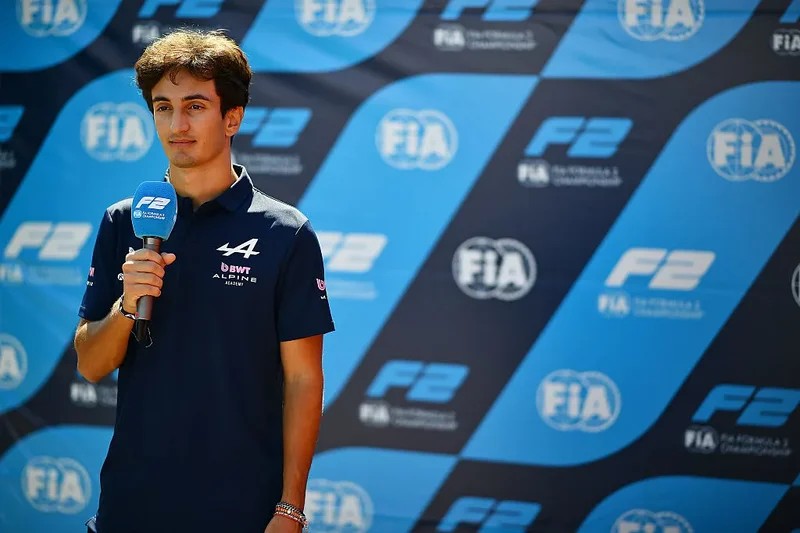
There is an annoying habit plaguing the Red Bull camp this year, and according to Motorsport.com Italia, it is not getting solved anytime soon. While the team has made clear progress in climbing back into the fight, their sluggish getaways off the line remain a glaring weak spot. Even at Austin, both Max Verstappen and Isack Hadjar failed to launch cleanly from their respective grid slots. For the French driver, that poor initial bite immediately cost him two positions to Ferrari, while Verstappen missed any chance to properly pressure Antonelli right as the lights went out.
Back at the start of the season, seeing the Milton Keynes cars—along with the Racing Bulls machines—drop backward in the opening meters was a frustratingly familiar sight that routinely wasted a strong qualifying effort. Mercedes and Red Bull alike have poured effort into ironing out these launch flaws, but as it turns out, a real breakthrough requires hardware shifts that cannot happen until 2027.
At the moment it is too delicate and particularly suffers from temperature management. It's a nightmare.
"The issue with starts is a more complex problem to solve, in the sense that performance at the start involves practically all departments of the company, with the exception of aerodynamics," explained Red Bull Team Principal Laurent Mekies after the Austin weekend. Even at Singapore, the team spent the whole build-up sweating over whether they would lose pole position before the first corner.
Even when they hold position, the launch mechanics rarely feel fully resolved. Mekies pointed out the multi-dimensional nature of the headache: "Engines, gearboxes, clutches, and other aspects come into play. Since the beginning of the season, we have seen that we are not the benchmark at the start." While developments have clawed back some performance, consistency is completely missing. Some weekends yield a decent jump, while others see them swallowed up instantly.
Part of the struggle stems from the narrow operating window required to spool up the turbocharger correctly on the grid. Without the MGU-H assisting the turbo speed from a standstill, generating the necessary pressure while stationary is a brutal task, prompting the FIA to grant an extra five seconds to help systems reach their operating windows. Unfortunately, that extended procedure forces drivers to sit on the grid with engines revving high for longer, creating a nightmare for temperature management.
As Isack Hadjar bluntly noted, the hardware itself is crying out for a redesign. "The clutch needs a redesign at the project level," Hadjar said. "At the moment it is too delicate and particularly suffers from temperature management. It's a nightmare."
Mekies remains confident that small software tweaks and procedural learning will keep chipping away at the gap between now and the end of the season. But when it comes to the fundamental hardware, the team principal admitted that the ultimate fix will not land before next season. Until then, Red Bull's drivers will just have to keep wrestling a clutch that hates heat as much as it hates sitting still.