
It is a cruel script when a machine shows brilliant pace for a day and a half, dominates two-thirds of qualifying, and then watches everything slip away in the few minutes that actually matter. As Motorsport.com Italia reports, the Ferrari garage was left with a bitter taste after finishing the United States Grand Prix qualifying session with Charles Leclerc in fourth and Lewis Hamilton in fifth. Before the session, both SF-26 cars were viewed as genuine threats for the top three positions in a competitive field topped by Kimi Antonelli's pole position for Mercedes.
The real puzzle lies in how the afternoon unspooled. Leclerc bossed Q2, setting a benchmark time of 1'34"198 that would have comfortably secured him a front-row grid spot had he managed it moments later. But Q3 told a completely different story. Right from the first set of soft tyres, the red cars lacked their previous punch, with Leclerc unable to match his earlier pace and Hamilton languishing in sixth after his initial run.
Simply the others were faster. I think we lose mostly on the power unit front,
While worsening track conditions caught out several drivers toward the end of the session, both Ferraris actually managed to improve on their final attempts, with Leclerc dropping his time by about a tenth and Hamilton jumping ahead of Russell to claim fifth. The fatal blow was undeniably that first run in Q3. Leclerc pointed the finger firmly at tyre preparation and a narrow operating window.
“It is very deluding,” Charles explained, noting that the car struggled to generate temperature as the track cooled by a couple of degrees. “I struggled already in the out-lap, sliding quite a lot and this made everything very difficult.” Leclerc added that the SF-26's extreme sensitivity to rubber temperatures makes it a beast to hook up in qualifying when temperatures drop, even if that same trait might protect the tyres over a race stint.
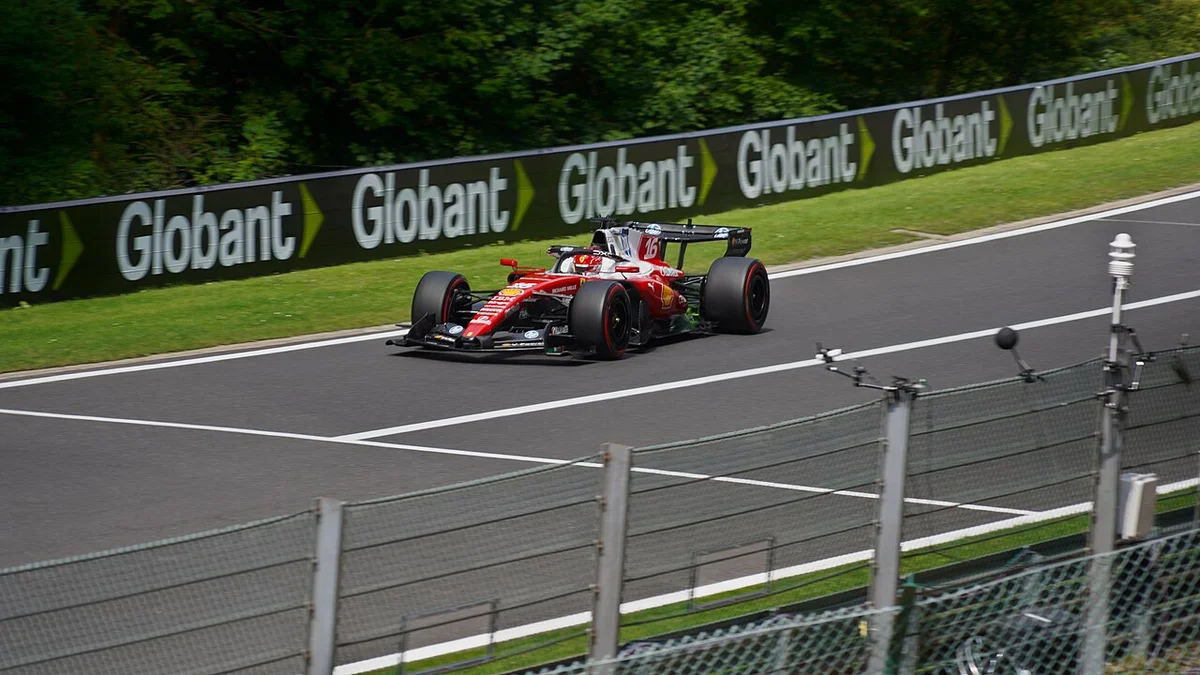
Hamilton saw the battlefield through a completely different lens. The British driver dismissed any tyre-preparation excuses, declaring his out-lap clean and the car responsive. Instead, Lewis laid the blame squarely on the power unit. “Simply the others were faster. I think we lose mostly on the power unit front,” Hamilton stated, estimating a deficit of three to four decimally crucial tenths to rivals like Red Bull and Mercedes, particularly out of slow corners and down the straights where the telemetry shows rival acceleration pulling away.
With Leclerc missing out on Verstappen's first-row spot by a mere 53 milliseconds, the margins are agonizingly small. Yet team boss Vasseur noted that up until the final corner of Q3, they were right there in the fight. Now, both drivers look toward Sunday with different expectations: Leclerc hopes the tyre characteristics that hurt him on a single flying lap will turn into an asset over a long race distance, while Hamilton remains realistic about the difficulties of overtaking from fourth and fifth on the grid.