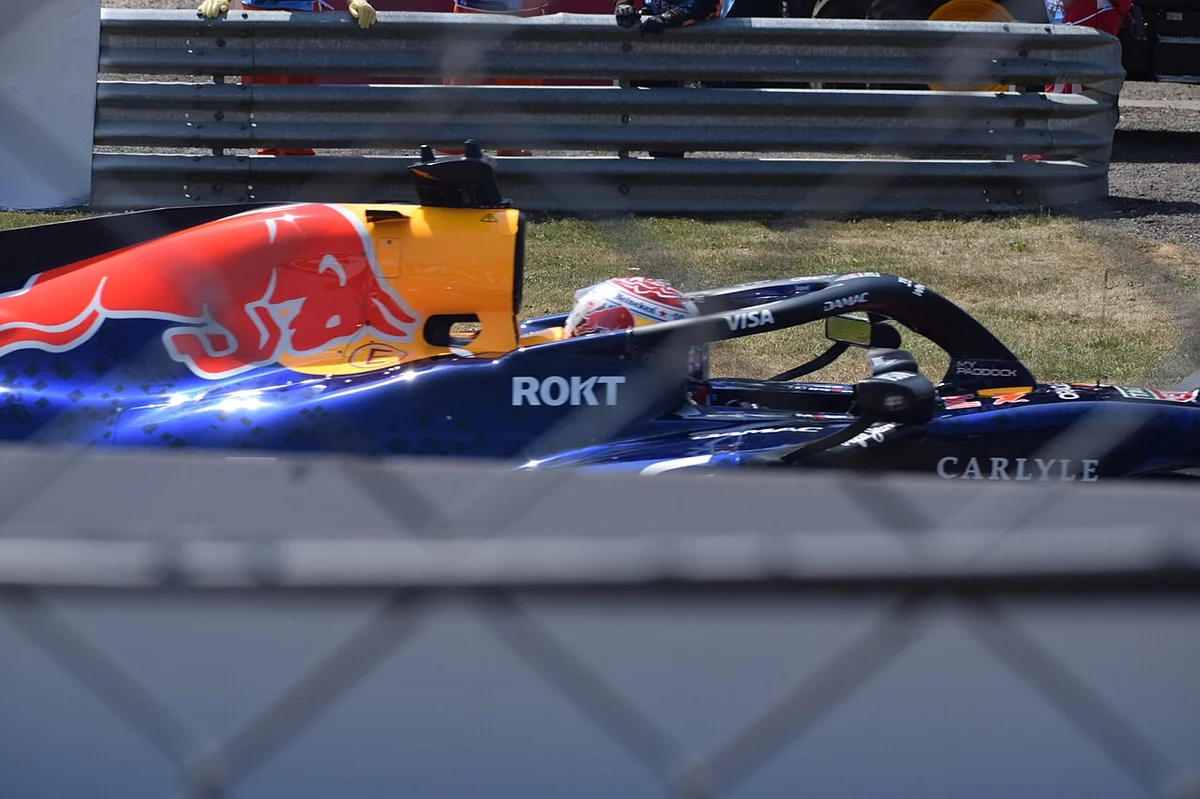


While Max Verstappen's Bahrain Grand Prix victory naturally turned heads toward Red Bull's chassis upgrades, a deeper look at the data from Malaysia reveals a fascinating secondary story. As The Race reports, the foundations of Verstappen's pole position and race-winning pace owed a massive debt to straightline performance. Telemetry comparisons from Q3 showed the Red Bull power units regularly sitting near the top of speed traps, even amidst complex energy deployment patterns.
This kind of pace on the straights suggests serious strides are being made on the power unit side, particularly following Red Bull's form on the main straight in Baku. It is worth noting that Ferrari is currently lacking power, while Mercedes brought a high-drag upgrade that seemingly pulled back the top speeds of George Russell and Kimi Antonelli. Yet the gains for Red Bull remain deeply impressive, especially given the strict limitations they and partner Ford have faced under F1's ADUO rules, which barred them from bringing a hardware engine upgrade this season.
In Malaysia, Baku and Madrid we certainly have managed to give Max and Isack a package with which they feel more at ease.
Team principal Laurent Mekies admitted that while there was clear annoyance over the FIA judging their power unit to be clear of the rest—leaving them isolated without development opportunities—the engineers in Milton Keynes simply kept their heads down. The rules attempt to estimate peak power of the internal combustion engine, but Mekies pointed out just how many other performance vectors remain open. Without changing hardware, the team has poured massive effort into driveability, operating windows, and launches, capitalizing on the ever-deepening integration between chassis and power unit.
That integration helped tame tracks like Baku and Malaysia, though Mekies is quick to keep expectations grounded. The team principal views the much-discussed Baku upgrade not as some revolutionary silver bullet, but merely the final, necessary building block to close down the daunting one-second deficit Red Bull faced at the start of the year. It simply caught everyone's attention because it finally put them properly on terms with Mercedes.
Even so, the Milton Keynes squad is well aware that old ghosts have not completely vanished. As recently as Monza in early September, Verstappen was vocal about an aero degradation problem that plagued the first half of their campaign. Mekies conceded that while packages in Baku, Madrid, and Malaysia have given Verstappen and Isack Hadjar a much more compliant machine, the degradation issue is not entirely fixed.
"Is it a finished job? No, but are we progressing," Mekies said when asked if the degradation problem had been sorted. "In Malaysia, Baku and Madrid we certainly have managed to give Max and Isack a package with which they feel more at ease."
Despite the clear forward momentum, Red Bull continues pushing behind the scenes to reform the ADUO rules for the future, remaining frustrated by the initial FIA evaluations while ultimately preferring to focus purely on racing. Whether their sudden Sepang supremacy was aided by extreme heat and track roughness or genuine parity with Mercedes remains to be seen, but the machine is undeniably coming alive.