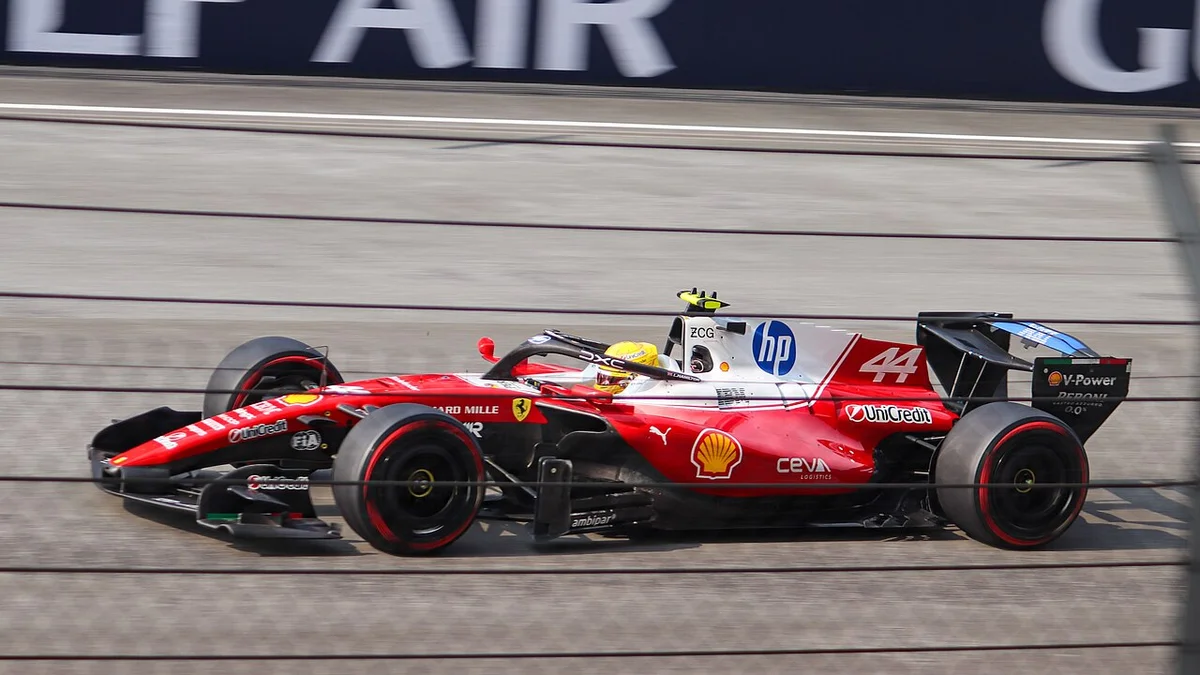


As Motorsport.com Italia reports, the high altitude and thin air of Mexico City created an unforeseen passing crisis during the grand prix, entirely driven by standard FIA power mappings for the MGU-K. Once cars crossed a specific speed threshold, the electric motor's power dropped off completely, wiping out any performance delta needed to launch an attack down the straight.
Even with maximum downforce wings bolted on, the thin air means downforce levels in Mexico match those at Monza, which should theoretically turn the massive straight into a passing haven. Yet, as has occasionally happened with DRS in the past, a completely different mechanical hurdle reared its head. Preset FIA maps dictate how every machine spends its electrical energy, scaling down MGU-K output progressively past a certain velocity in standard modes: starting from 350 kW at 290 km/h all the way down to 0 kW by 345 km/h.
While the overtake mode makes these restrictions slightly less aggressive by holding higher electric power until roughly 340 km/h before hitting 0 kW at 355 km/h, Mexico served up a bizarre exception. Across qualifying and the race, top speeds among different manufacturers flattened out completely. Cars simply plateaued around 345 to 350 km/h, refusing to accelerate further because the electric juice cut out so abruptly.
Compounding the issue, the ultra-slow stadium section immediately preceding the straight allowed drivers to heavily recharge their batteries, aided by generous FIA recharging allowances during the lap. Firing out of the final corner with full energy and minimal aerodynamic drag, cars rocketed up to 340 km/h almost instantly, only to slam into the power wall as the MGU-K output plummeted.
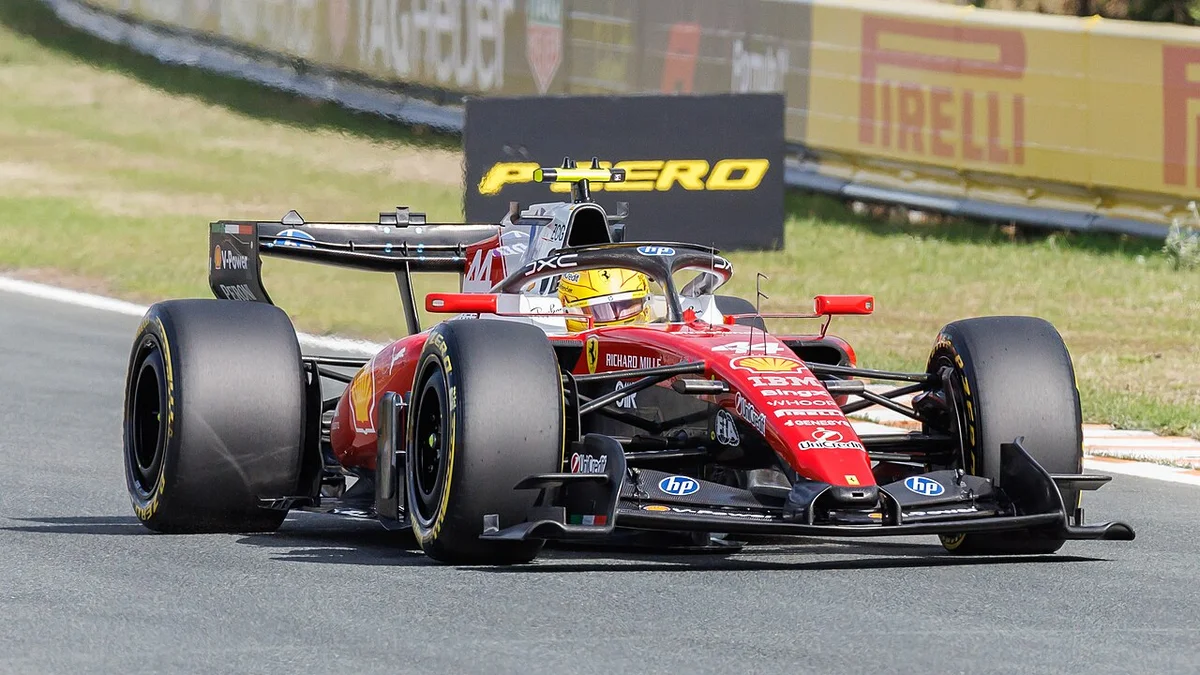
This perfect storm of conditions never even materialized at places like Baku or Monza, leaving the additional 0.5 MJ provided by the overtake mode entirely useless against the 8.5 MJ total budget on a tight layout. Red Bull Racing was forced to react by pulling Max Verstappen in early for a massive stint on soft tires to cover Charles Leclerc, knowing track position was the only way to dictate the pace and keep the rival behind.
Lewis Hamilton found himself completely handcuffed by the rules while chasing Max Verstappen, noting after the race that passing was rendered entirely impossible. The Mercedes driver did not hold back in his assessment of the situation: “Here you can't overtake. I think that's something that the FIA needs to address, because the situation is bad. We have this limiter at the end of the straight that prevents exceeding a certain speed, so everyone just ends up following each other,” Hamilton said during the post-race press conference.
“It's a nonsense when you're behind and you have a bit more power thanks to the slipstream. You should be able to use that advantage to try to overtake. The engine could go faster, but there are these stupid limits. Honestly, I think it's probably the worst engine mapping this sport has ever seen, and it doesn't help the show on track at all,” Hamilton added, pointing out that his MGU-K was scaling back barely 300 meters past the start/finish line while still holding overtake mode over 500 meters away from the braking zone at turn one.


 F1
 F1
 F1